Savoring the Moments: Reflections on the 2026-27 Season from Patrick Summers Part 3 of a Series

Click here to read Part 1 and Part 2 of Savoring the Moments
7
Show Boat is so present in American culture, such a deep part of our history from every vantage point, that it is hard to imagine that in 2027 it will be a hundred years old. It feels too young to be a centenarian. And what a glorious work it is, the musical not only of “Ol’ Man River,” but of so much else.
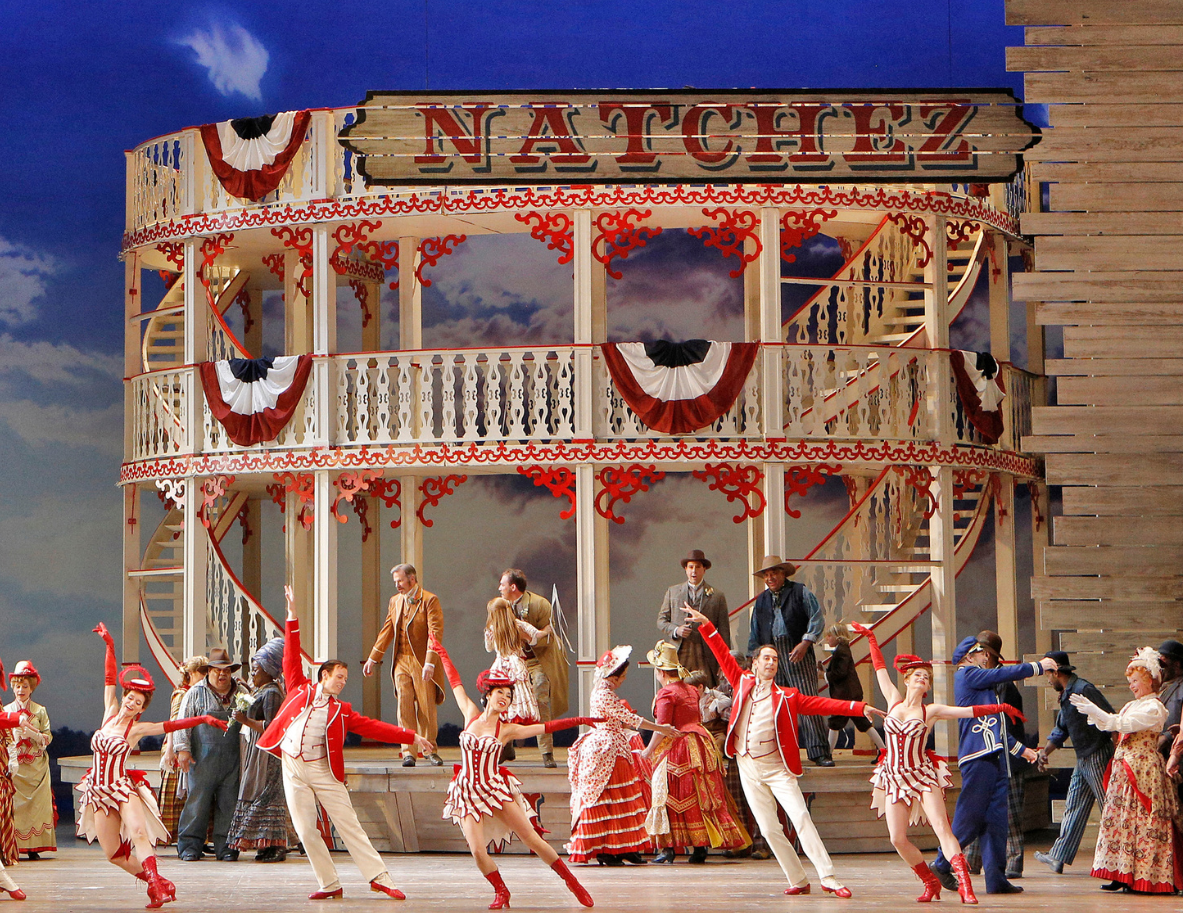
The American musical didn’t “come from” opera so much as grow parallel to it, and all of these influences converge in Show Boat. The roots of the American musical—a play whose characters also sing—can be traced to the aftermath of the U.S. Civil War, in 1866, with a fluke that itself sounds like the plot of a musical: Niblo’s Garden, a Broadway theater managed by one William Wheatley, had announced a spoken play, The Black Crook, a Faust-like tale set in Germany. At the same time, further downtown, a Parisian ballet troupe had been booked to play the Academy of Music, which had unfortunately burned down during the Atlantic crossing of the French dancers. Wheatley seized the opportunity to add the theater-less dancers to his play, converted some existing music and commissioned a bit more to fill out the evening, and The Black Crook was turned into a singing, dancing, and acting spectacle, the first of its kind in America. It was quite a hit, too: it played 474 performances and earned $1 million in revenue at a time when theatrical presenters were lucky to cover their expenses. It is parodied in the “melodrammer” in Show Boat’s first act.
The Black Crook set a tone and expectation for the remainder of the 19th century in the United States, in all of the major cities—any newly-born musical was expected to be large in scale, opulent in design, comic, and filled with thrilling dancing and tuneful, if often forgettable, music. Concurrently, opera was enjoying immense popularity all over the world, with Verdi and Wagner both immersed in history-changing careers by the 1880s. In the commercial theater, star performers were the draw, much more so than the works themselves—which were, and should be, the focus of an opera house.
George M. Cohan, “the man who owned Broadway,” exerted a powerful influence over the music of his era. He wrote more than 50 musicals, many of them incorporating dance and some with serious themes, decades before others would be credited with integrating these elements. Composers Rudolf Friml (Rose-Marie and The Vagabond King) and Sigmund Romberg (The Student Prince and The Desert Song) both enjoyed immense popularity with their fantasy operettas that played alongside the still-popular Gilbert and Sullivan operas that were being imported from England. Cohan’s influence is felt in Show Boat’s secondary plot—in the dance couple, Frank and Ellie.
Into this emerging artistic mélange of belle époque New York City, two men were born in midtown Manhattan just a few blocks from the theaters in which they would later wield great influence over how America viewed itself—the composer Jerome Kern in 1885 and lyricist Oscar Hammerstein II a decade later, in 1895.
Following the tradition of talented young American musicians of the time, Kern spent two years in Europe, both in London and Heidelberg, Germany, before returning to New York City to earn a living as a pianist in Tin Pan Alley, which was one city block on 28th Street between Fifth and Sixth avenues, then home to a string of music publishers. Patrons entered the shops seeking new songs to play on their home pianos, and salesman-pianists would play them, receiving a small commission on each sale. Kern’s early songs stood out from those of his contemporaries, and it doesn’t take a great deal of analyses to hear the influence of German music, particularly in his sophisticated use of harmony. Jerome Kern is the evolutionary link between European and American theatrical music.
Oscar Hammerstein II was the grandson of Oscar Hammerstein, an enterprising Prussian immigrant and opera lover who thought the Metropolitan Opera too staid and set out in 1906 to build a rival company, the Manhattan Opera Company, on 34th Street, around the corner from the 23-year-old Met. The elder Hammerstein competed so successfully with the Met that the latter ended up buying him out with his promise that he wouldn’t produce opera in the city for a decade. The younger Hammerstein would come to dominate 20th-century theater and film with his poetic and sweetly philosophical lyrics for an incredible 850 songs.
No one is quite sure exactly when Kern and Hammerstein met, though their insular New York City worlds must have coincided early. During the wartime years, 1914 to 1917, around the corner from where the Metropolitan Opera House then stood, was the unassuming Princess Theater on 39th Street. It was at the Princess that Jerome Kern wrote, with P.G. Wodehouse and Guy Bolton, a series of small and sophisticated musicals, now all forgotten, that would alter the genre that would later produce Show Boat and the great panoply of works now so beloved.
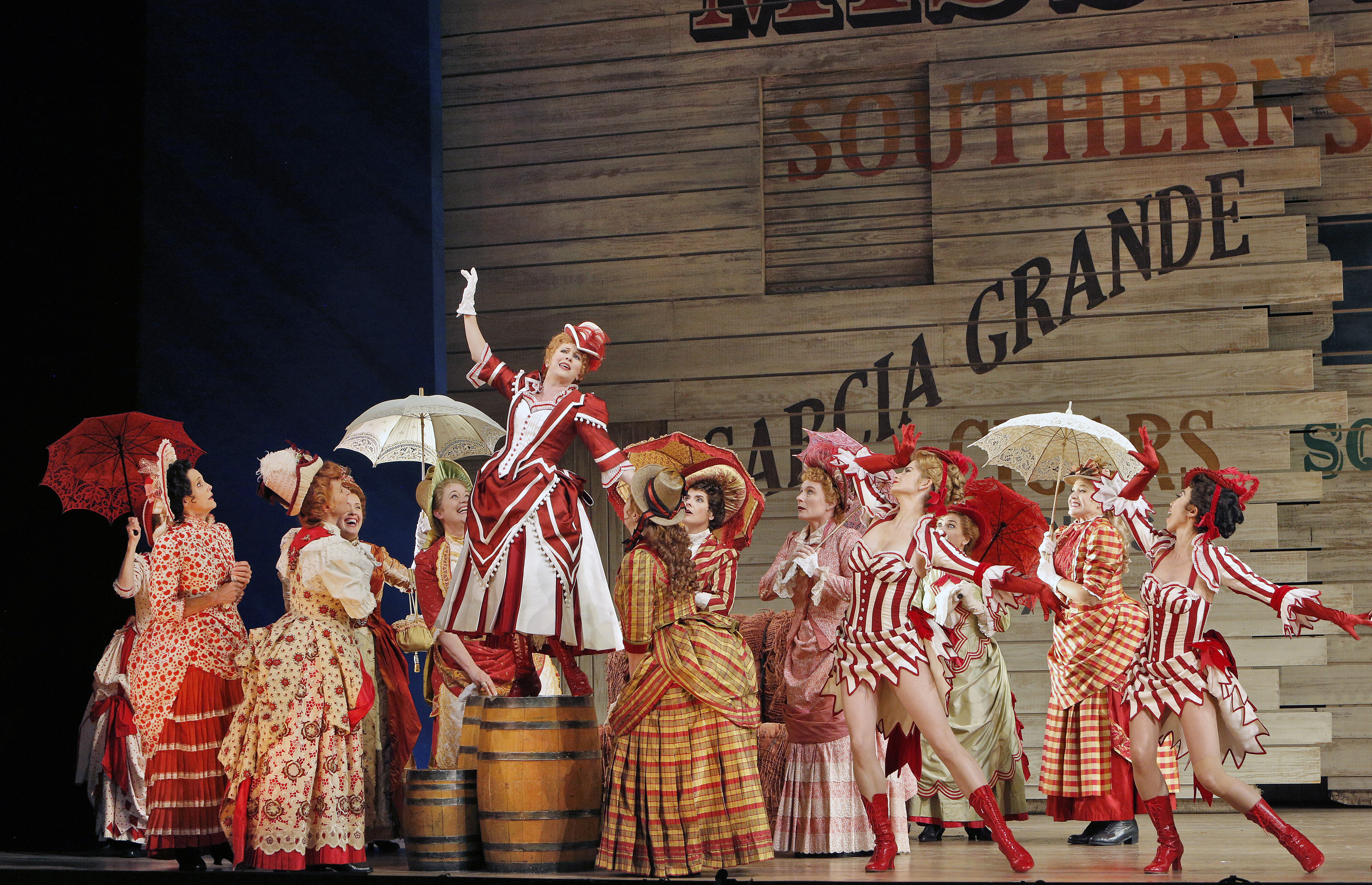
By the 1920s, Jerome Kern was a well-established composer in the New York theater, and he was constantly searching for new projects. An avid reader, he was not yet halfway through Edna Ferber’s 1926 novel Show Boat before he decided to approach her for the stage rights. Few figures in American literature were more famous at the time than Ferber. Her rich assortment of strong female characters became perfect fodder for Hollywood, and many of her novels and plays were adapted multiple times for film. Her works include the Pulitzer Prize-winning So Big, as well as Cimarron, Stage Door, Saratoga Trunk, Dinner at Eight, and her most famous, the epic of Texas that earned her the lifetime scorn of many Texans, Giant.
Ferber’s inspiration to write Show Boat came from an unlikely source. On a rehearsal break for a play called Minick, a producer, Winthrop Ames, casually mentioned to the play’s co-authors, George S. Kaufman and Edna Ferber, that they should forget about taking their problem play to Broadway and just become a “show boat” troupe.
Ferber began intensive research into the then-almost-vanished world of the Reconstruction-era show boats—floating theaters that traversed America’s rivers, particularly the Mississippi and Ohio and their many tributaries, offering an array of entertainments from opera to minstrel shows to Shakespeare plays. For Ferber, the metaphor of the timeless, silent river was as irresistible as it had been to authors like Mark Twain and songwriters such as Henry Mancini and Johnny Mercer in their soulful “Moon River.”
Ferber, a devoted diarist, recorded her first thoughts upon meeting Jerome Kern, describing him as “a pixie-looking little man with the most winning smile in the world.” They had been introduced by Ferber’s Algonquin Round Table partner and nemesis, Alexander Woollcott, at Kern’s request, as he wanted to meet the celebrated novelist to ask her permission to musicalize her then-new best-seller Show Boat, an idea that fell hard upon her at the time, when the world of musicals consisted of little but contrived dance numbers and slapstick comedy routines. In sharp contrast, her novel was filled with family strife, ambition, heartache, and the complicated issues of race in America—and it spanned more than 40 years, hardly the typical fare for a musical of the 1920s. She consented to Kern’s request upon learning that Oscar Hammerstein II would write the book.
In Kern’s score of Show Boat, the music tells the story to a larger degree than in any musical that came before it, and it represents the moment that European operetta, “light music”, became fully American. The score takes us, sonically, from the lightness of “Make Believe” to the passionate heights of grand opera in the Act I duet, “You Are Love.” Show Boat also has “showbiz” songs such as the delightful “Life upon the Wicked Stage,” The most famous song in Show Boat, “Ol’ Man River,” was so perfectly wrought that many thought it an authentic spiritual instead of an original creation of its authors.
Kern took the melody of “Ol’ Man River,” which he wrote before Hammerstein wrote the famous text, and inverted it to create the Cotton Blossom music of the opening scene. “Can’t Help Lovin’ Dat Man,” one of the few instances in this score in which the text was written first, is an American standard, recorded countless times and associated with many great ladies of song. It also carries the main dramaturgical weight in Show Boat—it is a “colored” song, as described in the script, and there is great suspicion about Julie when she sings it to Magnolia. It is a song that manages to be tuneful, joyful, sad, and memorable all at once.
The music of Show Boat undoubtedly affected the musical language of George Gershwin’s Porgy and Bess, which premiered within a decade of Show Boat. Porgy and Bess was a visionary work so far ahead of its time that it had to wait 40 years to be realized as its authors envisioned it, in Houston Grand Opera’s 1976 production that paved the way for the opera finally being presented at the mighty Metropolitan a decade later, half a century after it was written.
Show Boat’s second act is crowned by Julie’s famous torch song, “Bill,” the only piece in the musical not expressly written for it, and the only one with a lyric not by Hammerstein. Kern thought this song from his 1918 musical Oh, Lady! Lady!! had exactly the right degree of pathos. The original Julie, Helen Morgan, delivered it seated atop an upright piano in a heartbreaking rendition that was one of the iconic images of the era.
8
There is nothing in opera more delightful than a great production of Mozart’s The Magic Flute, an opera with a score that even a thousand years from now could not sound old, and a story that takes two innocent Adam-and-Eve characters, Tamino and Pamina, on a fairytale journey that mirrors every mature and self-examining adult: a journey from helpless childhood into the dangers of nature, and through learning and trials we enter a world of order and culture. What could be better? But The Magic Flute has not remained popular because of its story, but because of its music.
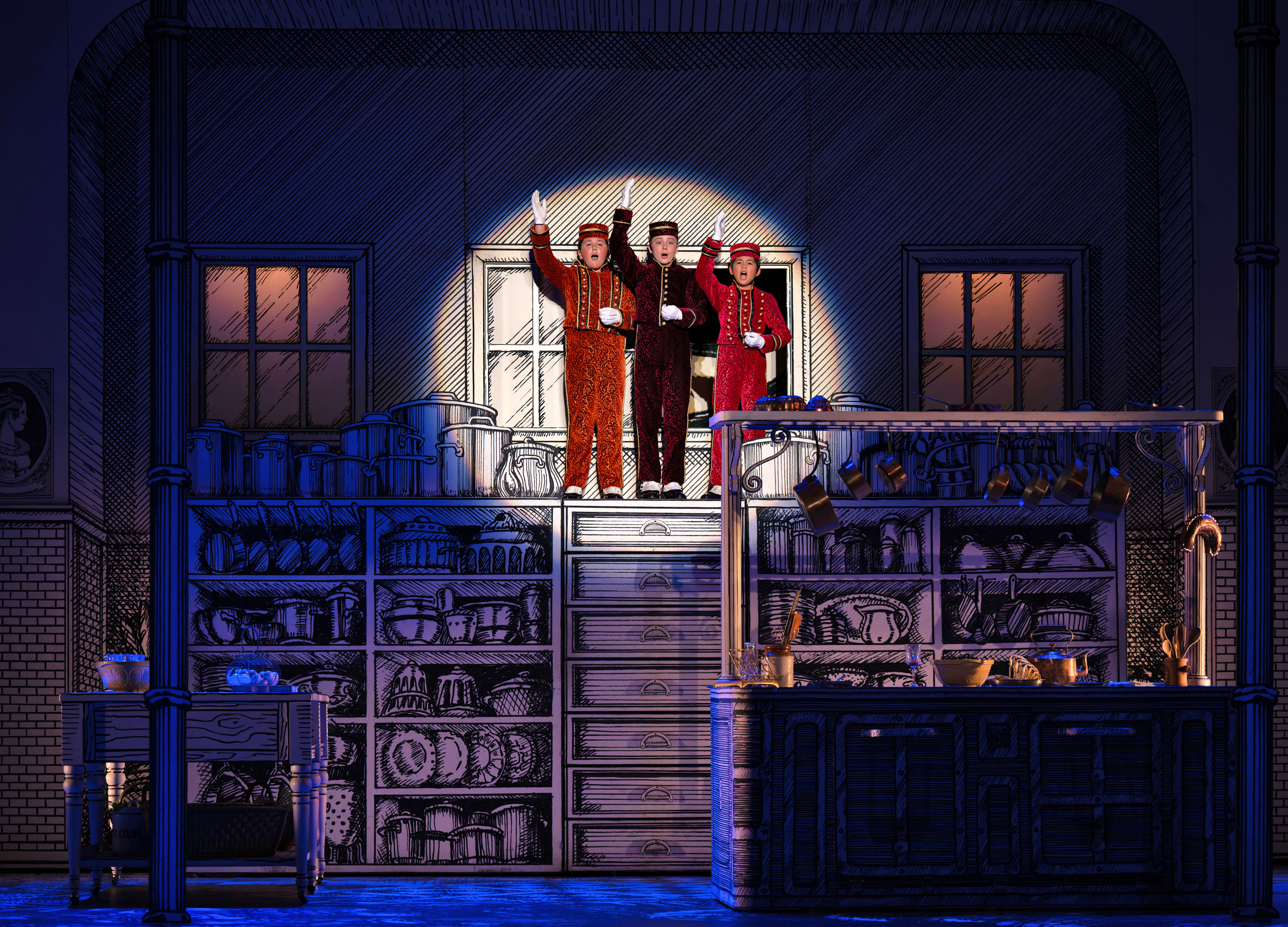
Most composers are more renowned for one genre of music over another: Chopin’s piano music, Verdi’s operas, Mahler’s symphonies, Bach’s organ music, Handel’s operas and oratorios. But Mozart uniquely mastered every genre he touched; his concertos for piano, flute, clarinet, bassoon, and horn remain the greatest for each of the instruments, his symphonies, masses, string quartets, piano and violin sonatas, piano trios, serenades, variations, church sonatas, dances, divertimenti, marches, canons, cassations, have all remained at the top of the repertoire. But Mozart himself, despite his mastery across genres, considered himself first and foremost an opera composer. He considered opera the supreme art for a musician, and he transformed opera from courtly entertainment into deep explorations of the human soul, especially human souls in love.
Following the first opera of his maturity, Idomeneo, composed for Munich when he was 25 (though it was his twelfth opera), Mozart was obsessed with the form, and the operas that followed remain unmatched in the depth of their humanity, humor, and beauty: The Abduction from the Seraglio, The Marriage of Figaro, Don Giovanni, Così fan tutte, The Magic Flute, and La clemenza di Tito. Each has several important instances of enlightened transcendence, frozen moments of enriching beauty, that make them indispensable to the repertoire, with the most sublime moment of The Magic Flute coming just before the trials of fire and water, the “Tones Macht” scene, in which the power of music is summoned as a force for good in the world—in music by Mozart of such perfection that one can scarcely believe what one is hearing, even all of these centuries later.
The librettist of The Magic Flute, the enterprising impresario Emanuel Schikaneder, first met Mozart in the early 1780s. Schikaneder, also the first performer of Papageno, was a well-regarded actor; before they met, Mozart likely saw him perform as Shakespeare’s Hamlet and Richard III (what a pity he wasn’t moved to write operatic adaptations of both!). Schikaneder ran a number of Viennese theaters, including a season at the Kärntnertortheater, which fortuitously began with a production of Mozart’s Abduction from the Seraglio. It was this very theater that prompted the Emperor Joseph II to ban a subversive French play soon to become extremely important in Mozart’s life, The Marriage of Figaro.
As head of the Theater auf der Wieden, a suburban Viennese theater, Schikaneder commissioned Mozart to write The Magic Flute in 1791, meaning it was more closely related to a commercial musical like Show Boat than to any of Mozart’s other operas. 1791, Mozart’s final year, was a time of remarkable compositions: the Piano Concerto no. 27 in B-flat Major and the sublime Clarinet Concerto—the first significant concerto for the relatively new instrument. As one would expect, the title “character” of The Magic Flute reigns supreme in that opera, and the original Tamino, Benedikt Schack, is said to have played it himself—a feat which, if true, has not been equaled. In addition to a magic flute, Mozart’s final opera has magic bells which the composer sometimes played.
Much has been made of the weaving of the number three throughout The Magic Flute, with its three opening chords in E-flat major, the key of three flats, and the three ladies and three boys, (each of whom make three appearances!), three trials, three doors, three slaves, and the three major plot strands.
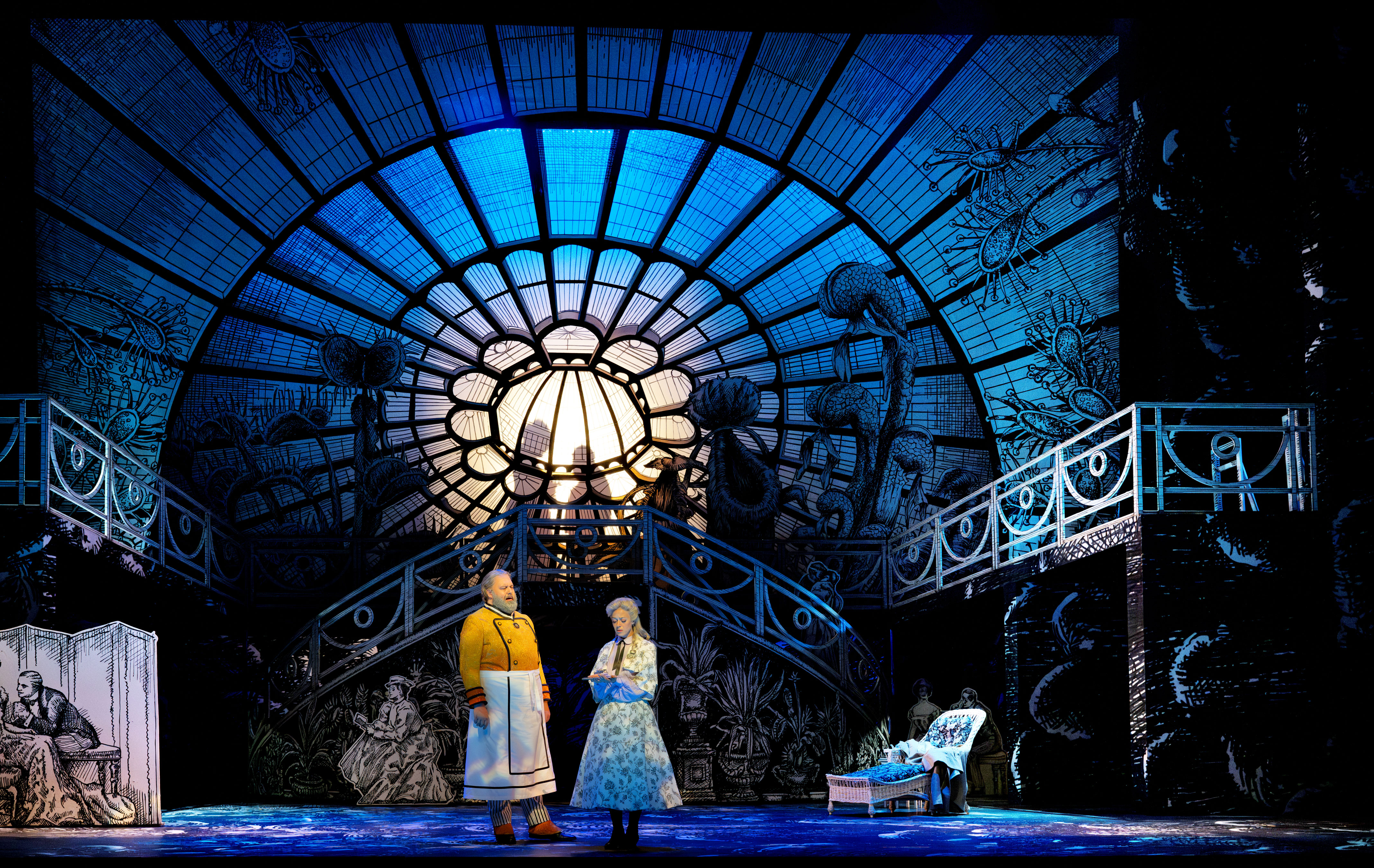
But the significance of three is not only Masonic; the French Revolution was fought for a famous tripartite of civic virtues: liberté, égalité, fraternité. Christians pray to the Father, Son, and Holy Spirit, and Buddhists seek the threefold training: sila (ethics), samadhi (meditation), and prajna (wisdom). Most significantly for The Magic Flute, in Richard Tarnas's 1991 book, The Passion of the Western Mind, he divides human activity into three realms—religion, science, and philosophy—each seeking “truth,” yet historically never in agreement. Even the founding documents of the United States enshrine a trio of ideas in life, liberty, and the pursuit of happiness. The tripart thinking is enshrined in the structure of Mozart’s final, fascinating opera, a work that keeps us searching for meaning and truth in at least one of the three realms, if not all.
Like a few transcendent creators in history, including Shakespeare, Goethe, Montaigne, and others, Mozart seems never to give up on us, no matter how trying the trials we place upon ourselves. In all of his mature operas, he seems to ask us to share with him two of the most gracious and important human qualities: humor and hope.
9
An opera season requires no Faustian deal with the devil. To the contrary: it needs faith—faith in the power of the art to touch us. A season is a journey into a world of extraordinary music and timeless ideas that no artificial intelligence could ever recreate—though no doubt our future with A.I. is going to feel quite Faustian indeed.
Though it is true that some advanced preparation will help anyone enjoy opera more, it is truer that you need no knowledge at all to enjoy opera’s moments. And the moments of this coming season are unforgettable ones, many of them subtle and quiet: when Susannah sings, “I’m so tired. I jes’ cain’t fight no more,” we are uniquely within her world. Or when Marguerite summons the angels in ever-climbing phrases, or when Amonasro, Aida’s father, majestically asks her to think of her people, in what is probably the single-most gorgeous phrase of music in Aida, or when ol’ man river keeps rolling along underneath the show boat, or when Tamino and Pamina summon the power of music to make them safe, or most especially, when the symbolic silver rose is presented near the beginning of Der Rosenkavalier’s second act, something begins to dawn on us.
Opera speaks to the deep human need to collect these moments. Operas are their totality, of course, but they are really a collection of brief moments that align with our own. They embrace and invite an emotional connection to our own lives. They ask something simple of us: to listen to them.