Savoring the Moments: Reflections on the 2026-27 Season from Patrick Summers | Part 1 of a Series

In the prologue to Goethe’s iconic Faust, the play on which Gounod’s beautiful opera is based, we are with a trinity of people discussing the theater. One is a director/impresario, viewing the theater (and thus the world) from a purely financial viewpoint, how to make enough people interested to pay for the theater’s existence. The second character is an actor, viewing the theater as a pathway to personal fame and fortune. And the third character is a poet at odds with the other two, who aspires only to selflessly create a work that will have lasting meaning. These three characters are, ultimately, Faust, the Devil, and God. Ah, but which is which?
1
An opera season is among the most curated events you can find in modern life. Every aspect of each opera is thought about years in advance by large teams of experts. By the time a season is announced, hundreds of permutations of a season have been hypothesized, all sorts of contingency plans enacted and then scrapped, hundreds of hours of budgets have been pored over, funding has been raised from interested patrons, and by the time the announcement is made, that same group of people is thinking deeply about the 2028 and 2029 seasons. Season-planning is a thrilling madness, as trying to predict relevance is a fool’s game, but we can know this: the operas that have already been tested and loved by audiences are likely to do that again. But what cannot be predicted until the time is directly upon us is what these operas might have to say to each other—what they collectively become in a single season, when each opera makes a new journey—a diamond set in a different ring or bracelet, to borrow another theme from Gounod’s Faust.
The operas of Houston Grand Opera’s 2026-27 season form several simultaneous journeys: adventures for the adventurers, comforting familiarities for those seeking them, and an incredible collection of traditions—a melting pot not only of opera, but of what the art is as we enter the central part of the 21st century for the first time, with a quarter of it behind us. One can easily begin and end this journey solely through the stars themselves, the epic voices who will populate this season: Angel Blue, Rod Gilfry, Ildebrando D’Arcangelo, Pretty Yende, Matthew Polenzani, Ailyn Pérez, Jonathan Tetelman, Lauren Snouffer, Edward Nelson, Tamara Wilson, Isabel Leonard, Morris Robinson—great singers, all—the best of our era. My list is thankfully incomplete.
But what does this mean, really? What does it mean to be a great singer? Great singing is an art of attainment and accomplishment—years of dedicated training, years of discipline, years of meticulous work, all to even be considered to star in an opera. These singers have been curated specifically for you, but still: what makes them great? Individuality. A great voice is separated from a good voice by a distinct sonic imprint, every bit as individual as a fingerprint or the look of an eye. Singing is a life force, and one of the last totally organic expressions on offer in our media-saturated world. The voices of opera singers travel over the HGO Orchestra by their own power, with no microphones—so you are in the room with them as they vibrate the air around you with no adornment. It is an artistic miracle, never to be completely out of mind in a live performance: a good voice is pleasantly enjoyable; a great voice is a life force of expressiveness.
Singing artists give voice to a larger journey, that of the extraordinary operas themselves. Great artists at their best practice their art in service of the composers who brought these works into being in the first place, and what a set of works they are:
The single most consequential work of American theater, a work that, a century ago, began to shift the European lines of culture to our shores, Show Boat.
The quintessential grand opera, one of several crowning achievements of Giuseppe Verdi’s long and eventful life, Aida, in a majestic and beautiful new production that will open the work to 21st-century audiences.
The single composer who has most shaped Houston Grand Opera, Carlisle Floyd, in his centenary year, gets the deserved posthumous honor of opening our season with his 1955 opera Susannah, a monument of national pride.
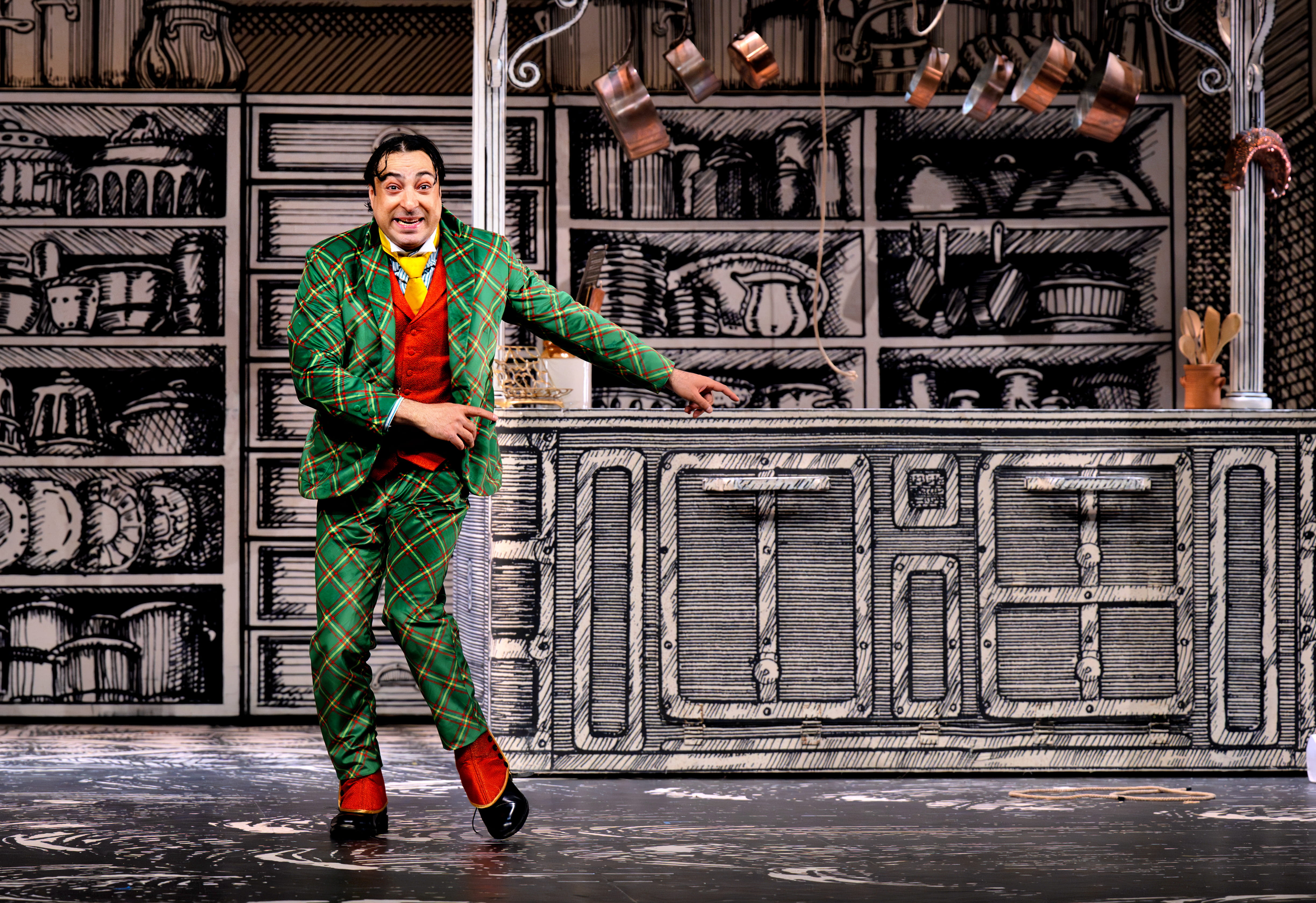
Mozart’s resplendent Adam-Eve allegory of a journey from the harshness of nature into the world of learning, enlightenment, and culture, The Magic Flute, in a whimsical, dream-like production.
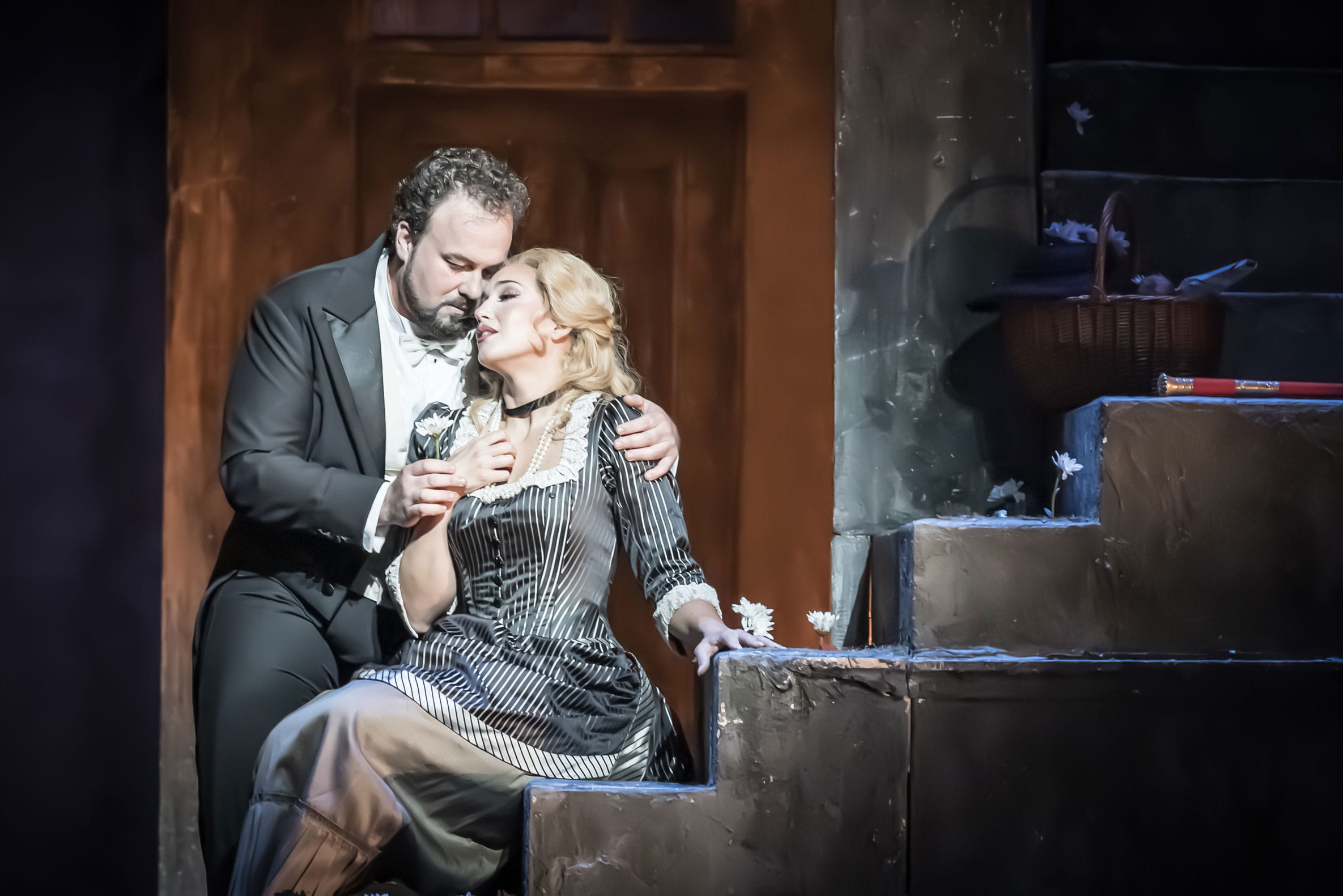
Gounod’s melodious and eerie Faust, which invites us into a world of enticing melodies that are beautifully at odds with a dark bargain with the devil. Faust asks life’s deepest questions.
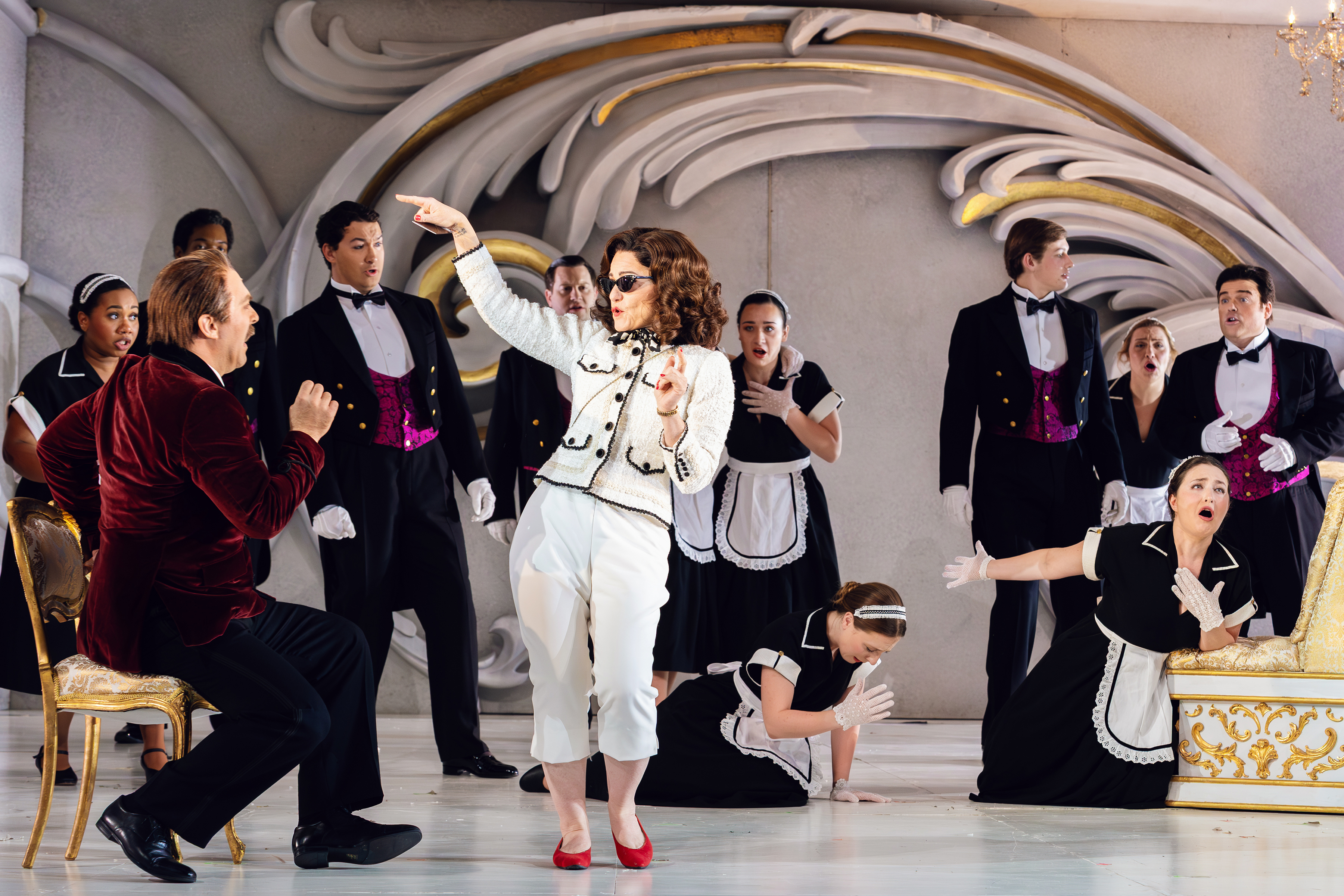
And most excitingly, one of opera’s artistic pinnacles, the opera that paid tribute to a vanishing world of elegance just prior to WWI, Richard Strauss’s autumnal Der Rosenkavalier, a melancholic romance about the swift passage of time—and an uproarious comedy.
2
In the sublime final moments of Der Rosenkavalier, the young lovers Sophie and Octavian wonder if their dreams can come true, if their love for each other, which in their young bodies feels so real, might actually be a dream. Following the time-stopping trio, an operatic moment that has no equal for exquisite beauty and depth of feeling, the elder Marschallin gives young Octavian to his beloved Sophie “in God’s name,” and what follows is the full magic of Der Rosenkavalier. In music directly quoted from Mozart’s The Magic Flute, the music with which Pamina and Papageno muse on the power of music to help them through life’s trials, Octavian and Sophie sing a levitating duet of unearthly beauty, as high strings gleam through like sunlight. For purely sonic beauty, touching beyond the imagination, the end of Der Rosenkavalier has no equal.
Der Rosenkavalier is so astounding that it deserves the resurrection of a rarely-used work, “finifugal”—Der Rosenkavalier is the most finifugal opera ever written! This strange word describes a curious but common feeling: not wanting something good to end. Der Rosenkavalier is such a musical delight, so full of invention, that by the time the great trio comes around, deep into a long opera, we are not ready to go home. The score of Der Rosenkavalier, more than three hours of music, is of monumental musical difficulty; orchestral musicians still bow before it. Its delights are fairly endless: it has the most famous copulation ever depicted in music—an act we hear but do not see. Indeed, Der Rosenkavalier’s graphic opening music is the anti-Tristan opening of an opera. Wagner’s weighty Tristan und Isolde, the most influential opera ever written, famously has in its first full measure what has come down in history as the “Tristan chord,” a single chord of ambiguous tonality, a chord with an inability to sonically resolve itself. Many musicians, Strauss included, thought the Tristan chord stretched tonality to its limits, leaving no further room for development. Strauss the composer, a generation after Wagner, further blew tonality apart with his operas Salome and Elektra, but he brings it back together for Der Rosenkavalier, which is a virtual orgy or harmonic resolution—and what harmonies they are. Der Rosenkavalier is a music-lover’s dream.
Octavian, the title character of Der Rosenkavalier, is the bearer of a silver rose to Sophie as a surrogate for a much older man, Baron Ochs. The rose symbolizes the beauty of youth and the innocence. Octavian bears the rose to her, never expecting the instant life-attraction he experiences, especially since he has experienced such intense physical passion with the older Marschallin. The opera tells of the conniving required to get Octavian and Sophie together and distract the oafish Baron Ochs—a plot that involves disguises and intrigues, women dressed as men, women dressed as men pretending to be women, and all sorts of other intricacies. The plot is a complex tangle, resolved with the greatest ending of any opera.
The big moments of Der Rosenkavalier are breathlessly beautiful: beyond the luridly descriptive opening music, we have the magnificent monologue of the Marschallin in which she confesses to stopping all of the clocks, the thrilling presentation of the silver rose, the sublimely subversive waltz that ends the second act, the long parade of waltzes in the third act—and so many smaller orchestral touches: we hear a small dog piddling on the floor during the Marschallin’s levee, we hear Baron Ochs bite into a hard biscuit, and we hear the unmovable love of Sophie and Octavian in three notes which repeat throughout the third act, staying in their own key no matter what else is around them.
As young Sophie sings when capturing the sublime scent of perfumed silver rose borne to her by Octavian, “It is of heaven and not the earth.” The same can be said of this whole opera.
3
Is opera in 2026 alive and healthy?
Very few operas can be completely consumed within the confines of a theater. A little bit of advanced preparation, which I realize is against the grain of modern culture, can go a long way towards ensuring that the experience of an opera lives with you long afterwards. Operas are, by and large, grand events, and this doesn’t simply refer to the number of people on stage. The grandeur of opera more often involves the level of ideas heaped upon an opera by a composer. Enjoying The Magic Flute in the 18th century, for example, depended somewhat on an implied set of values, many of them Masonic, that were embedded in the work itself. There are no “hidden” messages in The Magic Flute, because almost every audience member who experienced it in 1791 would also have been or known a Mason, so there was no need to hide anything. Now, though, the Masonic imagery of The Magic Flute is rather a sideline for audiences, because the timeless, childlike tourism of Mozart’s music takes us on a very different journey in the 21st century. What it symbolized then—for all great operas carry symbolism—is not what it symbolizes now. The greater the work, the more it will change over time, which is a small miracle of opera.
When Michael J. Fox played Marty McFly in the 1985 film Back to the Future, his character is thrust back 30 years by a time machine—and he encounters a totally different world from the one he left behind. Were Mr. McFly to travel back 30 years from now to 1996, he would certainly be surprised by the beginnings of the internet and the relatively low cost of buying a home, but would he find the culture itself so different? The top three films that year were Independence Day, Mission: Impossible, and Twister, and all three films have had sequels and/or remakes in the last ten years. Thirty years ago, the top popular singer was the 26-year-old Mariah Carey—in 2026, she still is—which is no disparagement of her, but telling of our era.
One of the reasons a full opera season can appeal in the 21st century is that popular culture, though lucrative, vast, and permeative into every part of our lives now, feels creatively stuck, unable to move forward or backward. Popular culture is ever more disposable, devoid of many heroes, and sadly now also locked in an ignoble side of politics that has always existed, but which even popular art had formerly risen above. Popular culture now demands from us consistent outrage, and many people will naturally respond to that with retreat. How could they not? Opera offers a rare opportunity: a modern glance into the past. Opera is often accused of being irrelevant to a modern society—but what could be more relevant than an art that connects us to other worlds, an art that portrays some real heroism, and amplifies human sadness and joy? The worlds depicted in Faust or Der Rosenkavalier are not modern, yet their emotional journeys becomes ours through music—the realization that we are connected across generations can be enormously moving.
Cinema is the art to which every other art now gets compared. But cinema has never actually been much of an artistic corollary to opera, except in cinema’s infancy, because of the primacy of a composer in opera. The creative engine of cinema has never been writers or composers; it has been directors who have shaped the course of cinema’s history. Composers have been the only creative talents who have actively moved opera forward, making it closer, artistically, to novels or epic poetry. Time and attention are required for full enjoyment of these arts. If you seek in opera the deafening roar of action movies, with their constant background music and endless, fierce rumblings, the full force of an orchestra in live sound may actually seem tame to you—though there is nothing quite like its magic.
Operatic creation is a separate entity from the music business. The institutions we have created to produce art have a noble charge: to preserve and protect, to curate and create in the art of opera, centered on the human singing voice—and these are difficult tasks that require constant work, deep knowledge, and enormous belief. One has to constantly guard against impulsive decisions that can feel rigorous, or personal preferences that can mask insecure knowledge. Rarely in art is anything so simple as “right” or “wrong,” but there is a legacy to decisions that bear great responsibility.
And opera’s history is carried through to each future opera season. The two world wars of the early 20th century severed the European creative line of classical music and opera, a reality impossible to notice as it was happening, largely because far more important realities for humanity were emerging. The first half of the 20th century was a cataclysm for culture, with the two world wars, plus revolutions in Mexico, Russia, and China. But the long-active creativity did not stop during these years; it slowly moved, along with millions of other immigrants, to American shores. This didn’t happen immediately, but it happened. Next season, we experience two of the most important works that were composed during that shift: Show Boat, a century old in 2027, and Carlisle Floyd’s opera that was composed only 28 years later, Susannah. And in recent seasons, we have performed other important works from that mid-century shifting time: Porgy and Bess and Dialogues of the Carmelites.
American opera, initially, was a field with no traditions, except those that immigrated from Europe. But, like all immigrants, opera eventually assimilated into an American version of itself, which is the era in which we now sit, a quarter of the way through the 21st century, has seen more than 300 new operas commissioned in our country since 2000, a level of activity not seen since in the late 19th century, in the 30 years between Parsifal and Der Rosenkavalier.
Opera cannot have a mass culture middleman, no matter how hard some people insist on trying. Why is this? Every few years, in every opera company in the world, a board member or a politician will attempt to reinvent a very old wheel: how to make opera financially self-sufficient—how to make opera popular—how to simply do enough performances to balance the books—all very earnest and all a very noble waste of time. Opera has never been mainstream entertainment, which is not to say that opera has never had wide popularity. The golden century, plus a year or two, of opera that stretched from the premiere of Rossini’s The Barber of Seville in 1816 to Puccini’s extraordinary Trittico in 1918 was the height of Italian opera’s supremacy, but never once in that time did a single opera ever pay for itself. Opera has always required some sort of subsidy beyond the people who attend it, and this is simply because of the grandeur of the ideas within it. Opera has always aspired to more than it could possibly attain—isn’t that an important quality to have in the world?
Operas are not like movies, which can die in the theater and move on to syndication on television. If operas disappear, they really disappear, which has left many masterpieces unperformed for decades or, in a few cases, for centuries. They require advocates, custodians, conductors and directors of deep knowledge, teachers, cheerleaders. To be sure: most operas ever composed are not worth reviving, but a few hundred of them are, and those few hundred need us. Indeed, we need them. And a great many of these operas have been written recently—so the great paradox occurs: we are in a time that largely distrusts expertise, while being ever in great need of expertise, and great composers are conjuring all sorts of treasures around us. Opera has always needed a new audience, and it still does. But opera at its finest is at a new height of creativity and diversity—it behooves us to listen to it.