Opera Mythconception #1: There’s a language barrier

From Viking helmets to bank-breaking ticket prices, preconceived notions about opera have long deterred large swaths of the public from going anywhere near the art form. It’s a shame, since most of these myths and misconceptions—these “mythconceptions,” if you will—couldn’t be further from the truth. In this series, we debunk five of the most persistent ones and show why opera today is as comprehensible, delectable, accessible, and affordable as it’s ever been in its 400-year history.
This is part 1 of a 5-part series. We're also debunking other mythconceptions, from being boring, stuffy, too long, and too expensive.
First of all, a not-insignificant portion of the repertoire is, in fact, in English, especially contemporary American operas by composers like Carlisle Floyd, Missy Mazzoli, and Jake Heggie (HGO’s recording of his opera Intelligence recently won the company a GRAMMY). HGO also stages classic musicals like Show Boat, West Side Story, and The Sound of Music, which are, of course, also in English.
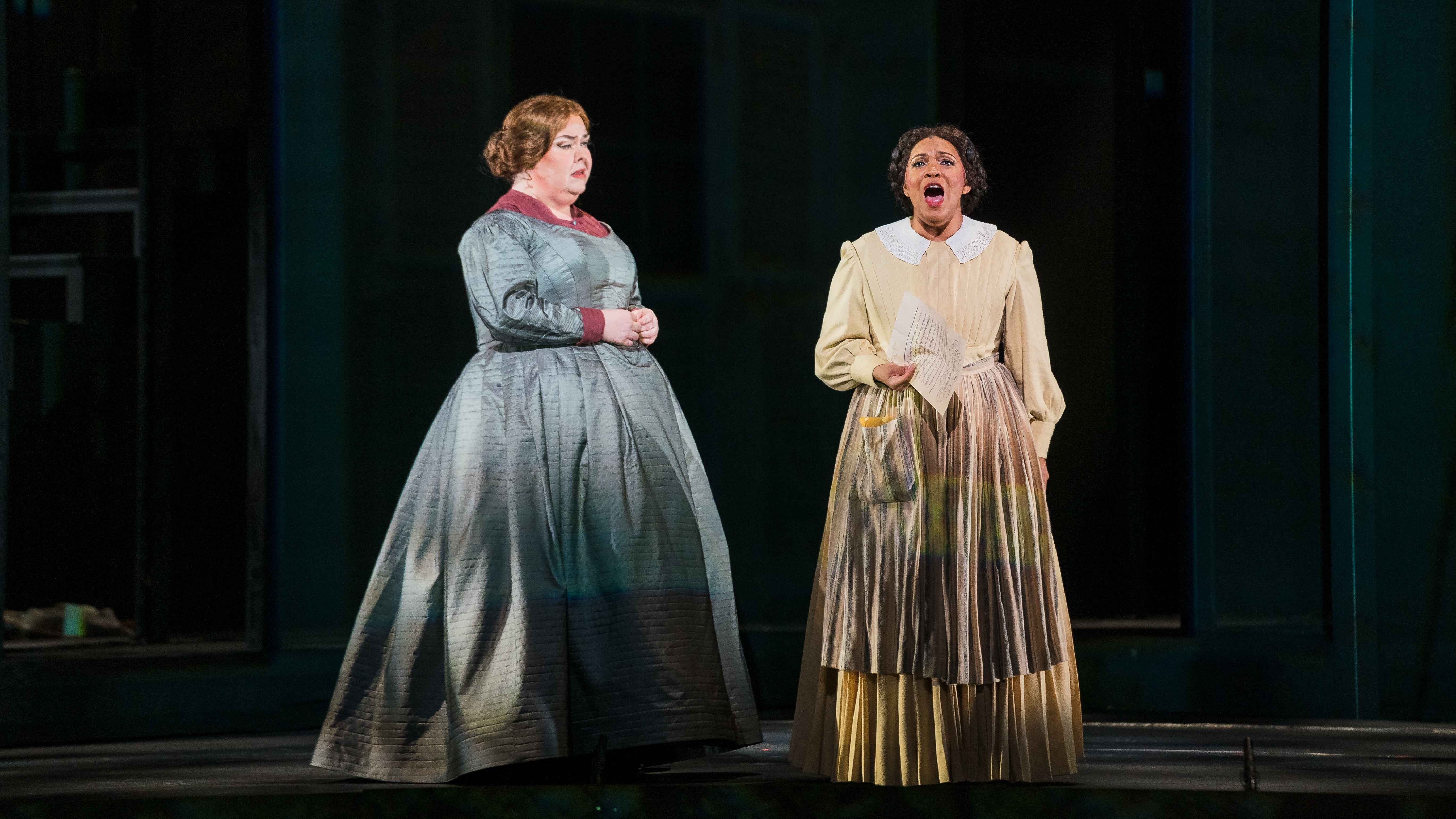
However, it is true that operas are most often sung in other languages, with French, Italian, and German dominating, since those three countries were the epicenter of the art form throughout most of its history. Still, you don’t need to Duolingo these languages before you come. Just angle your head up a little, and you’ll find an English translation projected onto a screen hanging over the stage.
Because they’re above the action, they’re called “supertitles” or “surtitles” rather than “subtitles,” which appear at the bottom of a movie screen. HGO was one of the first houses to employ the technology when it became available in the early 1980s. Today, they’re projected for every performance—even for operas or musicals in English. And if you’re interested in bringing your Spanish-speaking relatives, our annual Noche de Ópera performance features dual-language supertitles.
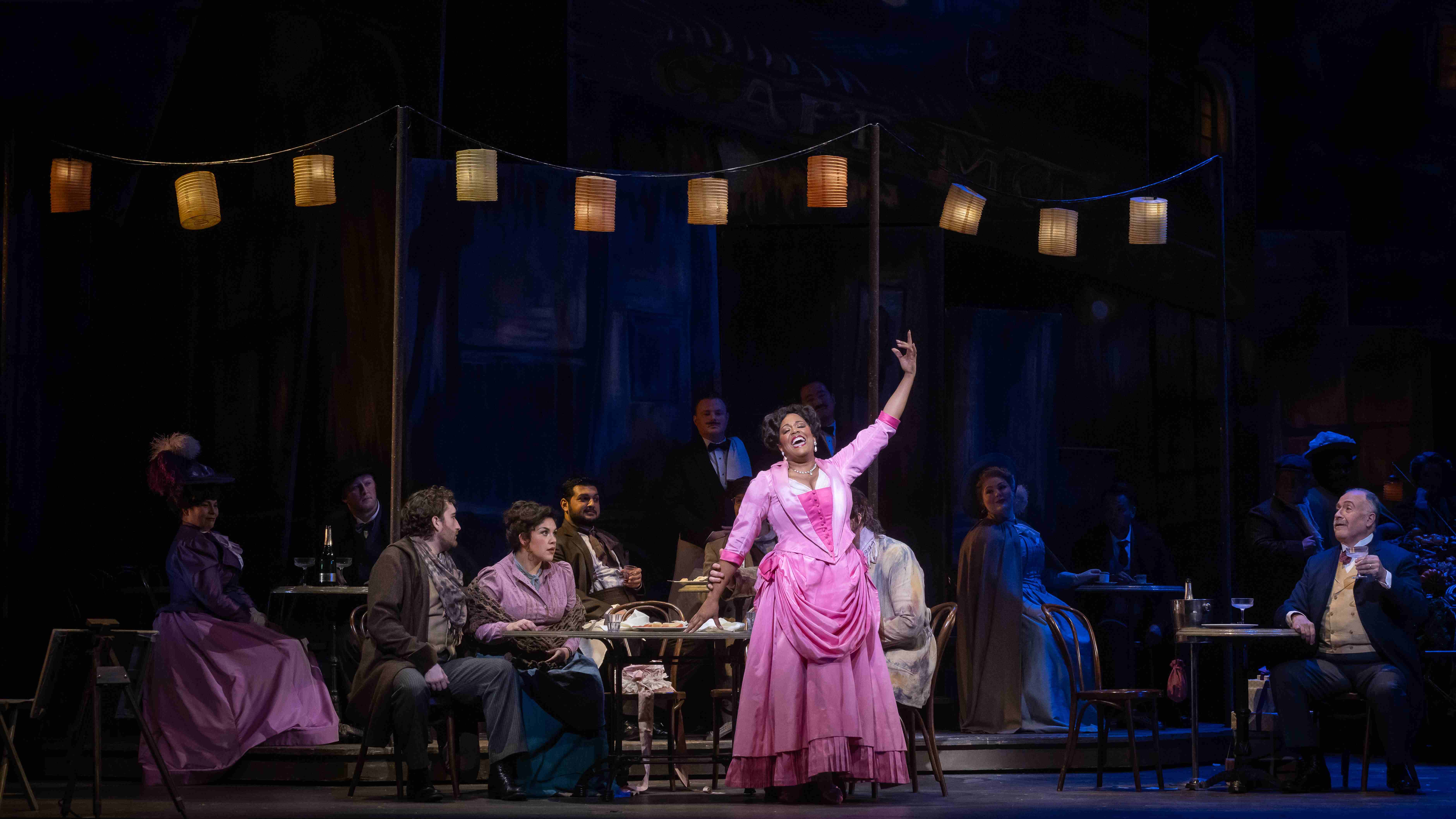
But, to be quite honest, a lot of the poetry of the original language is lost in translation, so supertitles don’t always do the libretto justice. If you come knowing the basic plot of the opera, it’s pretty liberating to forego the supertitles entirely and let the music and action speak for themselves. Plus, you’ll do your neck a lot of good if you’re not craning every few seconds to read yet another variation on “I love you so much.”
For patrons who are seeing-impaired, HGO offers complimentary descriptive services on request. Audiences are given special headsets to hear a trained employee read the supertitles and describe elements of the staging. For more information, call Customer Care at 713-228-6737 or email CustomerCare@HGO.org.