Opera and Soccer: The Triumphal Soundtrack to the World’s Best-Loved Sport

This past weekend, Curaçao lost to Germany 7-1 at NRG Stadium. It was the first time the tiny island nation in the Caribbean sent a team to the World Cup. One country that shockingly didn’t qualify this year (or the previous two World Cups): Italy.
Rewind two decades to July 9, 2006, the last time Italy won a World Cup. You might remember the infamous headbutt. With the score stuck at 1-1, the final between Italy and France went into overtime. At one point, France’s Zinedine Zidane rammed his noggin into the chest of Italy’s Marco Materazzi. He got his comeuppance—Italy won the penalty shoot-out, beating France 5-3.
Confetti canons exploded as captain Fabio Cannavaro lifted the trophy above his head, surrounded by his bouncing teammates. Over the speakers of Berlin Olympic Stadium blared a cheesy sports anthem titled “Stand Up” (its melody is actually taken from the Village People’s disco track “Go West”). When the song ended, a trumpet fanfare rose up over the crowd’s chants of “I-ta-lia, I-ta-lia!” The Italian fans in the stands instantly joined in, half-shouting, half-humming the familiar tune.
This piece isn’t the Italian national anthem, but it was written by an Italian: Giuseppe Verdi. The “Triumphal March” comes from the composer’s 1871 Aida, which Houston Grand Opera will stage in a new production this winter. In Act II, the Egyptian hero Radames returns victorious from battle, processing into Thebes with his army and their Ethiopian prisoners. It’s a scene of ceremonial pomp and splendor—a sequence of fanfares, proclamations, dances, and choruses that culminates in the iconic “Triumphal March.”
Verdi’s music has long been a rallying cry for Italians. Granted, scholars are still debating whether his operas played any part in the Italian unification movement. But eventually, choruses like “Va pensiero” from his 1842 Nabucco or “O signore, dal tetto natio” from his 1843 I Lombardi did indeed become potent symbols of Italian patriotism.
It’s no surprise, then, that the music of Italy’s national composer should serve as the soundtrack to their national sport of soccer—or calcio as they call it, meaning “kick.” The football club Parma Calcio 1913 was founded on the centennial year of Verdi’s birth. It was originally named for the composer, who was born in the northern province of Parma in 1813. While the team’s name has changed, they still play the “Triumphal March” when the players make their entrance onto the pitch. Verdi’s piece, a heroic processional that celebrates defeating an enemy, is a logical choice.
Fifty miles northeast of Parma, in fair Verona, fans of the club Verona Hellas have put their own lyrics to Verdi’s wordless march: “Alè, forza Verona alè, forza gialloblù.” Alè and forza (lit. “strength” or “force”) are equivalents of the English “let’s go” or “come on,” while gialloblù translates to “yellow-blue”—the team colors.
While Verdi doesn’t have any strong biographical connections to Verona, the city is home to the Arena di Verona, a Roman amphitheater where the composer’s operas are staged annually during the summer. In fact, like Parma’s football club, the Arena di Verona Festival was founded in 1913 to honor the Verdi centenary. One of its biggest draws is the massive Aida production by legendary film director Franco Zeffirelli.
That’ll do it for opera in soccer. But what about soccer in opera? Surprisingly, there are a couple operas about the sport. 2022 saw the world premiere of Gods of the Game by librettist Phil Porter and a team of five composers. The work is both “a glorious celebration and a bitter condemnation” of soccer, exposing the greed and corruption that run rampant in FIFA. (Coincidentally, the producers of Gods of the Game, Grange Park Opera, recently premiered John Tavener’s Krishna—an opera that will have its American premiere at HGO in Fall 2027.)
The other major soccer opera is Mark Anthony Turnage’s The Silver Tassie, from 1999. Based on a 1927 drama by playwright Sean O’Casey, it’s the story of an Irish footballer who’s left unable to play after he’s paralyzed during the Great War. The subject might call to mind Kevin Puts and Mark Campbell’s Silent Night, which HGO mounted this past winter. Set during the Christmas truces of World War I, there is a brief scene where Scottish, German, and French troops take a break from killing one other to join in a round of kickabout.
If you’re interested in introducing your own little soccer fan to opera, consider attending Storybook Opera this summer, presented by HGO’s Community and Learning department. A talented teaching artist will sing through the picture book World Cup Women, about the victorious 2019 U.S. Women’s National Soccer Team. Upcoming performances, which are intended for children grades Pre-K-2, are scheduled for July 8, 11, and 20.
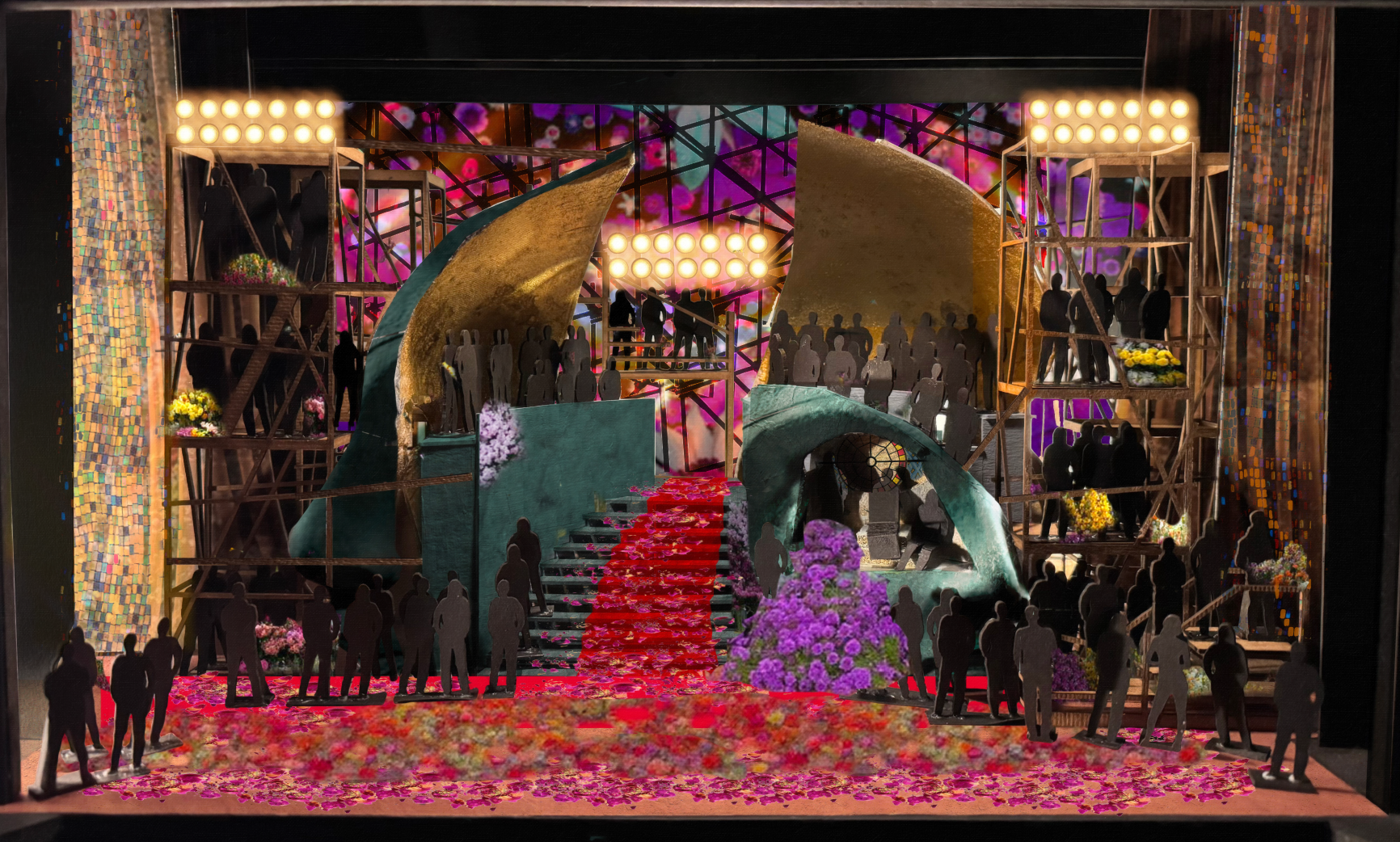
And if you’re eager to hear the HGO Orchestra play Verdi’s “Triumphal March,” single tickets to Aida are on sale now. While there won’t be any refs or goalies onstage, the sumptuous, flower-filled new production by director Kaneza Schaal will prove a spectacle worthy of the World Cup opening ceremonies. And in lieu of Shakira, HGO has assembled an all-star cast, including soprano Ailyn Pérez as Aida and tenors Jonathan Tetelman and Adam Smith sharing the role of Radames.