You Are An Artist Now

I spend my life traveling around the world listening to singers. Every year I hear thousands of voices. Sometimes I have the chance to speak with an artist afterward and share my thoughts. More often, I do not. The reflections that follow are the truths I have observed and the guidance I wish I could give every young singer I hear. They are shaped by the many vantage points I have held inside the opera world, as a singer, a casting manager, an artist manager and agent, and now as the Director of the Sarah and Ernest Butler Houston Grand Opera Studio.
Opera singers are artists. In that sense they stand alongside painters, dancers, actors, writers, and every other kind of creative maker. I am writing from the vantage point of opera, but these ideas apply wherever someone is trying to bring something true into the world. Art is art. The instrument changes, but the principles are the same:
When I listen to someone sing, I want to know technically how well they understand their own voice. I listen for an even sound from top to bottom, consistent support, healthy production, and a clear sense that the voice is sustainable, authentically produced and not imitated. Technique includes acting, movement, and musicianship. Clear physical choices, a defined character arc, a sense of musical style—all of these shape the foundation of the work. However, technique only matters insofar as it serves the artistic expression and perspective of the artist by bringing to life what lives in their artistic imagination.
Renée Fleming is a perfect example of the way technique and expression are tied together. She spent years in the practice room, patiently building a technique that was specific to her own instrument. She endeavored to create for herself a system that would allow maximum musical, emotional, and artistic freedom. Once her technique was solid, she could express anything she wanted. A strong technique gives you the ability to realize what lives in your imagination. Without that, the most profound artistic ideas stay trapped in your head and never breathe real life.
You cannot fake preparation. Preparation shows motivation, discipline, and respect for the craft. It is obvious when someone has lived with a role, slowly and patiently, and it is just as obvious when someone has rushed.
Many singers prepare with a microwave mentality. They cram, memorize the basics, and rush through the process. The result is uneven. Some parts are hot and overdone, other parts are still frozen and unusable. Nothing truly settles into the body.
Real preparation is more like a crock pot: slow, steady, and consistent. Each day you work, another layer of music, text, rhythm, intention, and character sinks deeper into your system. Over time the music is fully cooked, evenly flavored, and truly embodied. That kind of preparation allows you to live inside the piece rather than simply stand next to it and recite.
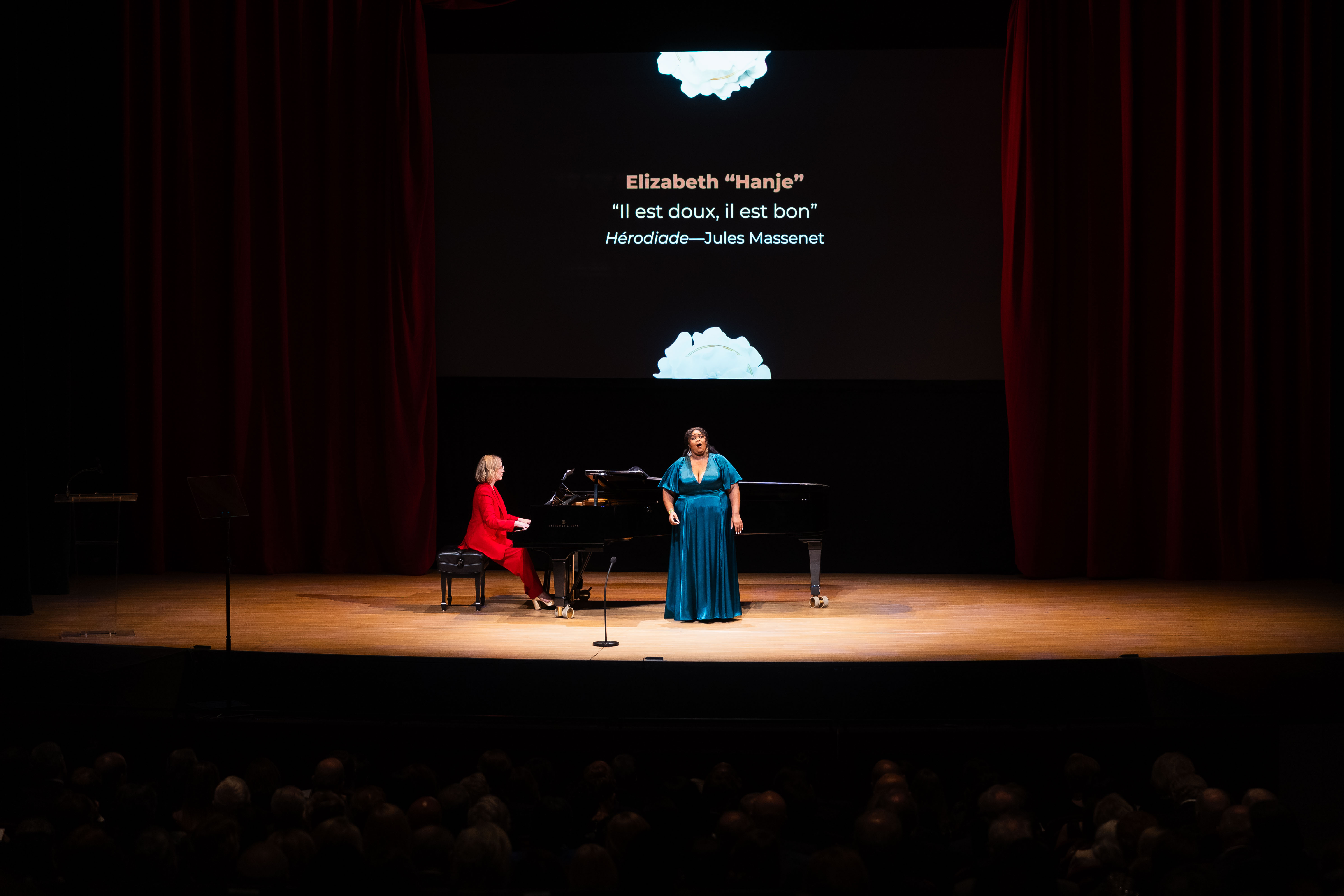
A common error I hear from young singers is this: I will really interpret later, once I am a professional. For now, I just need to get it right. This is a trap. You are an artist now. You do not need permission to be one if you have something to say. You do not need to wait for a contract or a title to begin embodying being an artist. The time to take ownership of your artistic perspective is quite literally now.
At the same time, you are never finished. Curiosity must stay alive for your entire career. The best artists are students forever, always striving for deeper truths, a better way to express or to tell the story. They keep asking how a phrase can be more true, how a choice can be more specific, how a character can be more alive.
Art is subjective. Many singers are secretly hunting for the one right answer and for someone to tell them they are correct. That longing for certainty can paralyze you. The more comfortable you become with the fact that there is no absolute right or wrong in interpretation, the more space opens for real artistry. People who succeed are the ones who bring a clear perspective instead of waiting to be told exactly what to do.
Art is about the human condition. You cannot say anything meaningful about life if you never truly live it. Seek out experiences. Listen to other people’s stories. Pay attention to lives different from your own. Nature, cities, friendships, conflict, joy, loss, boredom, tragedy, surprise—all of it becomes material for expression. You should know other art forms intimately. You should fill your eyes and ears with theater, painting, film, poetry, architecture, nature, human connections, street life, everything. The richer your inner world, the richer your work on stage.
I was deeply influenced early on by the way visual artists think about meaning, particularly the idea that every element of a work should serve a central message. In painting, each material is chosen for its relationship to the whole. Every brush stroke and color choice carries intention and contributes to the larger philosophical message of the piece. If an element does not advance that core, it does not belong. Beauty without meaning is empty. A work with no underlying purpose is not really art, it is decoration.
The same principle applies to music. Every sound, gesture, breath, and choice must serve something larger than itself. A gesture without a reason behind it looks fake. A high note or an ornament that appears only to impress is empty. But when a phrase grows from a character’s intention or need, when a gesture expresses a specific desire, when breath and body are aligned with what the person on stage wants, all of the elements begin to alchemize. The music, the text, the voice, the body, and the scenic world fuse into something larger than the sum of their parts. That is the alchemy of art. That is when audiences lean forward and cannot look away.
Bring us into your world. Lean into what makes you different. Your experiences, your questions, and your way of seeing the world are your most precious resources. Remember the famous Oscar Wilde quote: “Be yourself, everyone else is taken.” Every time I hear an audition, I am sincerely hoping the singer will be extraordinary. I actively hope to see something I have never seen before, have this artist show me something about a piece I have never conceived of before.
Opera is one of the most powerful ways humans have invented to tell stories. It is intimate and enormous at the same time. It can alter how an audience feels about the human condition in a single evening. We all share the responsibility for building the audience of the future. This work does not belong only to the companies, the press, the marketing departments. Artists who engage audiences—who make them feel, think and care—are the ones who secure the next chapter of this art form.
Do not be afraid to think differently. Many trailblazers were simply people who dared to imagine a story in a new way and then had the courage to follow that vision. Your interpretation may be the one that unlocks the piece for someone in the audience. Think boldly. Make a real case for why your way of telling the story reveals something essential.
Opera asks for full engagement of voice, body, mind, and soul. When solid technique, deep preparation, a sharp mentality, rich experience, and intentional artistry alchemize and come together, they create something that can change people. That is the level you should aim for. Your perspective is your truth. Your voice is valid. Step into your work with courage and clarity. We are waiting for you to show us what only you can do.