Treasures from the HGO Vaults: Meredith Monk’s ATLAS

In the 1980s, Houston Grand Opera General Director David Gockley continued to lead the company forward with the goal he had established the previous decade: to make HGO a powerhouse of contemporary American opera. One of Gockley’s most daring accomplishments was to bring the repetition-driven musical style of minimalism into the mainstream by commissioning and reviving works by John Adams and Philip Glass.
But the greatest risk Gockley took during the ’80s was to approach the unclassifiable interdisciplinary artist Meredith Monk. A composer, director, choreographer, filmmaker, and singer, Monk was primarily known for her works of abstract music theater, as well as the inhuman vocal techniques she developed over her career. In 1985, Gockley invited Monk to lead the young artists of the HGO Studio (now Butler Studio) in a performance of her 1979 Dolmen Music.
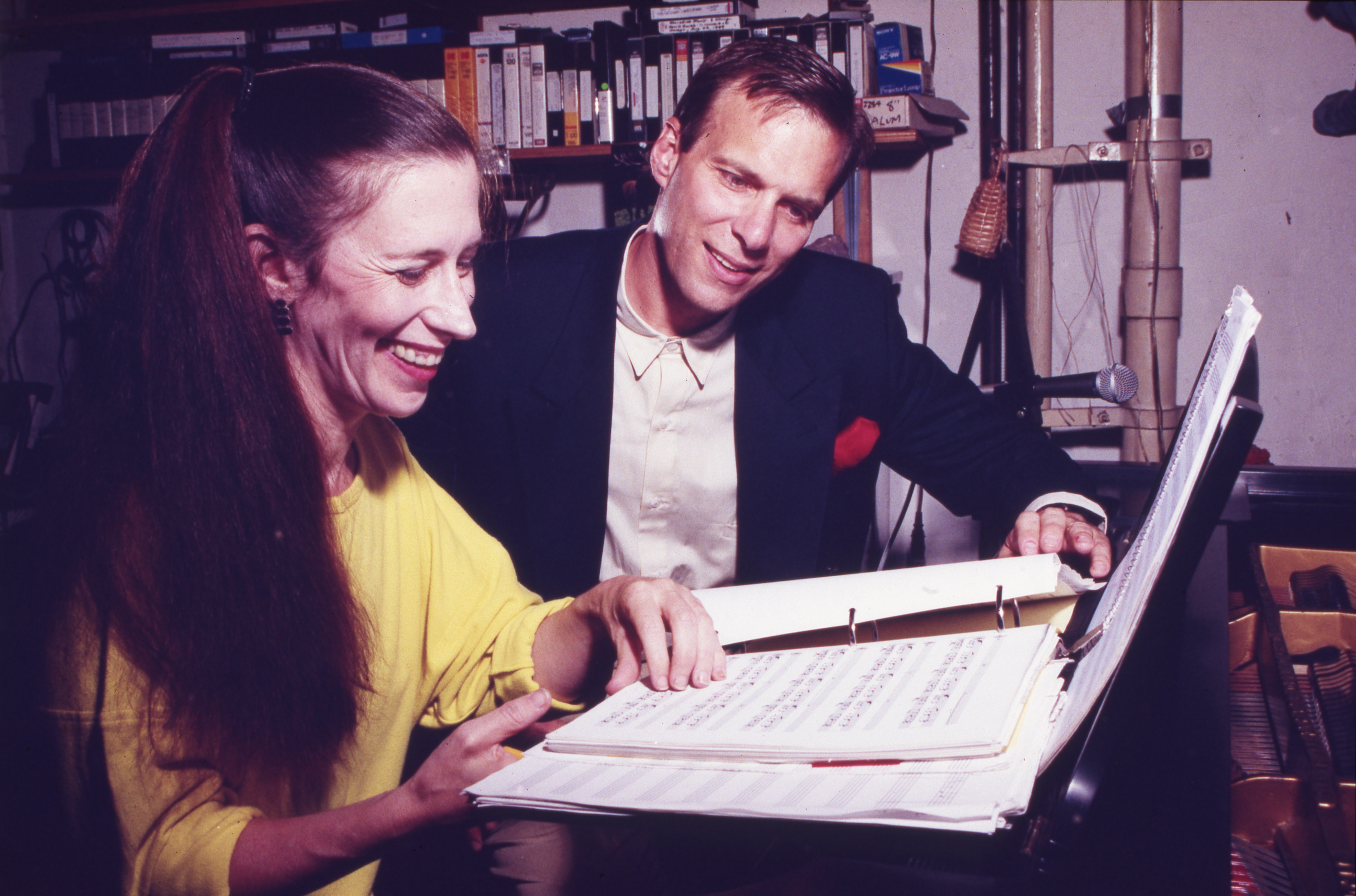
That same year, Gockley—who “was interested to see if classically trained singers could perform my music,” as Monk recalls—commissioned a full-scale opera from the composer. The resulting work, Monk’s 1991 ATLAS: an opera in three parts, is the most radically experimental of the nearly 80 world premieres HGO has mounted since 1974. “Being totally devoted to the idea of opera as a living form,” writes Monk of Gockley, “he was very open to my notions of process, ensemble work, and nonverbal text.”
Indeed, ATLAS strays far from traditional concepts of “opera.” While it has a loose plot, the story is told primarily through wordless vocalizing, instrumental music, images, stylized gestures, and dance. Often, ATLAS verges on the ceremonial, with narrative action replaced by static tableaux or ritual movements. Visual, musical, and theatrical elements interact with one another in a way that is often bewildering, sometimes comical, but always sublime.
As the title implies, ATLAS is an operatic journey around the earth. But it also charts the metaphorical journey of the soul. In many ways, the opera reflects Monk’s own personal quest—especially her exploration of the human voice. By bringing together instruments and vocal techniques that exist in different cultures, Monk speaks a musical language that transcends cultural differences and reaches directly to the emotions.
HGO World Premiere Cast and Creative Team
Alexandra at 13: Dina Emerson
Alexandra from 25-45: Meredith Monk
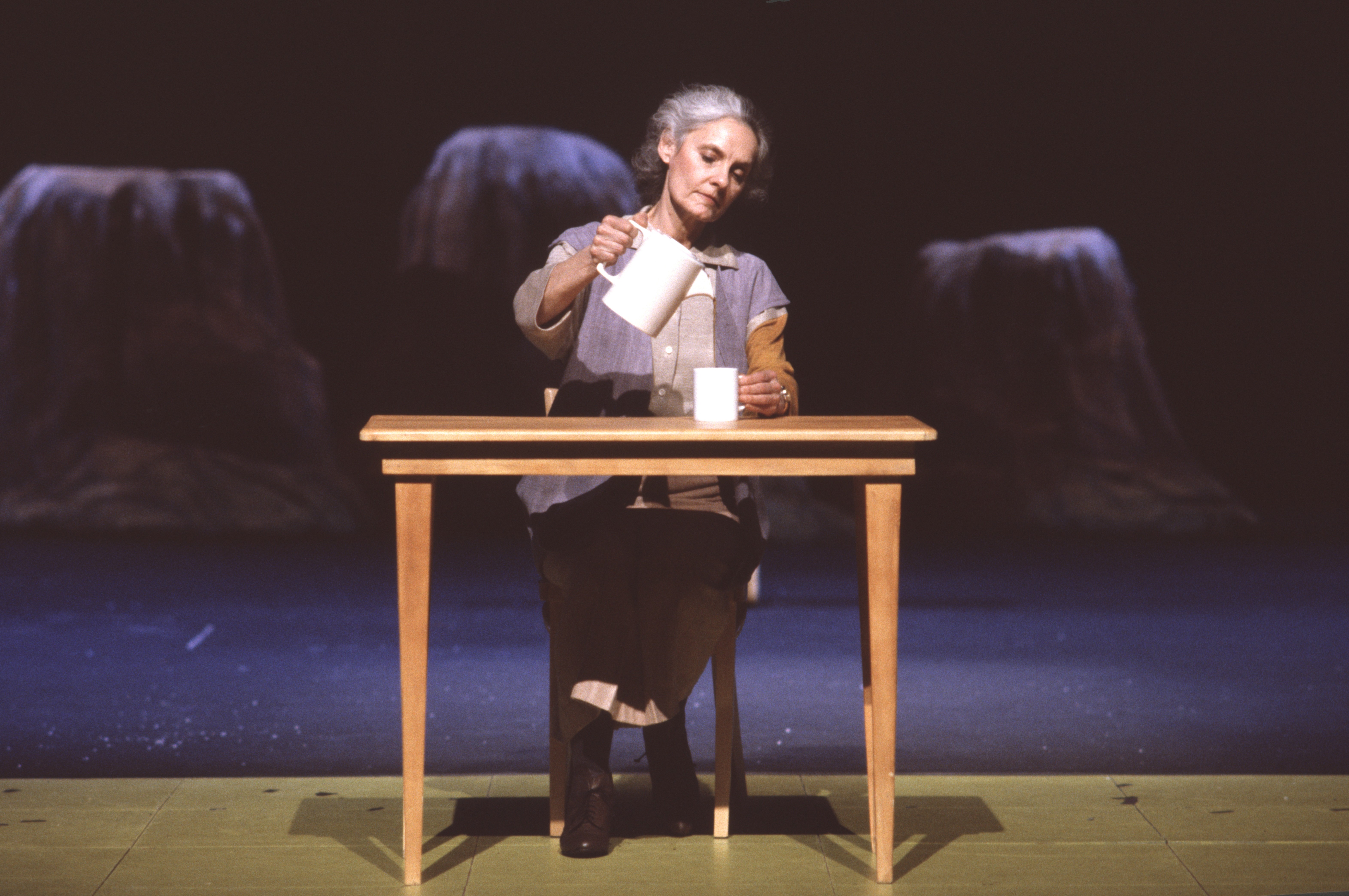
Alexandra at 60): Sally Gross
Mother: Wendy Hill
Father: Thomas Bogdan
Guide (Female): Allison Easter
Guide (Male): Ching Gonzalez
Chen Qing: Chen Shizheng
Erik Magnussen: Robert Een
Franco Hartmann: Stephen Kalm
Gwen St. Clair: Dana Hanchard
Vocal Ensemble: Carlos Arévalo, Victoria Boomsma, Janis Brenner, Dina Emerson, Emily Eyre, Katie Geissinger, Wilbur Pauley, Randall Wong
Director: Meredith Monk
Associate Director: Pablo Vela
Choreographer: Meredith Monk
Musical Director and Conductor: Wayne Hankin
Costume Designer: Yoshio Yabara
Set Designers: Debby Lee Cohen and Yoshio Yabara
Most of the same cast recorded ATLAS on the ECM label in 1992. Certain numbers were cut for this recording, but are available on two separate albums: “Long Shadows” and “Arctic Bar” are found on Monk’s Facing North (ECM) while “Return to Earth” appears on Musica Sacra’s Of Eternal Light (Catalyst).
Part I: Personal Climate
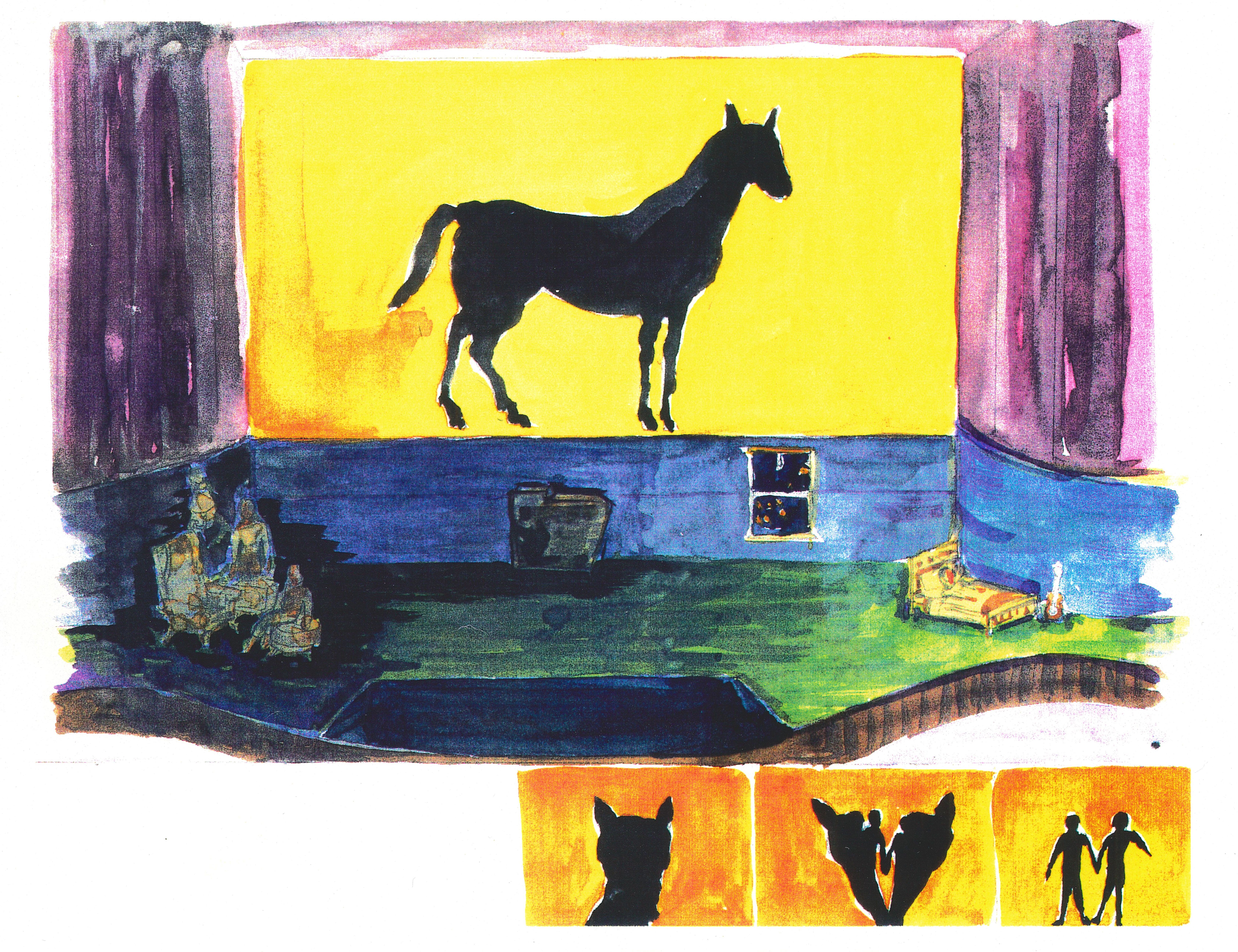
Thirteen-year-old Alexandra Daniels lives with her parents in a suburban home. Alone in her bedroom, she gazes out the window, longing for adventure. Her parents worry about her future, realizing their little girl will leave them one day. Alexandra sits on her bed and strums her guitar. Suddenly, she experiences a vision: a silhouette of a horse’s head splits open to reveal two Spirit Guides. She takes this as her call to journey out into the world. Carrying her suitcase, she departs.

Now a young woman, Alexandra prepares for an expedition. But first she must assemble a team of fellow explorers. She interviews Cheng Qing from China and Erik Magnussen from Norway, who are both accepted. The boastful Italian Franco Hartmann, however, is rejected. Alexandra, Cheng, and Erik set off for the airport. As the three wait expectantly for their flight, Alexandra’s Spirit Guides watch her in the form of airline employees.
Part II: Night Travel
The explorers visit an agricultural community whose members teach the trio their ways. Franco has followed them here, and when he asks Alexandra to reconsider her decision, she allows him to join the group. The explorers later huddle around a campfire at night, gradually leaving Cheng alone. A hungry ghost appears and attempts to suck Cheng’s life force, but he recites a magical incantation to protect himself.
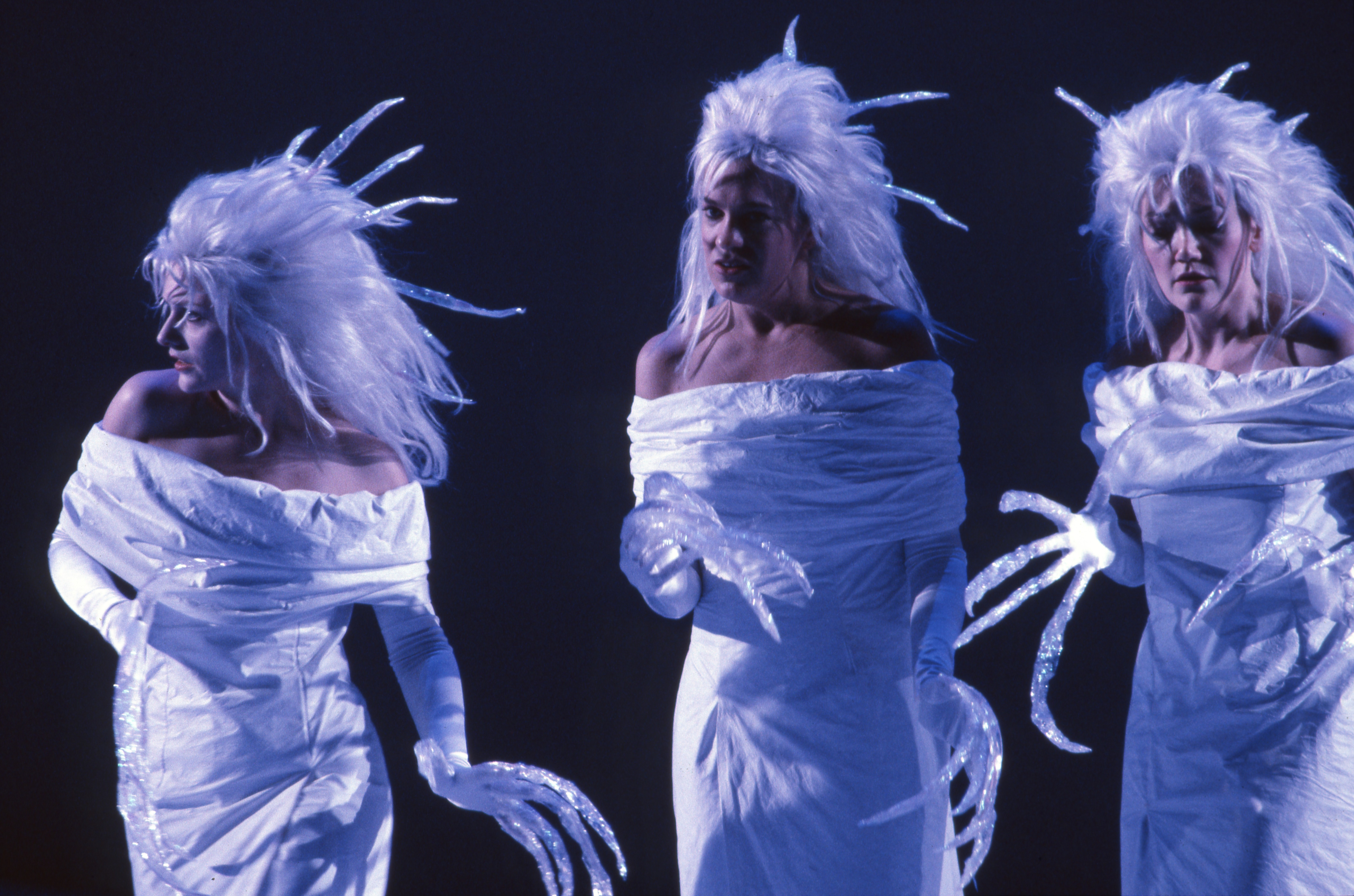
Now in the arctic, the explorers enter a bar and learn songs and dances from the locals. Among the bar’s clientele is Gwen St. Clair, who hails from the Caribbean island of Monserrat. She, too, joins the band of explorers. While Franco is alone in the snowy wilderness, he is attacked by Ice Demons, who freeze him. His friends come upon his cold body and warm him back to life. Led by the Spirit Guides, the explorers train in various exercises before marching off in a procession.
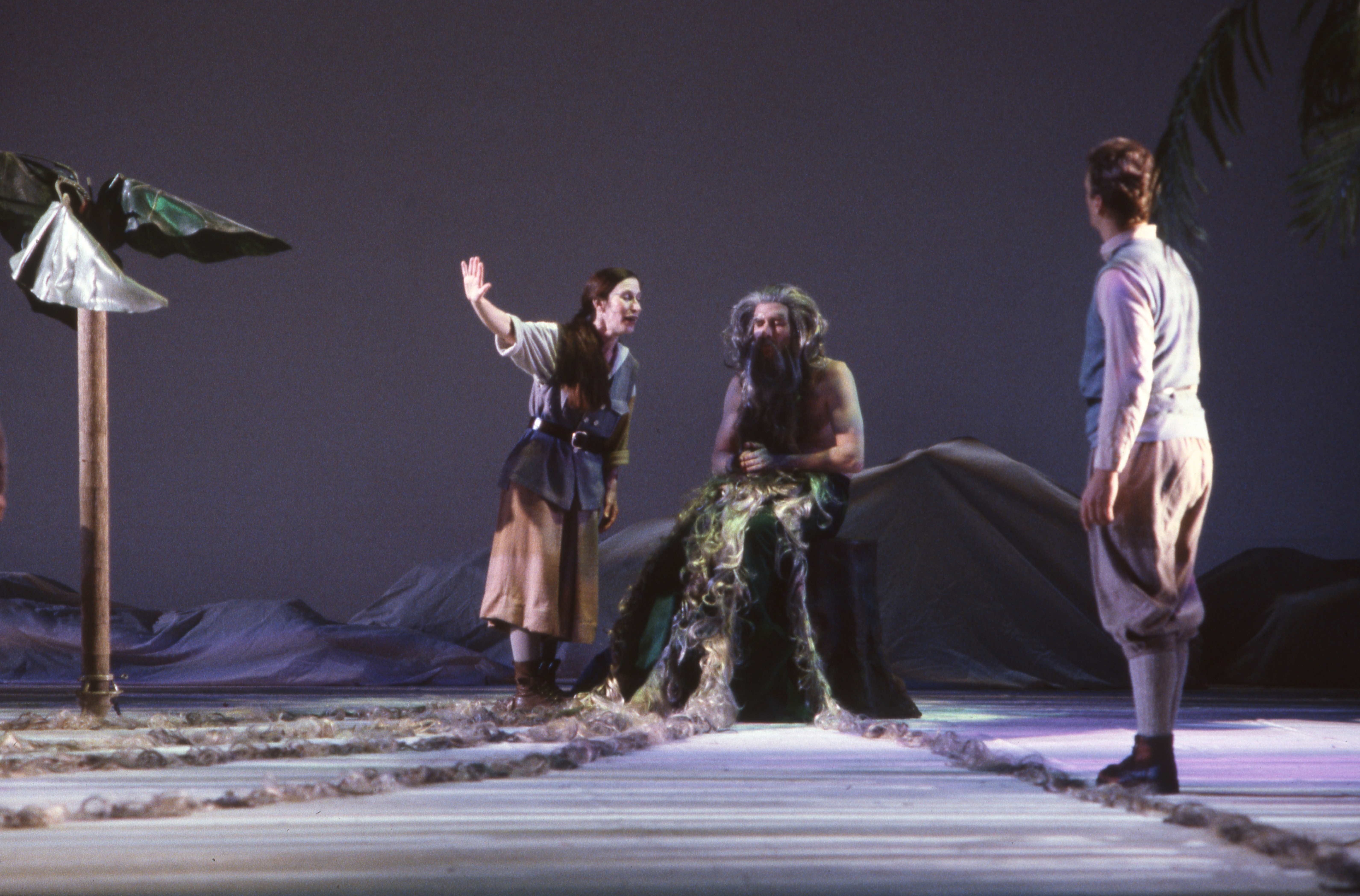
Alexandra encounters a Lonely Spirit, whom she comforts. But when the explorer tries to leave, she finds herself separated from her companions by an invisible barrier. Only through great effort is she able to free herself. The explorers then travel to a rainforest, where they seek wisdom from an Old Man. They ask him questions, but only Alexandra can understand his ancient language.
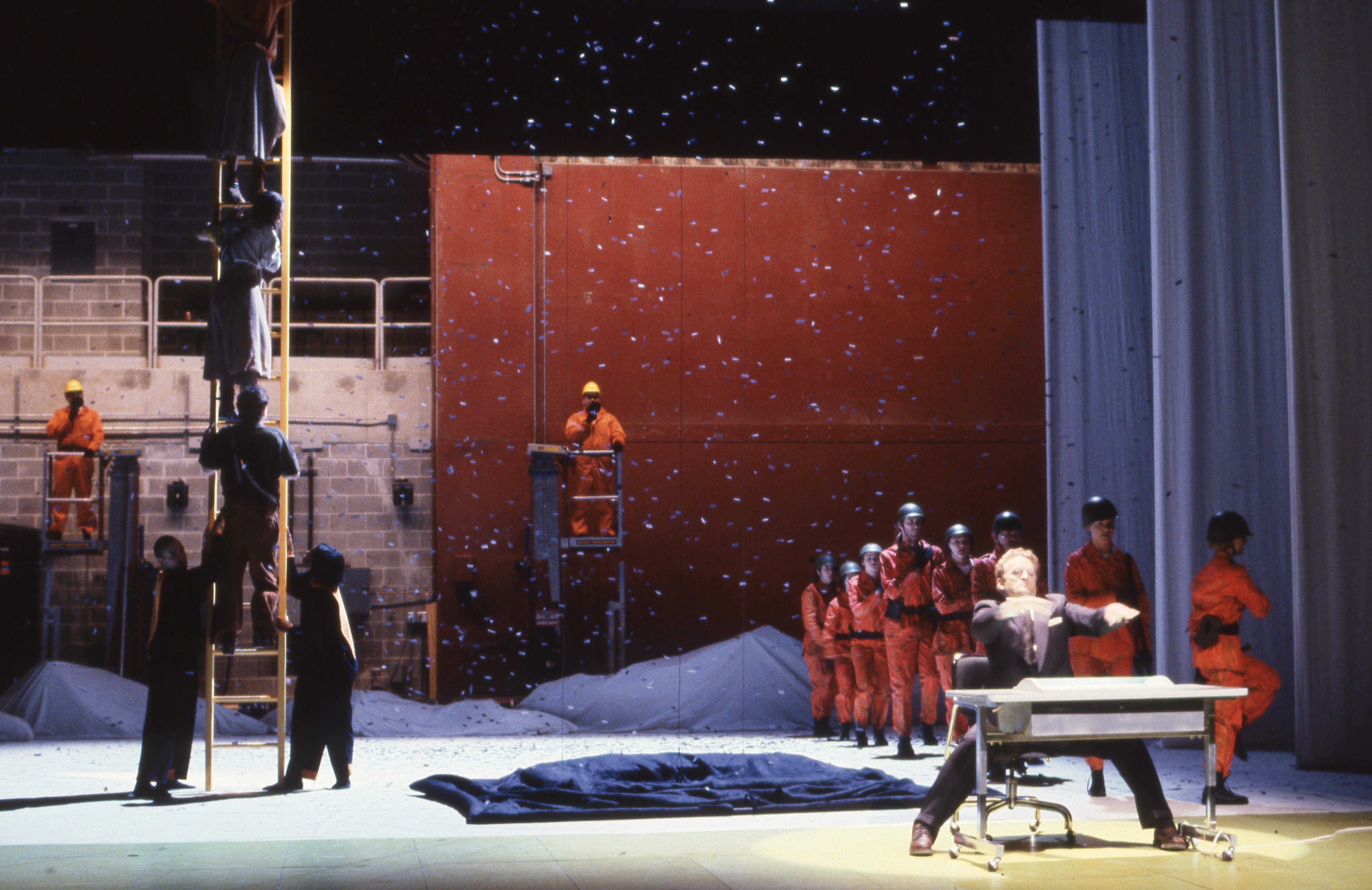
The explorers, now in a desert, have aged. Gwen prophesies a terrible calamity, and her colleagues fight among themselves. Unable to continue this life, Erik abandons his companions and takes an office job that drives him to insanity. As a military-industrial complex takes over, the remaining explorers escape via a ladder to the sky.
Part III: Invisible Light
In a realm of Invisible Light, the explorers and Spirit Guides commune. Viewing the earth from above, they pay tribute to its beauty. Alexandra’s companions then bid her farewell. Now aged 60, Alexandra sits at a table and drinks a cup of coffee and reflects on her eventful life while her Spirit Guides and younger selves look on. “What has seemed to be the depiction of an expedition has become the inner journey of a soul.”
Creators of opera have long been fascinated by the figure of the explorer. During the baroque era, conquerors like Alexander the Great, Julius Caesar, and Hernán Cortés were favorite operatic subjects. These works depicted campaigns in faraway lands like India, Egypt, or Mexico. Yet there was almost no attempt on the part of baroque composers to imitate non-Western music, which was largely unknown to Europeans.
During the 19th century, explorer operas offered an opportunity for composers to indulge in exoticism, dreaming up their own versions of non-Western music that bore little resemblance to authentic traditions. Examples can be found in Giacomo Meyerbeer’s 1837 Vasco da Gama, with its thoroughly French “Indian March,” and Alberto Franchetti’s 1892 Cristoforo Colombo, with its fanciful evocations of indigenous Taíno music. The titular explorers in these works, standing in for European operagoers, encounter alien peoples whose strangeness is marked by vaguely foreign-sounding music.
Following the World Wars, such blatant exoticizing became unfashionable. Increased contact with different cultures and greater access to their music sparked a genuine desire on the part of composers to research and accurately represent non-Western music. Likewise, the explorer figure in opera evolved from a conquering colonizer to a curious traveler, open to experiencing other cultures on their own terms.
For instance, in his 1981 opera Donnerstag aus Licht, composer Karlheinz Stockhausen sends his hero Michael on a musical journey around the earth. Portrayed by an onstage trumpet player rather than a vocalist, the character makes stops in Europe, North America, Asia, Africa, and the Middle East. At each locale, Stockhausen’s score emulates the music of these regions, including Japanese, Balinese, and Indian classical traditions. Michael can be seen as a representation of late-20th-century composers, who embraced humanity’s rich musical diversity like intrepid sonic explorers.
In the vein of Stockhausen’s Michael, Monk created her own sonic explorer in the form of Alexandra Daniels, the heroine of ATLAS. The character was inspired by a real-life Belgian-French explorer named Alexandra David-Néel. A former opera singer, David-Néel converted to Buddhism and studied the religion across Asia, especially in Tibet. She immersed herself in Tibetan language, culture, and faith, even meeting the Dalai Lama and receiving the title of lama.
Monk became fascinated by David-Néel after reading her 1929 Magic and Mystery in Tibet. “I remember thinking to myself, ‘Somebody should make a film about this woman, or somebody should do an opera about this woman,’” Monk said in an interview. However, rather than dramatize David-Néel’s biography in ATLAS, the composer decided to use this extraordinary woman’s life “as a jumping-off point and a prototype of this idea of exploration, following your path no matter how strange it may be.”
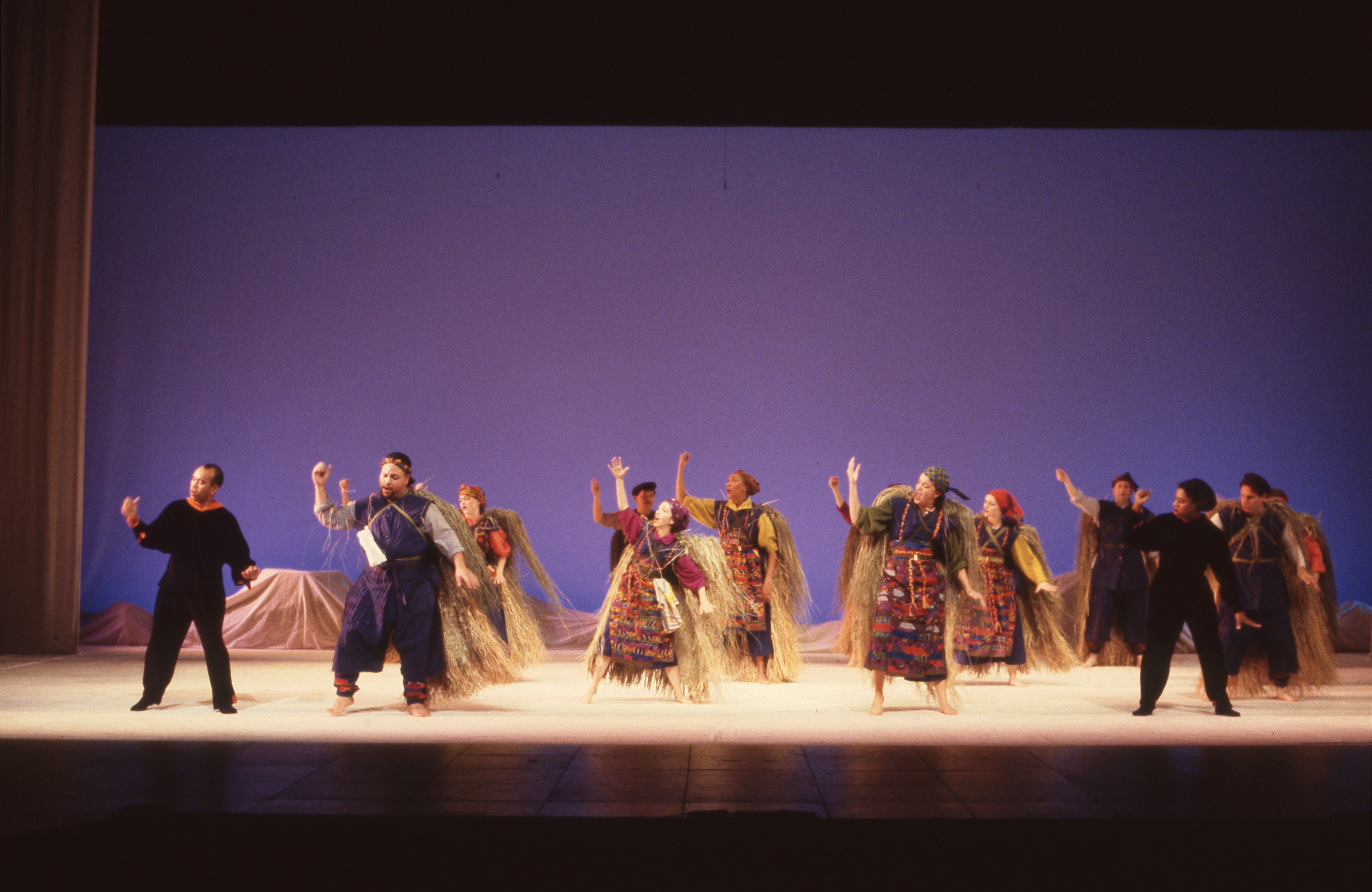
Like David-Néel, Monk’s character Alexandra seeks wisdom from the people she meets on her adventures around the world. No specific country is ever named. But the sparse set designs by Debby Lee Cohen and Yoshio Yabara for the HGO world premiere evoked diverse locations both on and beyond Earth: a farming region, the arctic, a rainforest, a desert, and eventually a celestial plane. Cohen and Yabara often used the vocal ensemble as “set pieces.” The singers carried palm trees for the rainforest scene, for instance, and wore straw coats that resembled hay bales for the “Agricultural Community” scene.
In Monk’s operatic atlas, we can see reflected the concept of the “global village”—a sense of living in a new interconnected world where mass communication brings different cultures in contact to one another. The 1980s, when Monk wrote ATLAS, was also an era of rising multiculturalism—especially in Houston, which experienced a huge influx of immigration during this decade. Between 1980 and ’90, the city’s Hispanic population increased from 17.6% to 27.6% while the Asian population doubled from 2.1% to 4.1%. Houston’s hometown opera company was therefore the ideal setting for the world premiere of ATLAS in 1991—a multicultural opera for a multicultural city.
But it should be stressed, Monk’s work is more than a superficial “It’s a Small World” trip around the world, with tokenized representations of various nations. On the contrary, her score fully integrates instruments and vocal techniques found in non-Western traditions. But more importantly, Monk combines these elements into a musical-theatrical language that rises above cultural differences.
Instead of starting from a libretto, Monk began ATLAS in 1987 as a series of modular musical pieces, unconnected to any fixed plot. “I didn’t even have the complete narrative structure at the time I was auditioning,” she explains. “I basically chose the human beings that I was interested in working with. And then, that influenced how I built the narrative structure.” Singers were chosen based on their ability to communicate and work within an ensemble. In particular, Monk sought vocalists “who were adept at and comfortable with integrating singing with movement and acting.”
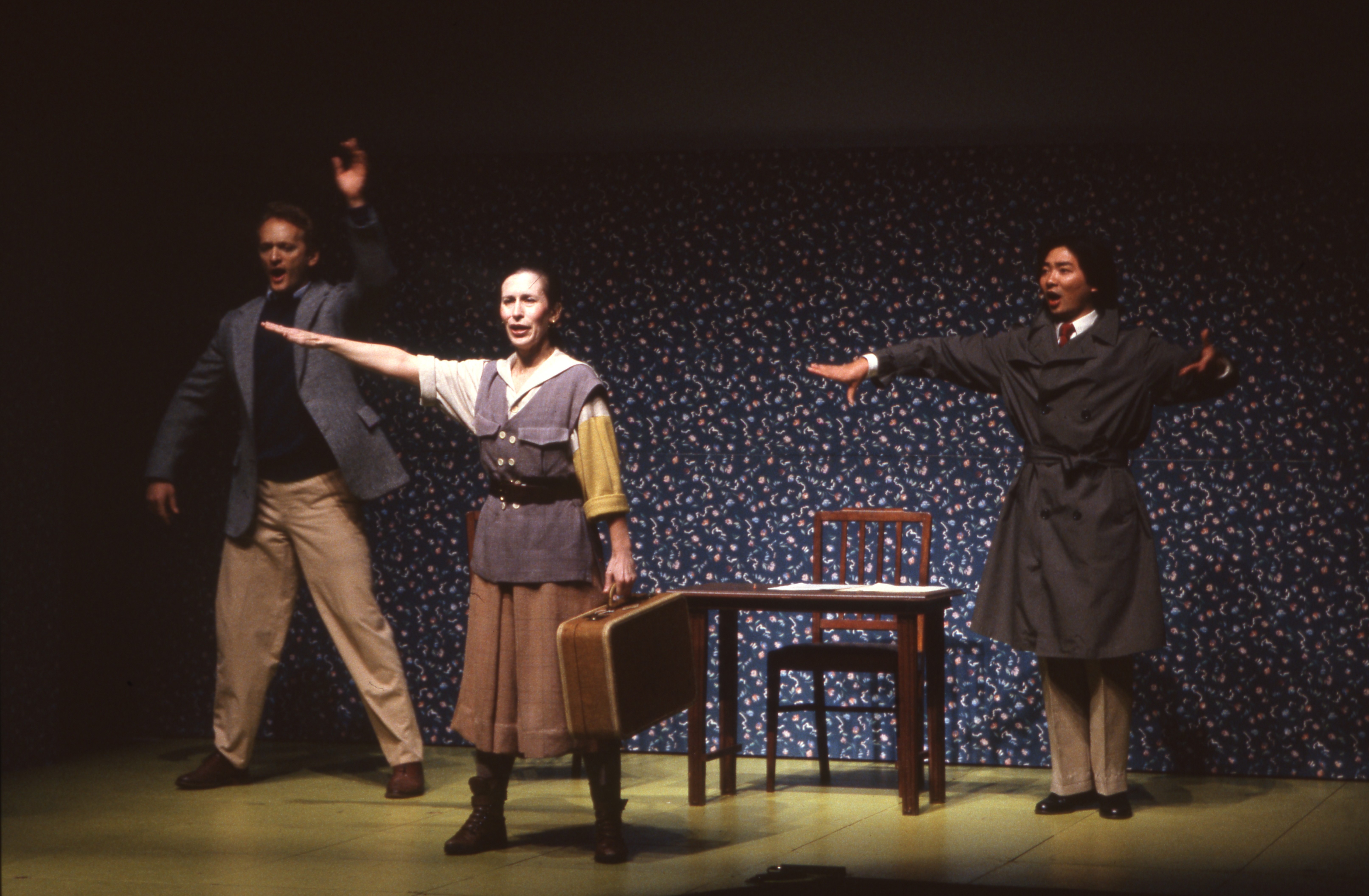
In fact, Monk’s audition process seems to be depicted within the opera itself. During the “Choosing Companions” scene, Alexandra selects the explorers that will join her on her voyages. Only, she’s less focused on their bravery and survival skills than on the kind of criteria Monk sought in her ATLAS cast. Chen and Erik are accepted after performing robust vocal solos accompanied by their own individualized movements, but Franco is rejected for his dreadful singing and motionless “park-and-bark” stance. In this scene, we can see how Alexandra serves as a kind of alter ego for Monk, who played the role herself in the HGO premiere.
Monk typically develops her musical ideas using improvisatory methods. As Wayne Hankin, the music director and conductor of ATLAS, explains, “She doesn’t come in with something completely finished, but comes into rehearsal and tries out the work piece by piece, giving every possibility a shot.” Yet for ATLAS, Monk had to produce a more-or-less fixed score, at least for the instrumentalists to rehearse from.
She was assisted by Hankin, who assembled her sketches and orchestrated the work based on Monk’s specifications. For the instrumental ensemble, the composer limited herself to a small group of approximately 10 players, including strings, clarinet, horn, keyboards, and percussion. (Monk revised the score with expanded instrumentation when ATLAS was revived for a performance by the Los Angeles Philharmonic in 2019.)
Supplementing the standard orchestral instruments are a handful of non-Western specimens. For instance, the overture to ATLAS opens with a chord on the sheng, a Chinese mouth organ reminiscent of a harmonica. The player blows through a mouthpiece and air passes through a bundle of vertical bamboo pipes. Perhaps in a nod to Alexandra David-Néel, whose Tibetan explorations inspired the opera, Monk includes a Tibetan singing bowl in the two “Rite of Passage” sequences.
During the “Desert Tango” of Part II, Monk evokes a Middle Eastern setting with rhythms on the doumbek goblet drum of Arabic folk music. This scene also features a medieval shawm, the predecessor of the modern oboe. However, paired with the doumbek, it’s likely meant to stand in for the Egyptian mizmar—another conical double reed akin to the shawm.
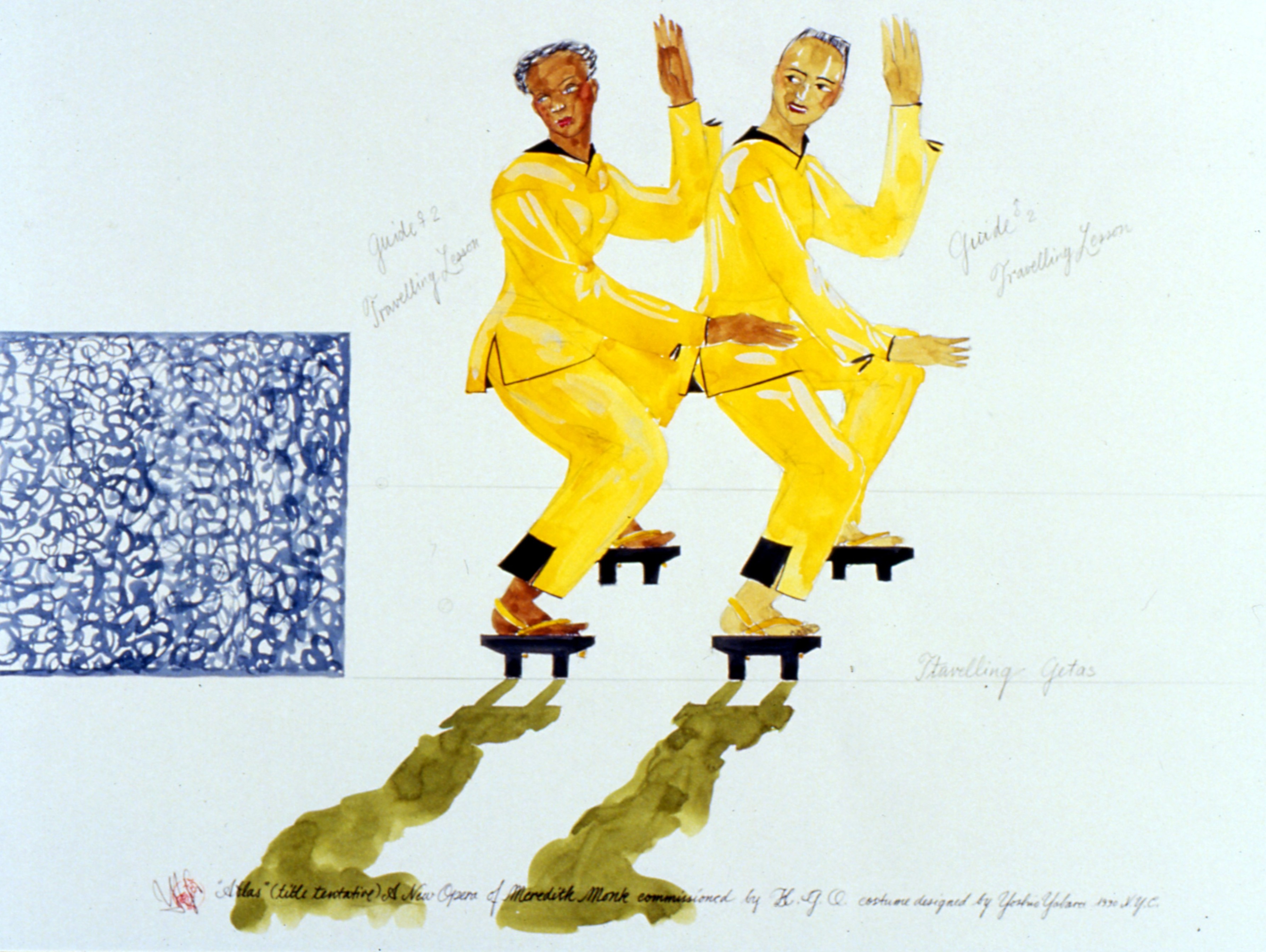
By far the most unusual non-Western “instrument” in Monk’s ensemble isn’t an instrument at all. Part II features an interlude titled “Guides’ Dance” in which the Spirit Guides perform a kind of clogging routine wearing Japanese wooden sandals known as geta. The rhythm of their clip-clopping, which is meant to imitate a horse’s hooves, is notated in the score—as if the footwear were percussion instruments played with the feet.
While Monk incorporates instruments from China, Tibet, the Middle East, and Japan (if we count the geta as instruments), there aren’t any obvious spots in the score that come off like intentional evocations of these cultures' musical traditions. To be sure, Monk is influenced by what she refers to as “ethnic music.” There are passages that are reminiscent of Native American, African, or East Asian music, especially since Monk favors pentatonicism—a system of five-note scales found in disparate musical traditions across the globe. But these references to non-Western music are assimilated into her own personal brand of minimalism.
While Monk objects to the label, there’s no denying that her style bears a resemblance to the minimalist works of composers like Philip Glass and Steve Reich. For each scene of ATLAS, Monk establishes an ostinato—i.e. an instrumental or vocal pattern that cycles continuously. These often serve a pictorial function. The ambulatory string ostinato in “Choosing Companions,” for instance, evokes walking, while the rollicking piano/cello ostinato in “Agricultural Community” imitates the motion of farm tasks like scything or threshing.
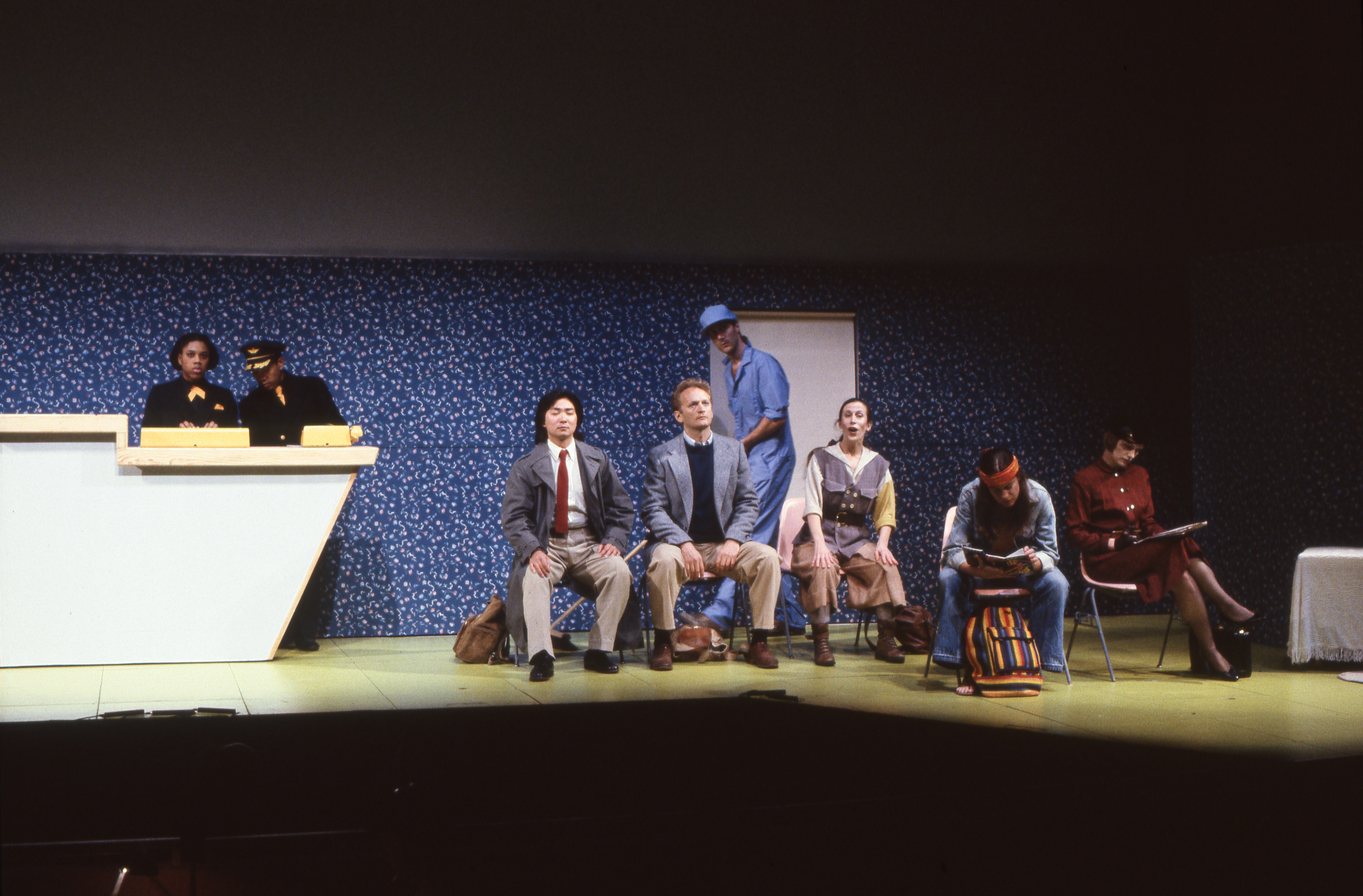
Beginning with this “base” ostinato, Monk layers on new ostinatos, gradually building up a complex musical structure. There’s a striking example in the “Airport” scene, which begins with a staccato piano/viola ostinato that scurries up and down. Monk adds more layers than usual here in order to musically conjure the bustle of a busy airline terminal. Among these ostinatos are monotone vocal lines marked “like a telegraph,” sung on the syllables “dih” and “dit.” Although these Morse code patterns reference a bygone technology, they seem to nod at the themes of global communication and interconnectivity that are found throughout ATLAS.
Even if such ostinato structures resemble those found in minimalism, Monk draws a distinction between her music and that of her minimalist colleagues: “I use instrumental repetition more as a carpet for the voice to fly off—to fly from and back into.” In other words, Monk’s ostinatos aren’t the “main event” in her music; they serve as the backdrop—the “carpet” in her words—for her arsenal of non-standard vocal effect. Referred to as “extended techniques,” these methods of singing allow Monk to wordlessly communicate with her audiences, ultimately transcending the need for language.
There is very little intelligible text in ATLAS. Of the few lines of English in the libretto, most are spoken. The vast majority of singing—especially in the vocal ostinatos—is done on syllables that recall the “sha-na-na” and “oo-la-la” choruses of pop songs. This isn’t to say that Monk’s syllables are meaningless. While they don’t have the same semantic specificity of language, they still communicate a message in combination with the music and the extended vocal techniques Monk employs.
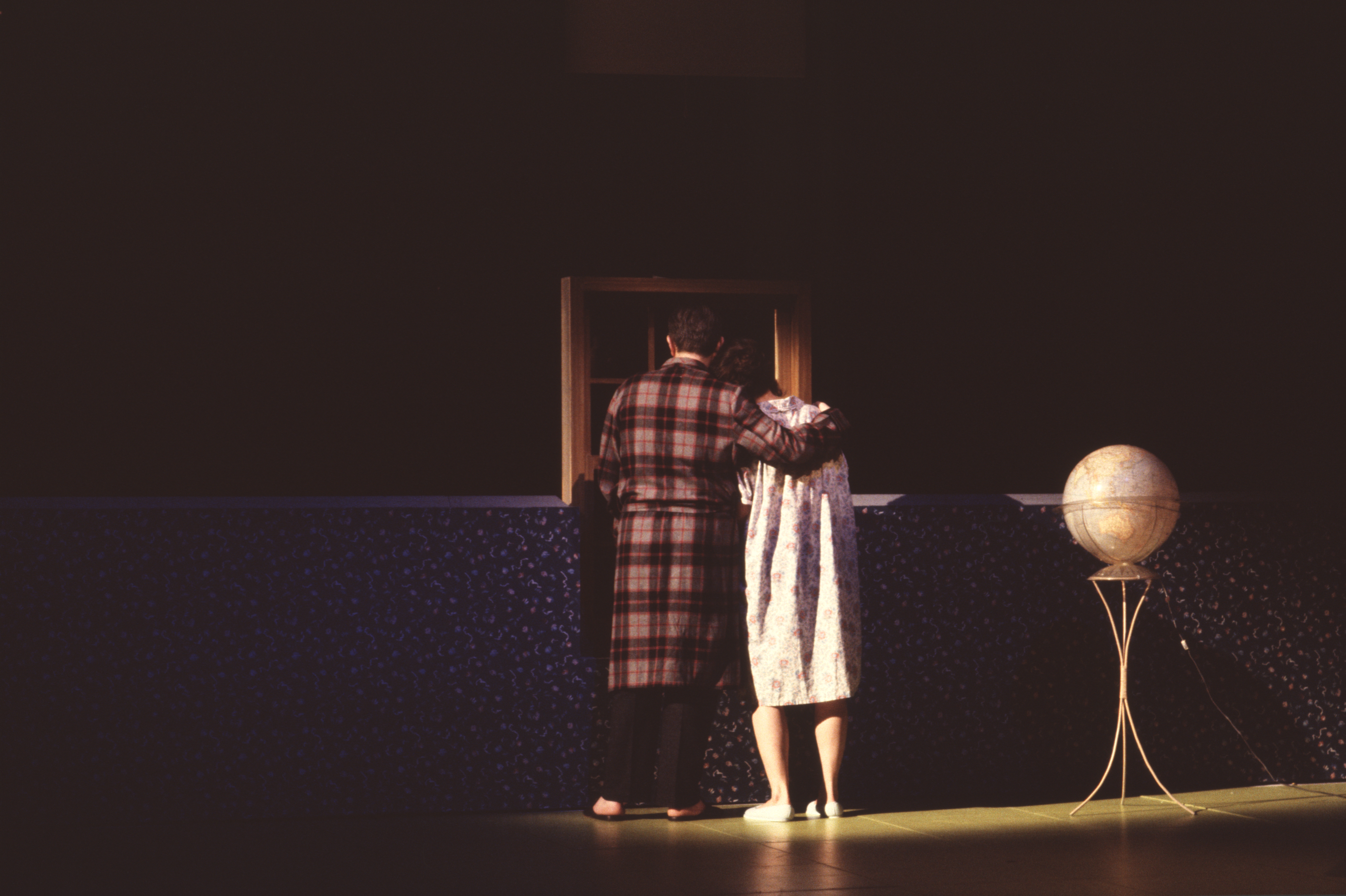
The “Loss Song” performed by Alexandra’s parents in Part II offers a poignant example. Saddened by the departure of her daughter, Mother sings a doleful, descending ostinato in D-minor—a key associated with mourning in the classical repertoire. As the song continues, her vocal line approaches genuine crying, including sobbing syncopations and wailing leaps to high C. For Father’s dotted rhythms in his upper register, the soloist is instructed to sing slightly sharp, producing a kind of whimper. While these weeping effects are sung only on the syllables “ah” or “hah,” they wordlessly convey the character’s deep sorrow.
In a handful of scenes, Monk even invents her own languages by combining syllables that imitate the cadence and rhythm of speech. In “Hungry Ghost,” the titular spirit executes squeals, growls, and goat trills (i.e. rapid repetitions of a single pitch) on phrases like “qui ah behle yohl wih yi” that suggest some otherworldly language. Cheng responds with his own language of stammering strings of syllables like “ta kos,” “doh,” and “skilik” that are supposed to represent a magical incantation he recites to protect himself. Combined with the stage action, the meaning of these imaginary languages is made clear to the audience.
“The vocal lines themselves define the situations and reflect the emotions of the characters,” writes Monk in her program note for the HGO world premiere. Further statements from the composer help to illuminate what she calls her “distrust for text”:
“For me, we can make theatrical language that’s universal. … Art really speaks from heart to heart; it can eloquently communicate the deepest human mysteries and insights, regardless of differences in culture and language. … People can respond directly, without having to go through language.”
This search for universality can also be found in Monk’s use of extended vocal techniques, which she discovered also exist across cultures:
“I realized that when you work with your own instrument, you come upon these things that exist transculturally. It’s really exploring what your own instrument can do. In some ways it’s a wonderful thing, because you become part of the world—what I would call the world vocal family—just by working with your instrument in a non-Western way.”
As an example, Monk points to the glottal break, which is found “in yodeling, Balkan music, African music, North Carolina hollarin’.” This technique appears in ATLAS during Gwen’s prophecy in the “Desert Tango,” where the soloist is instructed to execute enormous leaps as “glottal breaks between low and upper notes.” We might also consider Monk’s use of overtone singing in the two “Rite of Passage” sequences. The composer stumbled upon this technique naturally, but she later learned that it exists in Mongolian khoomei throat singing and Tibetan Buddhist chant.
In ATLAS, then, Monk transcends divisions in language and culture, seeking a universal form of opera that can be understood by all. It’s fitting, then, that Part III of the work takes place in “a pure realm of Invisible Light” beyond Earth. The emphasis is almost exclusively on the human voice in this final portion of the opera, which is performed mostly a cappella. Monk employs musical techniques that demand a tight unity of voices: canons (i.e. musical rounds), hockets (i.e. melodies divided among interlocking voices), mantra-like chants, and mosaic-like assemblages of ostinatos.
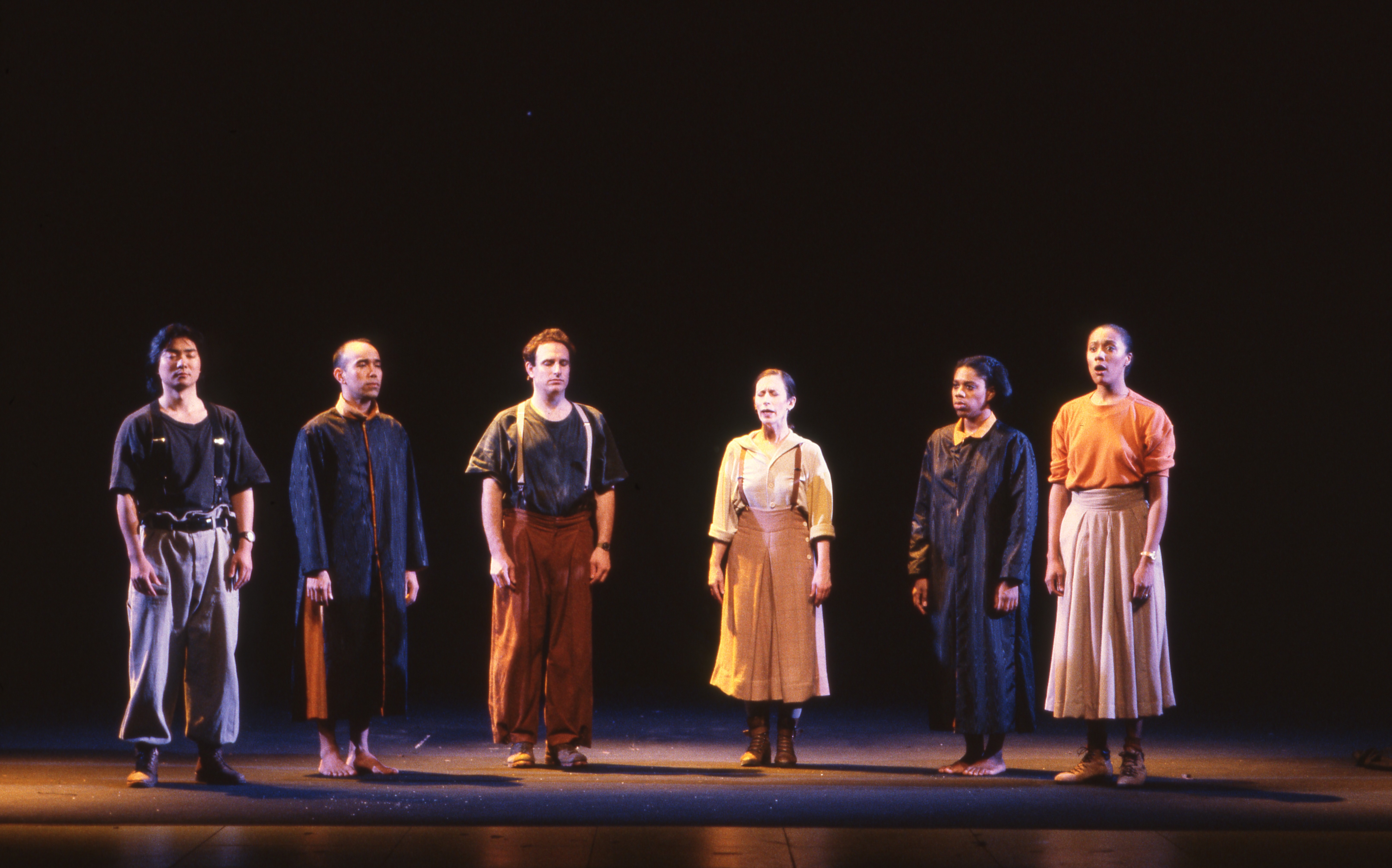
No soloist stands out in these vocal structures—in this extraterrestrial paradise, the explorers, Spirits Guides, and ensemble members lose their individual identities and become part of an integrated whole. Their music, which is meant to evoke the motion of planets, takes on a spiritual dimension—ethereal, untethered, and transcendent. In the opera’s final scene, where an elderly Alexandra sits and reflects on her life, it becomes clear that her journey—like every human being’s—has been an inner one.
“In ATLAS,” writes Monk in her HGO program note, “travel is a metaphor for spiritual quest and commitment to inner vision. ATLAS is about the idea of search—the quest for meaning and transcendence.”