The Power of Three
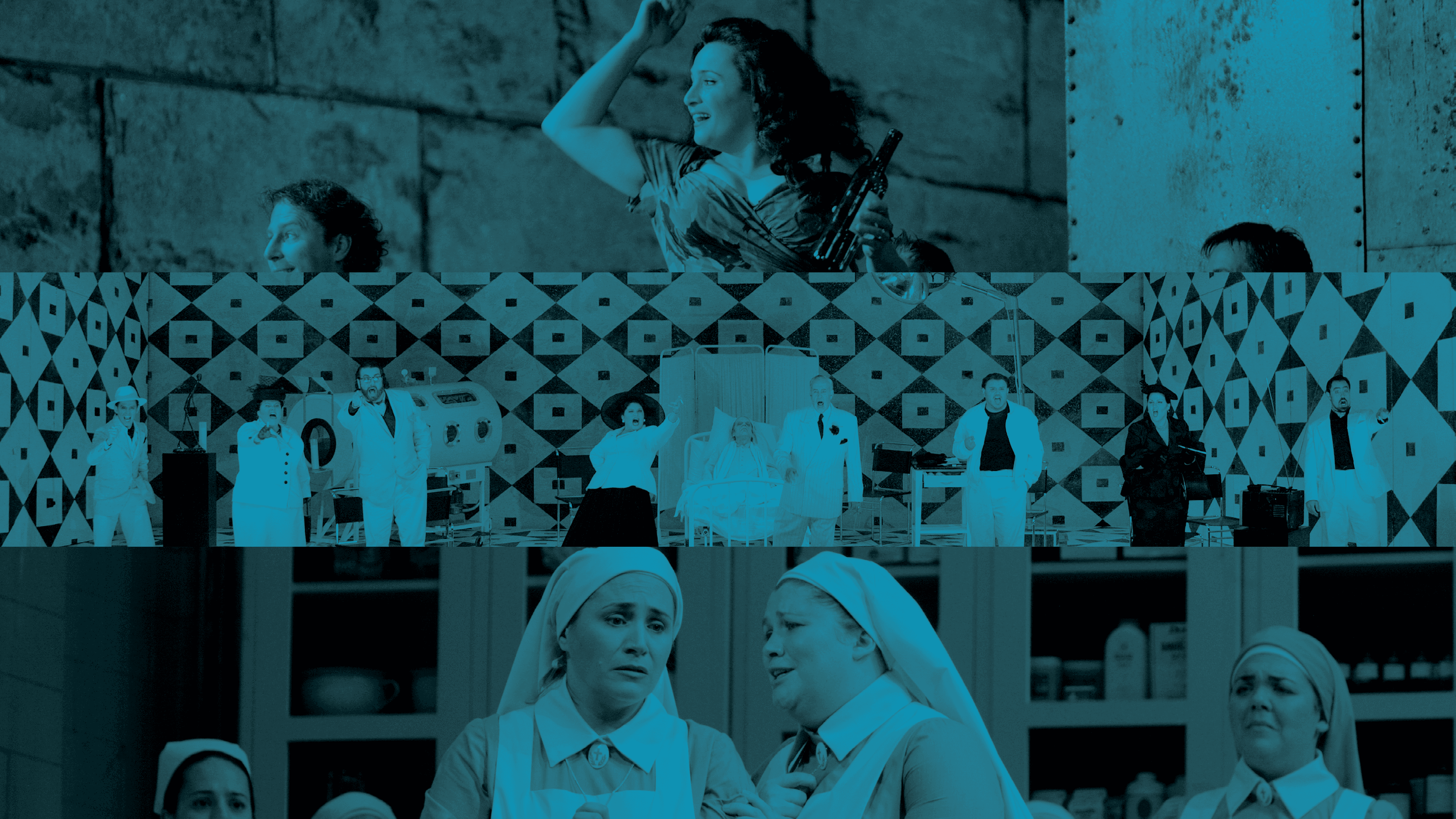
In the perennial tale, A Christmas Carol by Charles Dickens, there are good reasons that Ebenezer Scrooge is visited by three ghosts instead of two or four, just as there are three daughters of Tevye who marry in Fiddler on the Roof. There is a famous artistic “power of three” that aligns with the one inevitability we all share: past, present, and future.
The power of three is tested and proven by one of the greatest of operas, Giacomo Puccini’s transcendent Il trittico. After a quarter century of trying, sometimes quietly, occasionally vehemently, but constantly working to bring this magnificent opera to HGO, I am finally able to conduct it in its first full performances by the company. It arrives in my own final season as the company’s Artistic and Music Director, and I could not be more thrilled.
Is it true, as I’ve said perhaps too often, that Trittico is the “greatest” Italian opera? An opera is great when it fulfills and exceeds its own ambitions, but is Trittico somehow greater than Verdi’s Otello, or Donizetti’s Lucia di Lammermoor, or Rossini’s Barber of Seville? Of course, all of these are great operas, but Trittico has something in addition to each of them that makes it unique: it is an homage to all of the Italian operas which came before it, and the plot motivations of Otello, Lucia, and Barber are all within it.
Trittico was Puccini’s last completed work, and to experience it at all is rare. It was, unknowingly for him, the soft end of an era, since his final opera Turandot, which he did not live to complete, remains the last Italian opera to be regularly performed. The long century of Italian opera’s cultural dominance stretched from Rossini’s Barber, which premiered in 1816, right after the Congress of Vienna re-ordered Europe following the Napoleonic Wars, to Trittico, in 1918, as World War I was ending.
Though composed of three one-act operas, Trittico was conceived all of a piece. In English, “trittico” is best translated as triptych, as in a three-part altarpiece. But there are many other historical associations with the power of three, everything from children’s stories like Goldilocks and the Three Bears to the founding histories of nations: “life, liberty, and the pursuit of happiness” in the U.S. Declaration of Independence, “liberté, égalité, fraternité” in France, and Julius Caesar’s famous veni, vidi, vici.
But there’s more: Puccini’s Trittico is also a modern telling of one of the seminal works of Italian literature, Dante Alighieri’s grandly poetic vision of life after death, Divina Commedia (The Divine Comedy). Dante’s epic 14th-century poem is itself a trittico comprised of three books: Inferno, Purgatorio, and Paradiso. These are represented in Puccini’s Trittico by the emotional hell of Il tabarro, the endless waiting purgatory of Suor Angelica, and of course, the heavenly laughter of Gianni Schicchi. A passing reference in the Thirtieth Canto of Dante’s Inferno provided the germ of the comic plot of Gianni Schicchi, and Dante also gets the final mention of the work, as Gran Padre (great father). Opera is the main remnant of the Florentine and Venetian empires, so the great city of the Renaissance, gorgeous Florence, is ultimately the star of Gianni Schicchi.
And there is still more! Trittico was also, at least in retrospect, Puccini’s reaction to the horrors of what we now call World War I, though during Puccini’s life the conflict was known simply as the Great War, because no one could imagine anything worse, and no one knew what was coming within 20 years. When Trittico was commissioned by the Metropolitan Opera, funded by Italian immigrants to the U.S., the war in Europe had no end in sight, and the unbearable reality was setting in: row after endless row of caskets unloaded from every train in every European station. Small churchyard cemeteries were filled with men born in the 1890s—with a few unimaginably young, with birthdates of 1900. American deaths in WWI totaled over 53,000, a number that feels small now only because of the horrible numbers that came later: over 400,000 lost in WWII and nearly 58,000 in Vietnam.
The scale of youthful death was too much to grasp, so Puccini conceived the large-scale arc of Trittico: three diverse operas that each held within them a powerful unifying theme: the effect of a single death on those left alive. Two of the three are children: the infant child of Michele and Giorgetta, whose death destroys their marriage, and the son of Sister Angelica, a child who passed from this world without ever seeing the eyes of his mother. The deceased in Gianni Schicchi, the much-sung-about Buoso Donati, is similarly unseen, though in some productions his body is carried off, allowing an actor—or, in many companies, a patron who has purchased their stage debut—the opportunity to momentarily play dead.
Puccini went by his instincts and generally avoided intellectualizing, which has left a constant temptation to portray him as somehow less profound than Wagner or Verdi, in whose shadow he rose. Indeed, his fellow Italians, mourning the death of Verdi in 1901 as the peninsula had mourned very few in its history, turned their eyes toward Puccini to carry the Verdian mantle of Italian pride. But because of the non-Italian settings of Manon Lescaut, La bohème, and Girl of the Golden West, Puccini was criticized for lacking Italianità. And further, because of the appeal of his operas to women, the misogyny of his era labeled him a lightweight, a view of Puccini that lingers to this day in music’s most intellectual spheres. As a young conductor, I remember saying to an older colleague how much I loved Trittico and other Puccini operas, and he said to me with gravity, “Don’t let anyone hear you say you love Puccini; they won’t take you seriously.”
As Puccini aged, his projects got further apart. Following his string of early successes, some time passed before his next opera, a commission from the United States: La fanciulla del West (The Girl of the Golden West), was, like Butterfly, based on a successful play by David Belasco, and it had a phenomenally successful world premiere at the Metropolitan Opera in New York in 1910 starring Emmy Destinn and Enrico Caruso, conducted by Toscanini. Many consider Fanciulla to be Puccini’s most adventurous score, even as it has never garnered the wider public of Puccini’s more famous works. It did, though, establish the composer’s connection to New York City and to what was then still considered the “new” world. Puccini, like Rachmaninoff and a few other of their contemporaries, was out of step with the avant-garde compositional vogues like the Second Viennese School or France’s Les Six, and he held on to melody and traditional harmony as others moved beyond them. Audiences were what Puccini understood, and they loved his operas from the start, but he did have an ambition also to be accepted by the critical currents of his time. Yet the more popular he became with audiences, the more critics were wary of him.
For Monte Carlo, in 1917, Puccini composed La rondine, a successful attempt to capitalize on the operetta craze of the early 20th century, and this total beauty is still occasionally revived, if not often enough. The composer’s most experimental and innovative creation followed a year later: the trio of operas that gave the clearest indication of the directions he might have taken had he lived longer.
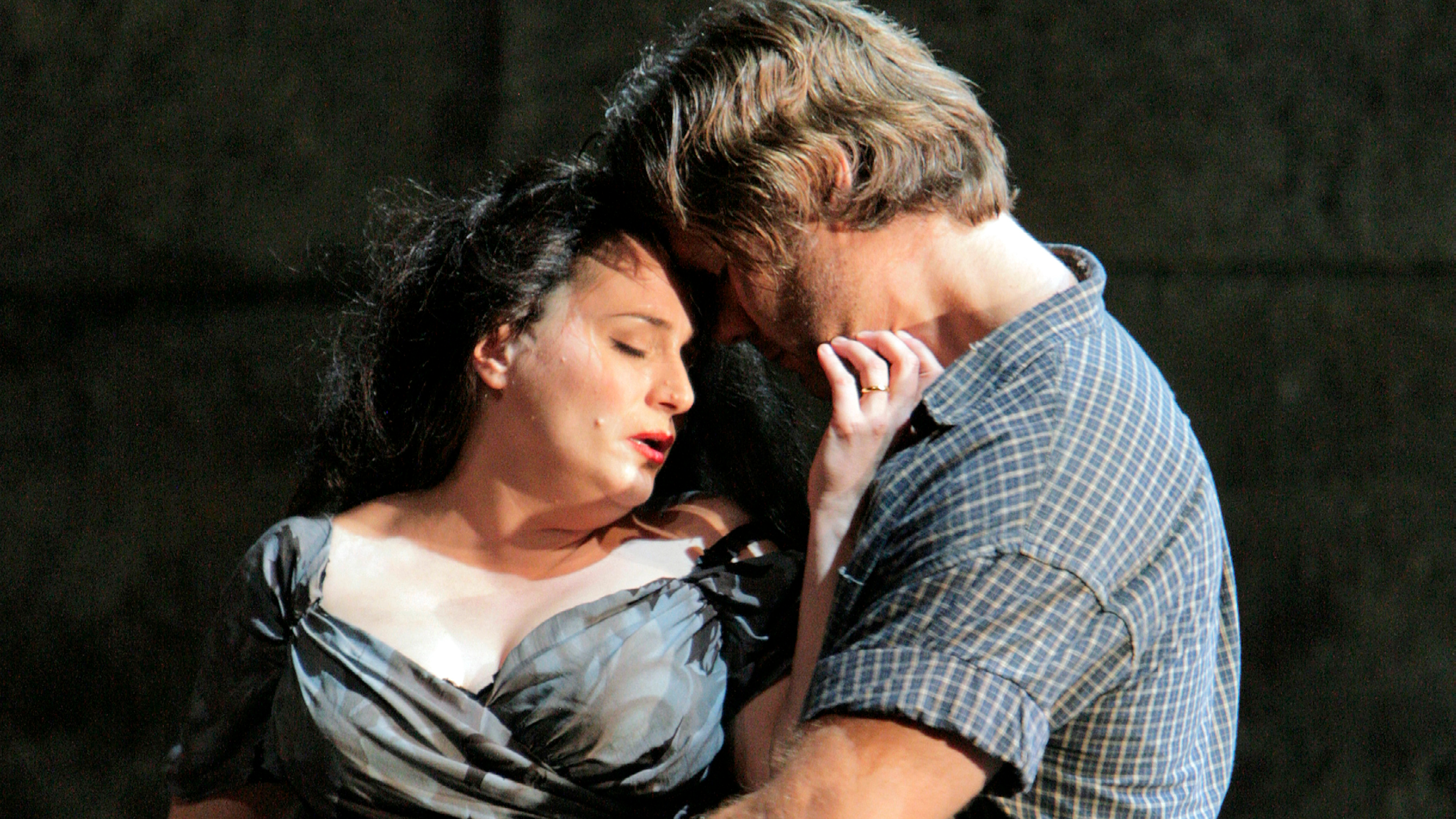
Each of the operas of Trittico has a distinctive musical and linguistic palette, providing a substantial experience when performed together. Each is an hour in length, and the scope of the work subtly moves from orchestral darkness toward light. Il tabarro has a score of tremendous darkness and weight, tempered by a feeling of Debussy in sonic depictions of the Seine, with a constant undercurrent of deep sadness and regret for heartbroken characters. The deep love of the married couple Giorgetta and Michele has dissipated with the death of their child, creating a cascade of tragic decisions, infidelity, and untenable jealousy. The duet between Giorgetta and her husband begins with a tender children’s lullaby played in the orchestra, accompanying a conversation between the couple that is strained in its normalcy; their lost baby is at the forefront of their unexpressed thoughts. Michele’s emotions about his lost child are raw; he desperately wants to return to a happier time, to a time “before,” but he is permanently imprisoned in a sadness that becomes violent. A mistaken signal, the lighting of a pipe, brings the opera to a quick and violent close, and the double-entendre “cloak” of the title reveals itself.
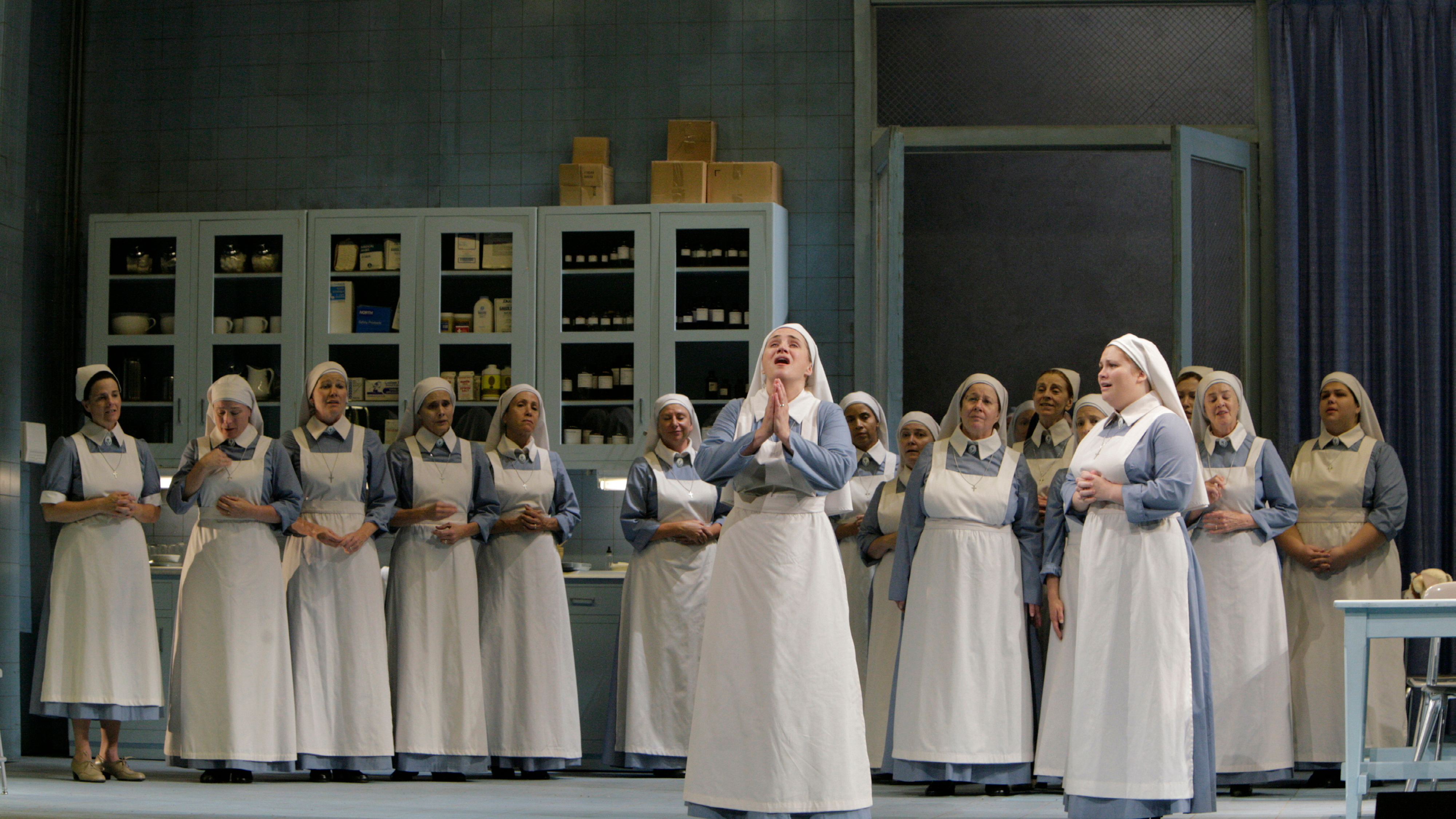
The mystical and reflective piece of Trittico, Suor Angelica, was Puccini’s favorite of all of his compositions. It is easy to understand why: the opera has an otherworldly musical beauty, as though composed on a liminal plane between this world and the next. It is largely sparse and deceivingly dissonant, filled with whole tones and an occasionally severe simplicity. As the tragedy of Angelica’s life becomes more apparent to her and to us, her mystical reunion with her son becomes more and more hallucinatory. The audience is meant to never know if the opera’s ending is real or imagined. The opera doesn’t end in a traditional way; it lingers a bit as if levitating, and it then simply evaporates.
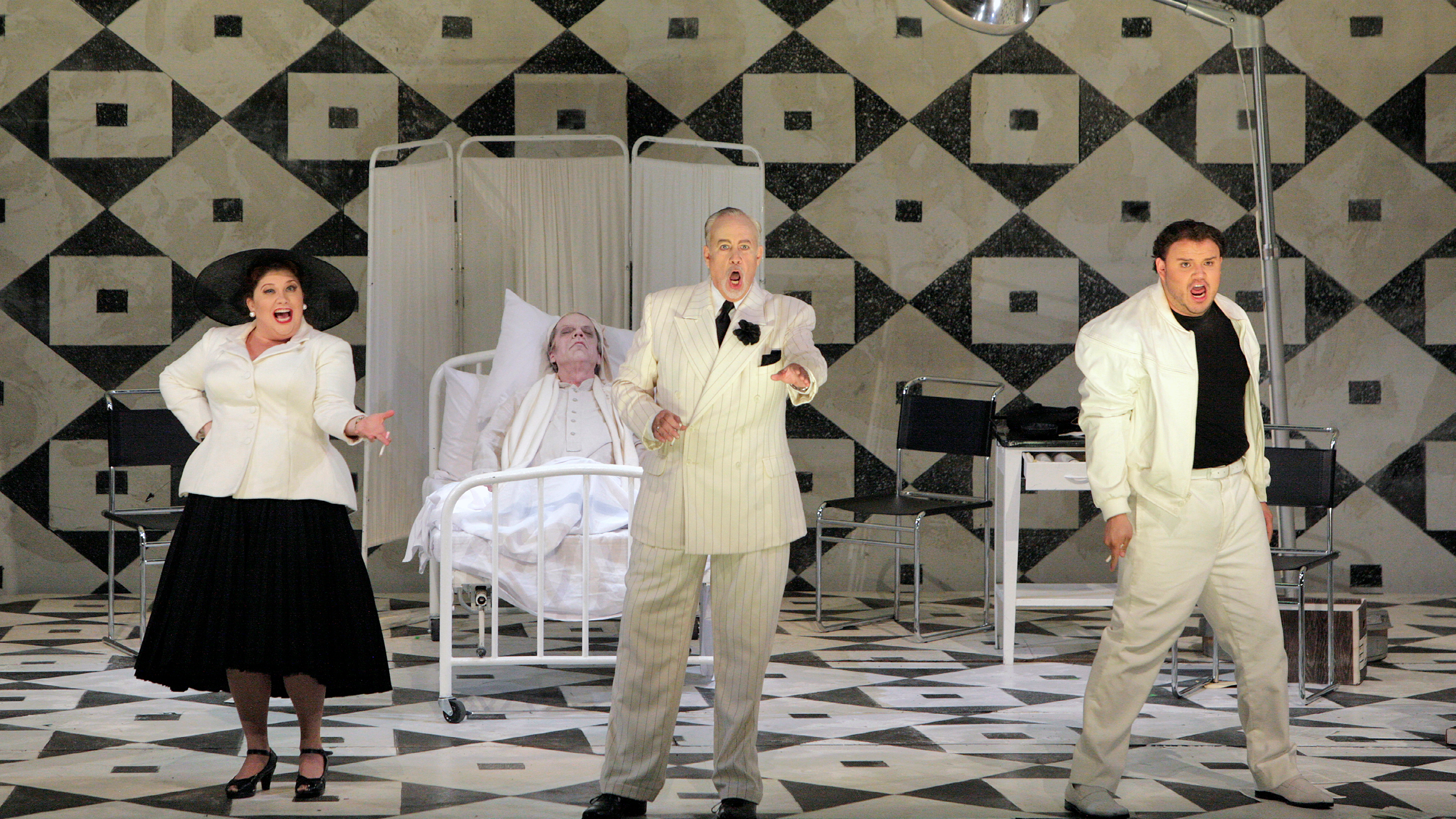
The final opera, the most popular of the three for most audiences, is the masterfully comic tale of divine retribution Gianni Schicchi, a deeply great work that virtually invented cinematic comic timing. The piece is also a wistfully romantic symphony, suffused with Tuscan sunlight as sound, and sparkling ensembles. Schicchi shows Puccini at his tuneful best, including one of the most famous melodies ever composed by anybody, “O mio babbino caro,” as well as the great love tune sung by the opera’s young couple, one of the most soaring the composer ever created.
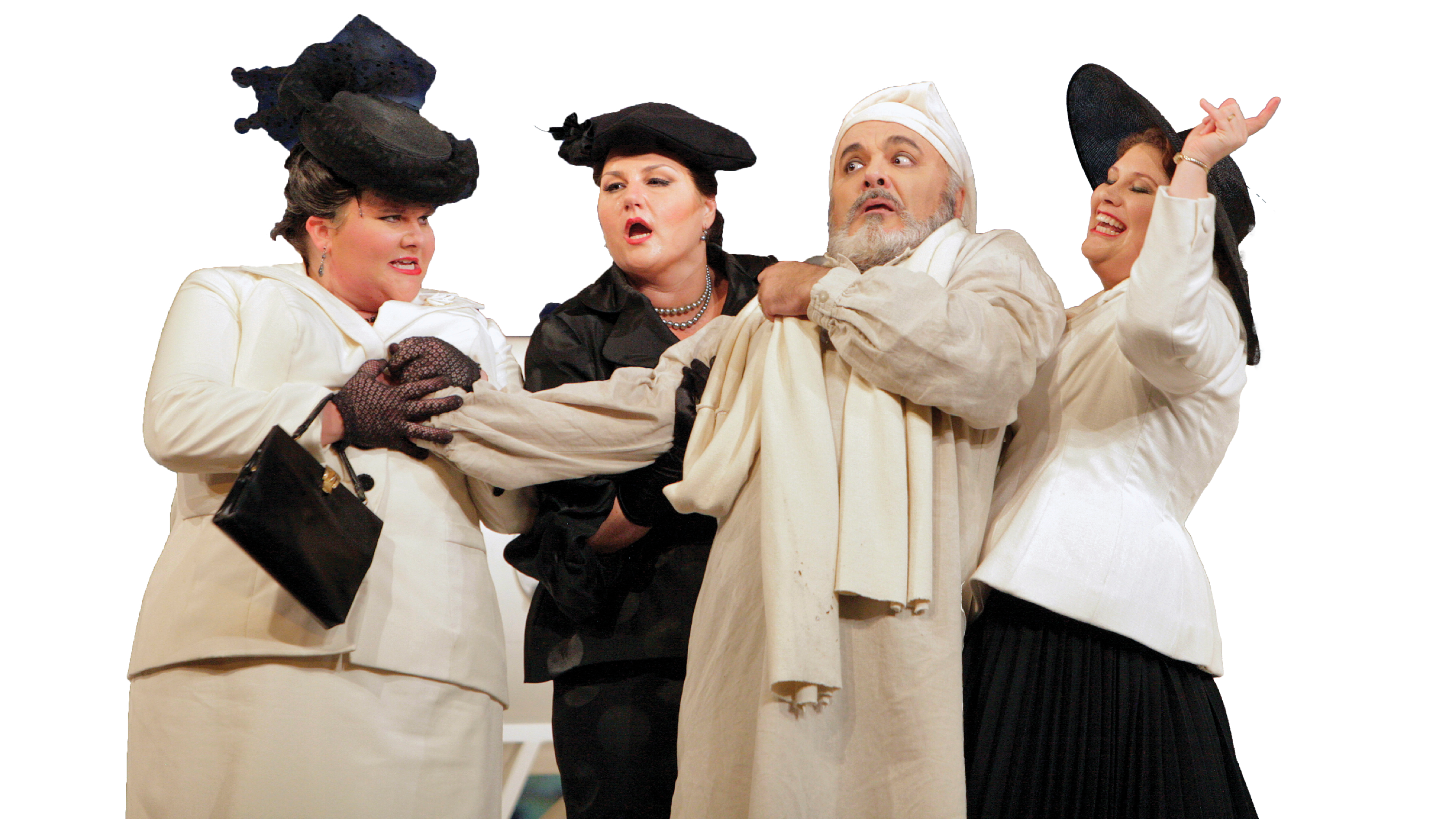
In Gianni Schicchi, an eccentric Florentine family hires the title character to impersonate their dying patriarch, Buoso Donati, in hopes of changing his last will and testament to leave his considerable riches to them, but it doesn’t quite turn out as they expect. Puccini has the falsely grieving relatives parody the great Verdi: their off-beat, drooping figure, initially played by the whole orchestra in the opera’s introduction, but eventually given to a lone bassoon, is a transposed and truncated version of Leonora’s Miserere from the final act of Verdi’s Il trovatore. Rinuccio, the opera’s romantic lead, sings an impassioned hymn to the opera’s Florentine setting, in the style of a Tuscan stornello, or folk song, and the opera’s final moments link the passion of the young duo to the role of Florence as the heart of the Italian soul and the birthplace of the Renaissance, of much art, and of opera itself.
The exquisite score of Gianni Schicchi features several sophisticated and delicate parodies of a lot of music, such as its wicked little tango (“Ecco la cappellina!”), its hysterically obsequious waltz (“oh Gianni, Gianni, nostro salvator!”), and the dissonant pulsating music that mocks the unashamed greed of the Donati family. In several passages, Puccini took digs at Stravinsky and other modernists such as Richard Strauss, Gustav Mahler, and the young Alban Berg, all of whom absolutely loathed his music and were not shy about saying so. But Puccini has the last laugh in this marvel of an opera. Of his other contemporaries, it is interesting that Janáček, Korngold, Lehár, and Rachmaninoff all admired his operas and melodic abilities.
Sister Angelica’s Aunt is the only major mezzo-soprano role Puccini composed other than Suzuki in Madame Butterfly. She is one of the coldest characters in opera—“a Turandot who never melts” as Conrad Wilson memorably put it—and her scene with Angelica, whose name the Aunt never utters, is the most brooding and harsh music Puccini would ever compose. This scene is far more than the usual operatic villain dueling with a protagonist; it lays bare so many family cruelties, and the lasting pain people feel from early familial traumas.
There is a special power in threes. When one looks solely at the third symphonies of many composers, one sees a profound pattern. Though certainly not always true, many times the first two symphonies were embryonic compared to a more complete and major third work: the third symphonies of Mahler, Tchaikovsky, Copland, Brahms, Rachmaninoff, Mendelssohn (the glorious “Scottish”), Corigliano, Saint-Saëns (the great “Organ Symphony”), Philip Glass, Leonard Bernstein (“Kaddish”), and Charles Ives (“The Camp Meeting”) each give hefty testament to the allure of a third.
Puccini’s Trittico is a masterful individual manifestation of the power of three, an idea explored in enormous depth in Mozart’s The Magic Flute, which might be said to have the same power on steroids: not only does it begin with three chords in the key of E Flat major, which has three flats, but it also has three ladies and three genii, each of whom make three appearances, and each of Papageno’s arias has three verses. What Trittico shares with The Magic Flute, though, is something more interesting and meaningful than these numerical associations.
Just as The Magic Flute beckons us on a trip through the primal nature of dragons and queens of the night into a world of trials, culture, and enlightened learning, Trittico takes us on a similarly profound journey. Within it, we move through the beginnings of life, the sounds of quietly undulating water, to the sometimes-violent wounds of love. We witness the constant human attempt to understand and/or explain the God force before being plunged into the unbearable and unexplainable pain of human loss, something we will likely never understand, because that understanding is the one gift we don’t have.
Trittico then tops our experience with an ingenious laugh at our own expense, as a father watches his beloved daughter fall in love, crowned with the golden Tuscan light of Florence. What on earth could be better?