Splendida Firenze
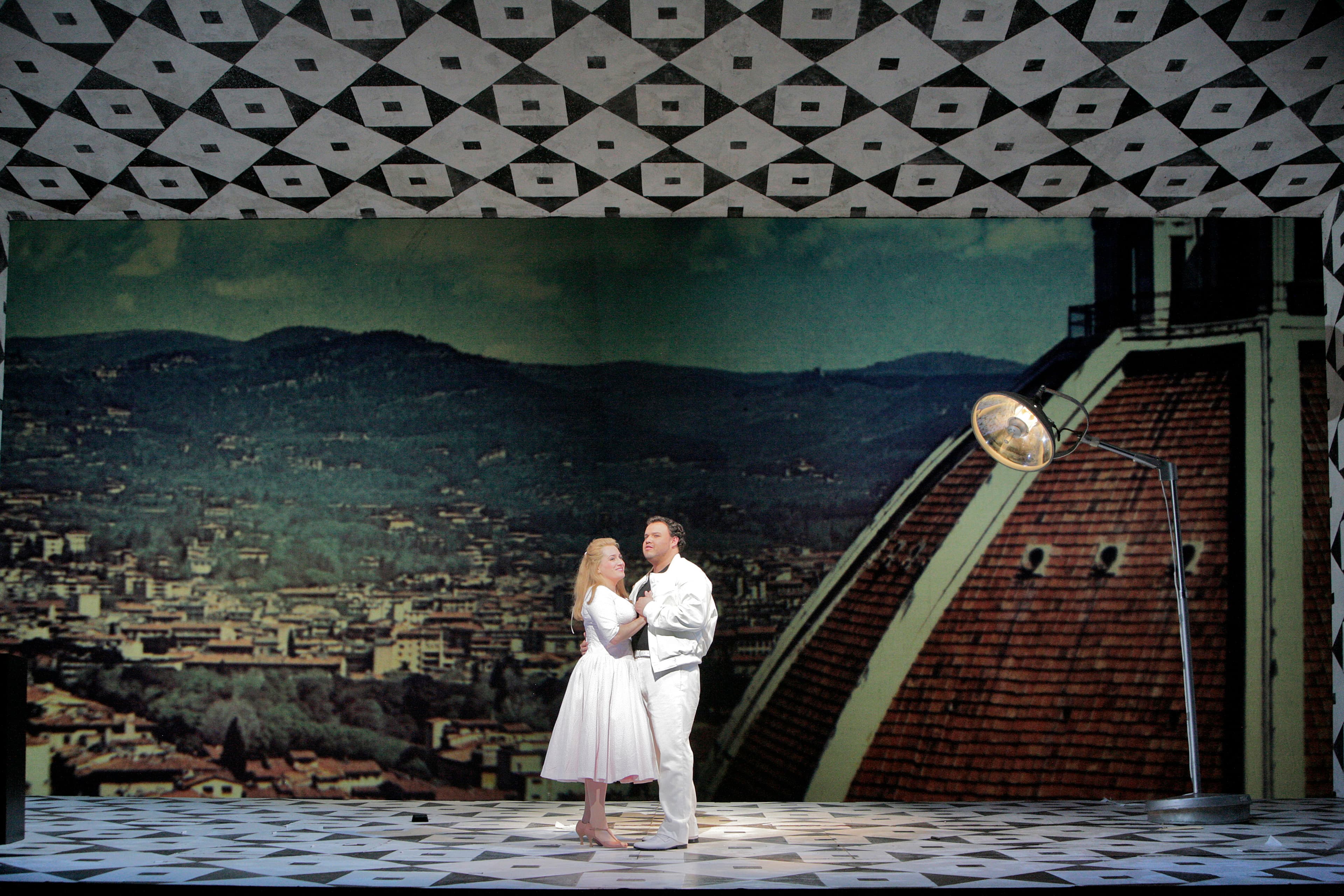
Gianni Schicchi, the comedic third opera of Puccini’s Il trittico, is set in the Tuscan capital of Florence. Giovacchino Forzano’s original libretto takes place in 1299, at the dawn of the Italian Renaissance. The opera is a love letter to the city—its palaces and piazzas, as well as the artists and thinkers it attracted. Take a walking tour via Puccini’s arias, which lay out a musical map of Firenze.
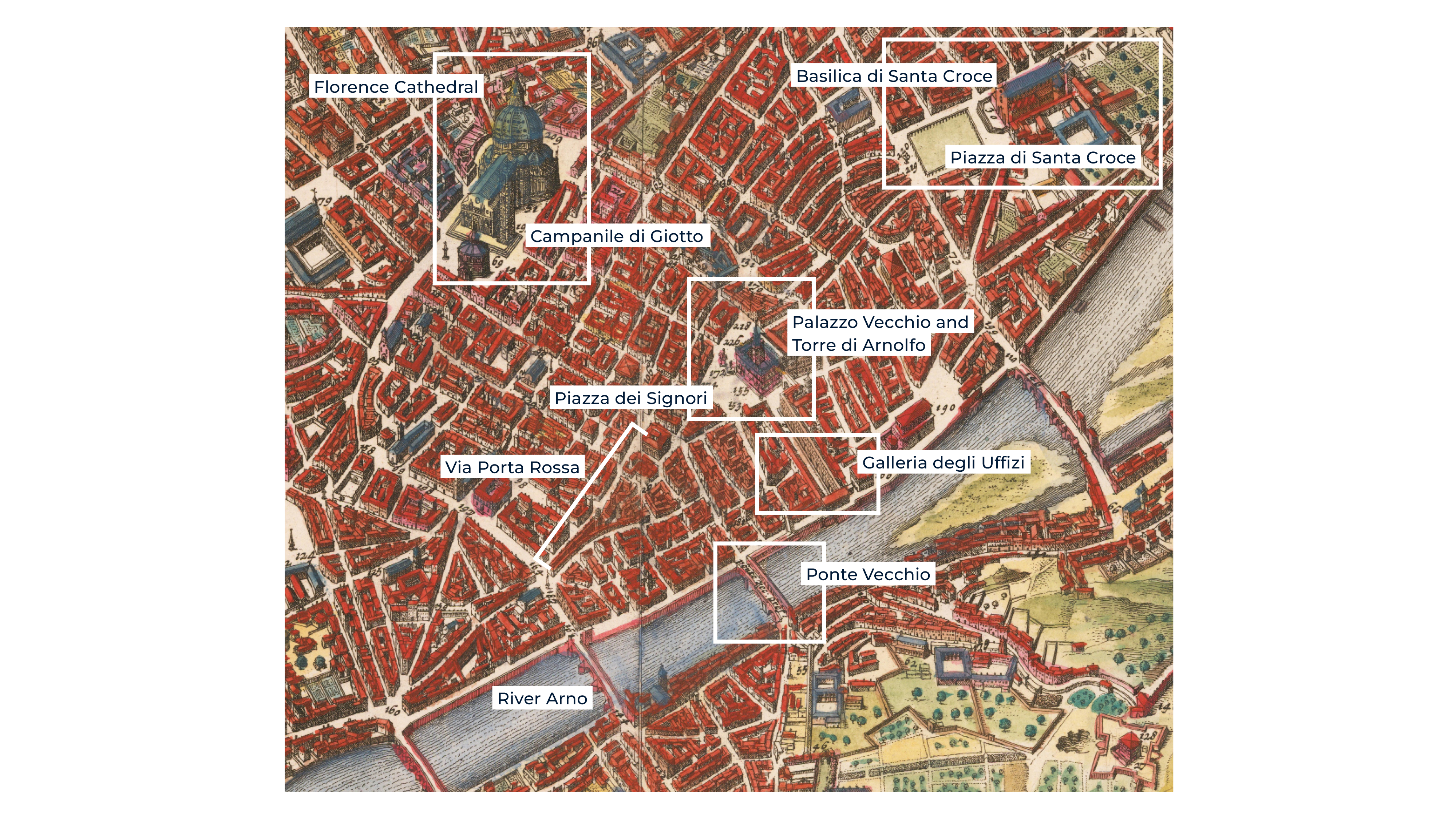
Florence is like a flowering tree
In the Piazza dei Signori. …
The Arno, before running to its mouth,
Sings as it kisses the Piazza Santa Croce. …
Welcome Arnolfo to build his beautiful tower!
Welcome Giotto…and the brave Merchant Medici!
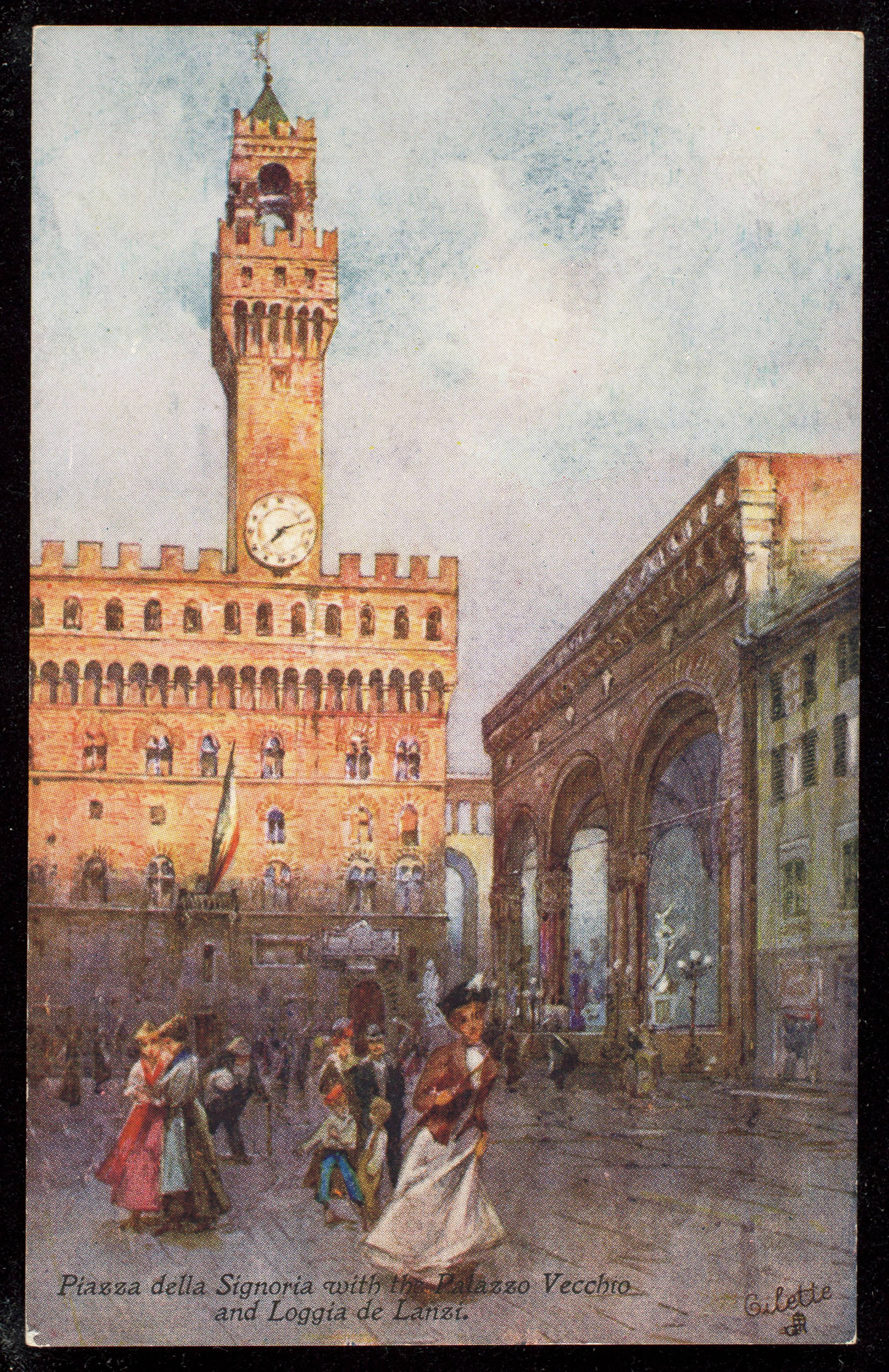
More commonly referred to as the Piazza della Signoria, this central square is home to a series of iconic statues, including a copy of Michelangelo’s David.
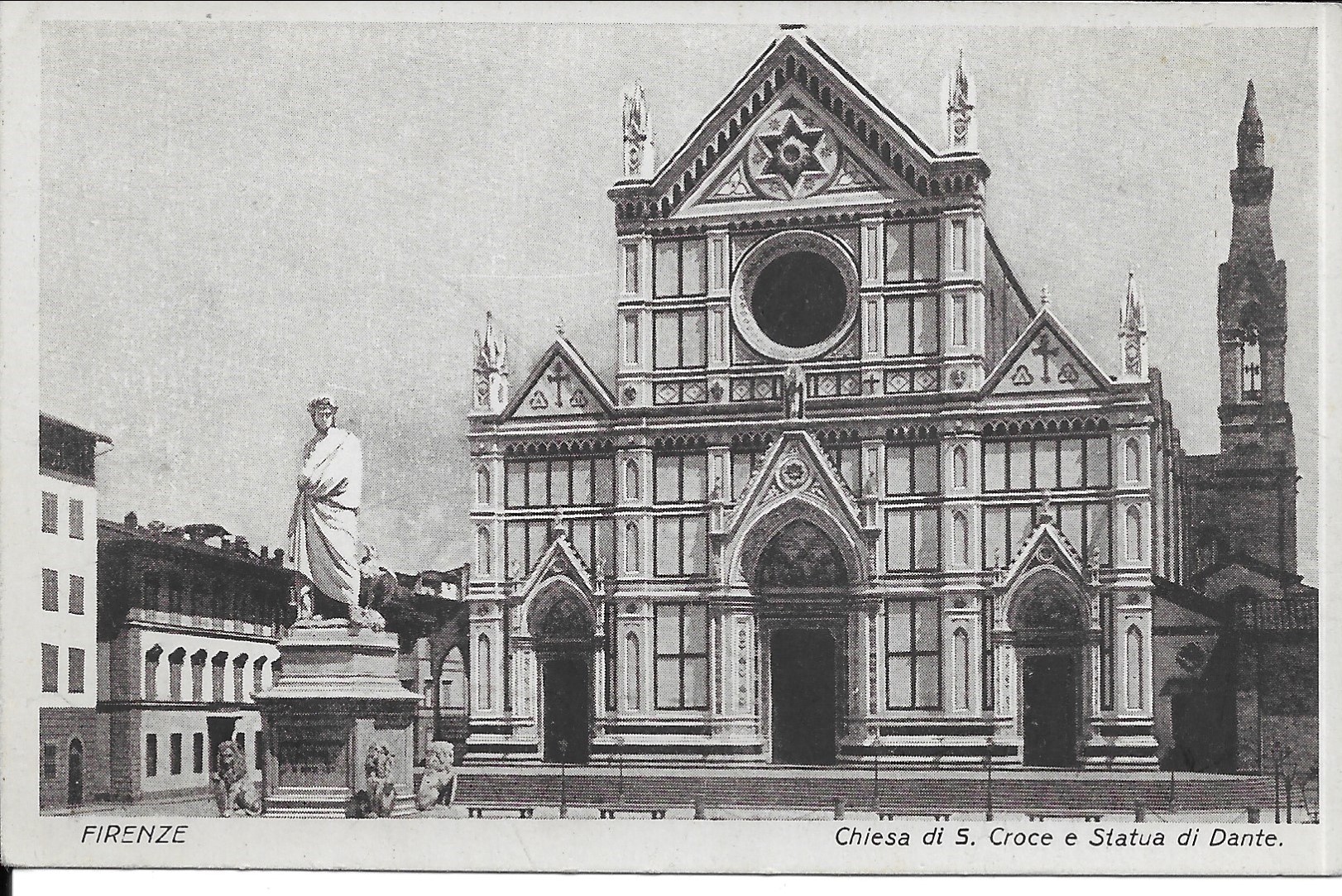
This 14th-century church is the resting place of Galileo and Rossini and features frescoes by Giotto. A monument to Dante stands in its piazza.
Situated on the Piazza della Signoria, the Palazzo Vecchio—with its imposing stone tower—was designed by architect Arnolfo di Cambio in the 13th century
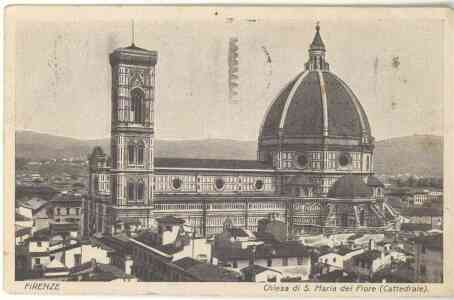
This late-medieval painter and architect designed the belltower of Florence Cathedral. The church figures prominently in James Robinson’s 2025 HGO production.
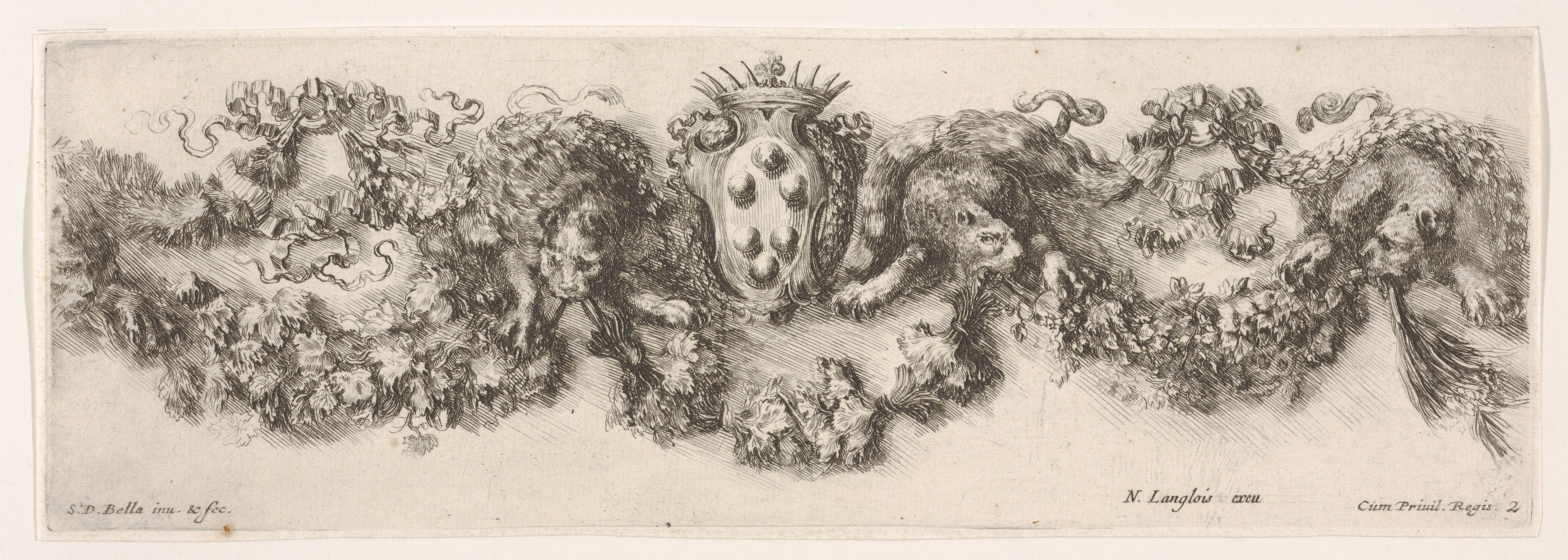
This powerful banking family ruled Florence for 300 years. They were generous art patrons, and their extensive collection is housed at the Galleria degli Uffizi.
I want to go to Porta Rossa to buy the ring! ...
And if I loved him in vain, I’d go to the Ponte Vecchio
And throw myself into the Arno!
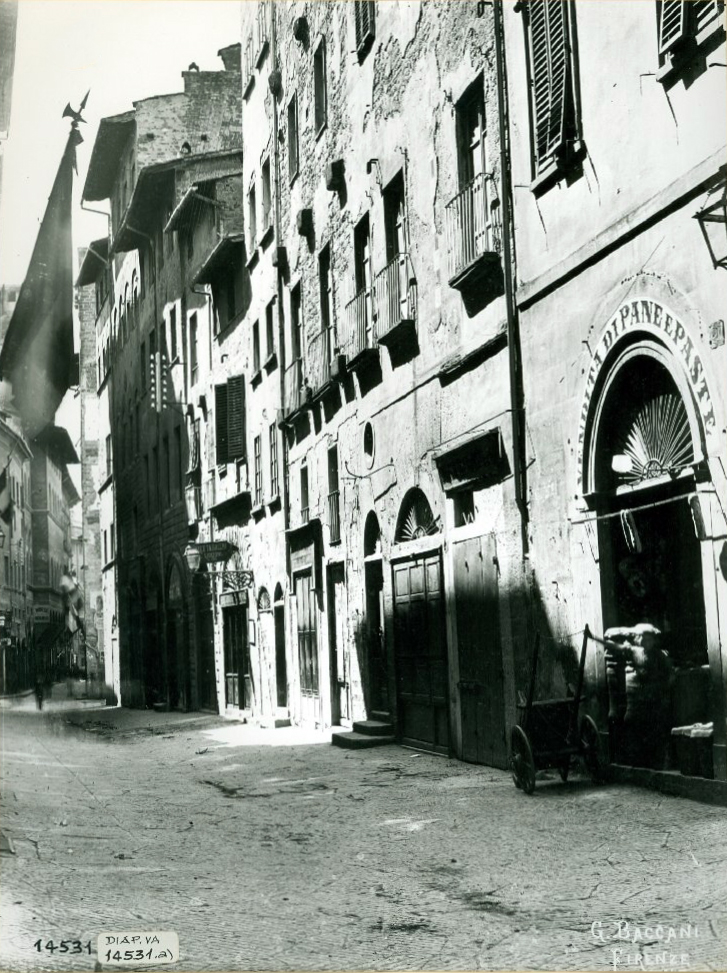
The Via Porta Rossa was formerly a commercial thoroughfare where merchants and artisans—including many goldsmiths—conducted business.
This medieval bridge is lined on both sides with dozens of shops.
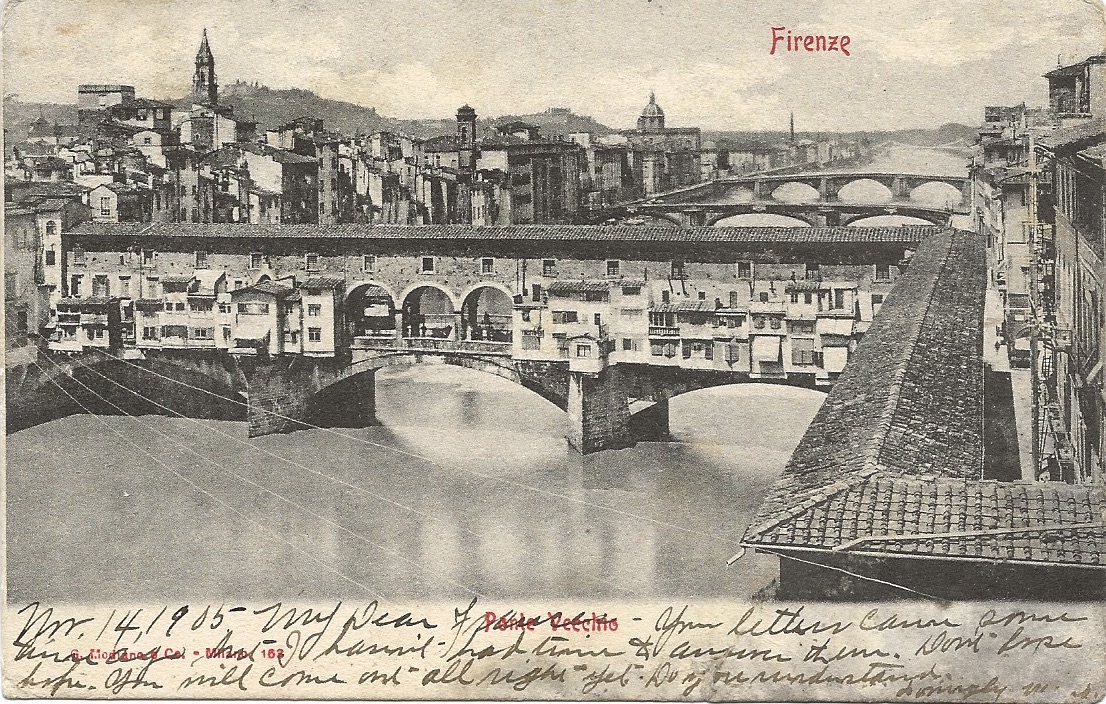
Tuscany’s longest river flows through Florence and Pisa before emptying into the Mediterranean.
For this prank, they sent me to hell—and so be it.
But with all due respect to the great father Dante,
If you enjoyed yourself this evening,
Grant me extenuating circumstances.
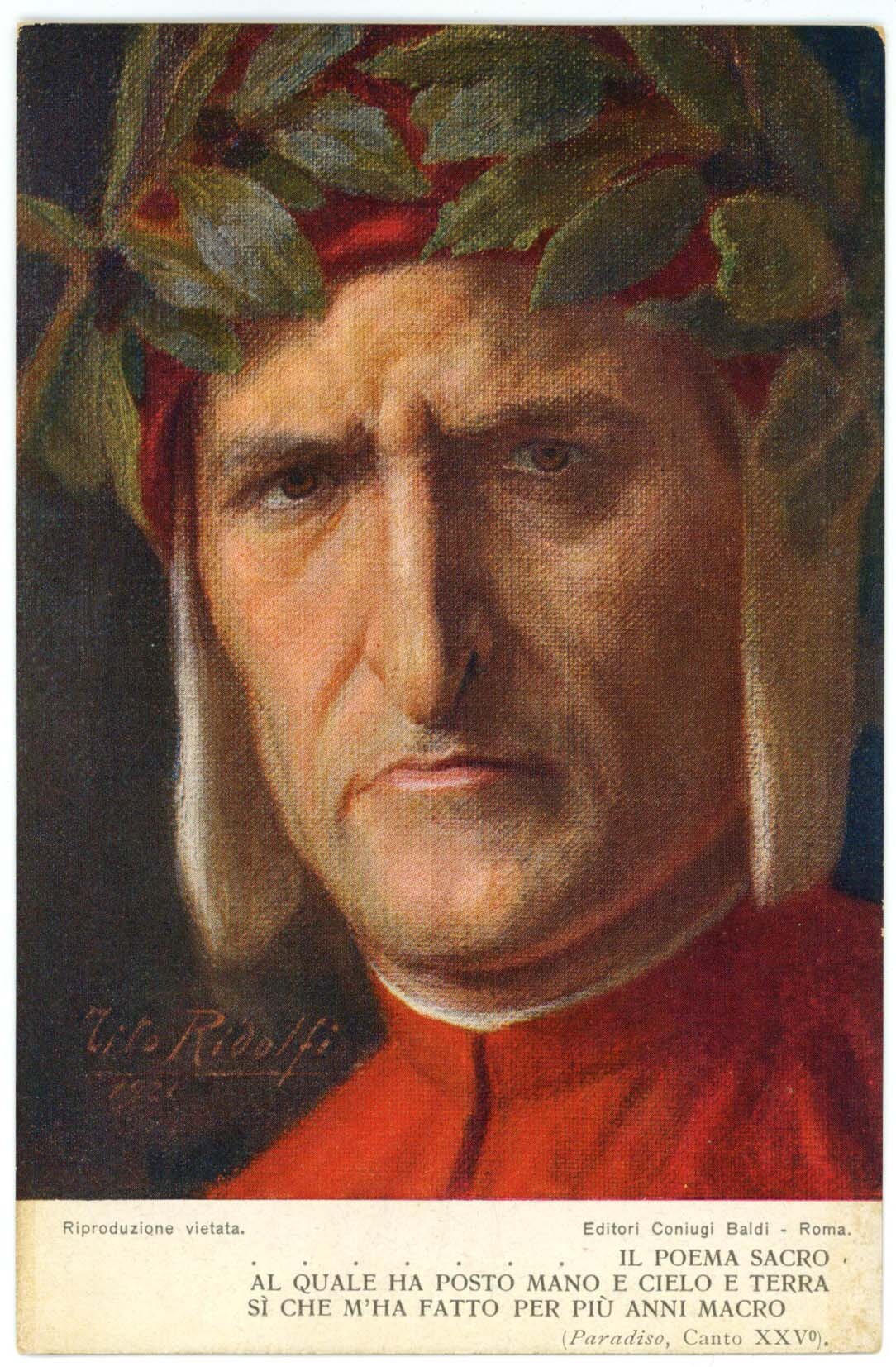
Born in Florence in the 13th century, Dante authored the Divine Comedy—a trilogy of epic poems that chronicle a journey through hell, purgatory, and heaven. In the Inferno, Dante encounters the damned soul of a fraudster named Gianni Schicchi, who posed as the deceased Buoso Donati to forge a new will. Schicchi and Buoso were both real-life Florentines—in fact, Dante married the latter’s relative, Gemma Donati.