Silent Night: Quick Start Guide
THE OPERA IN ONE SENTENCE
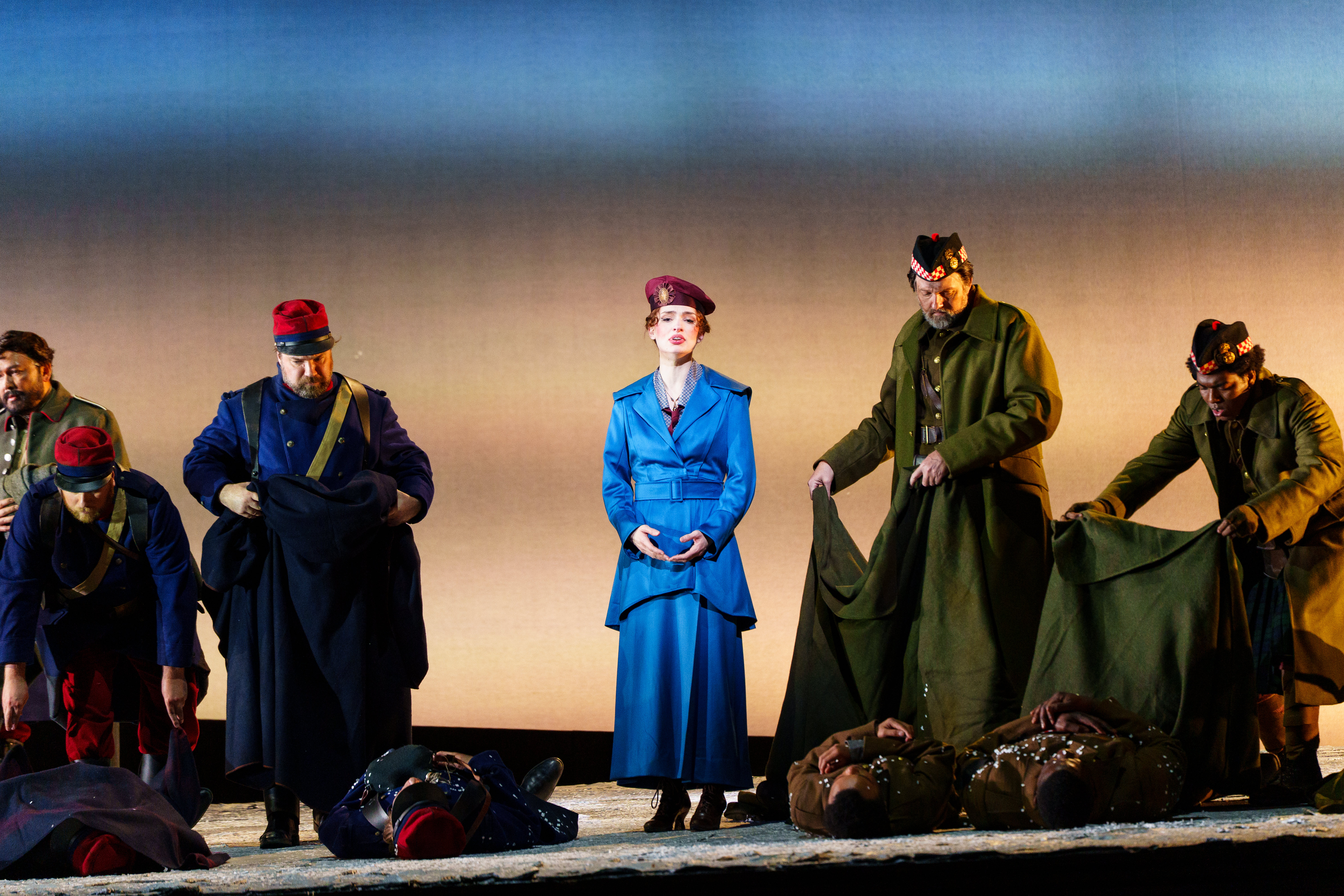
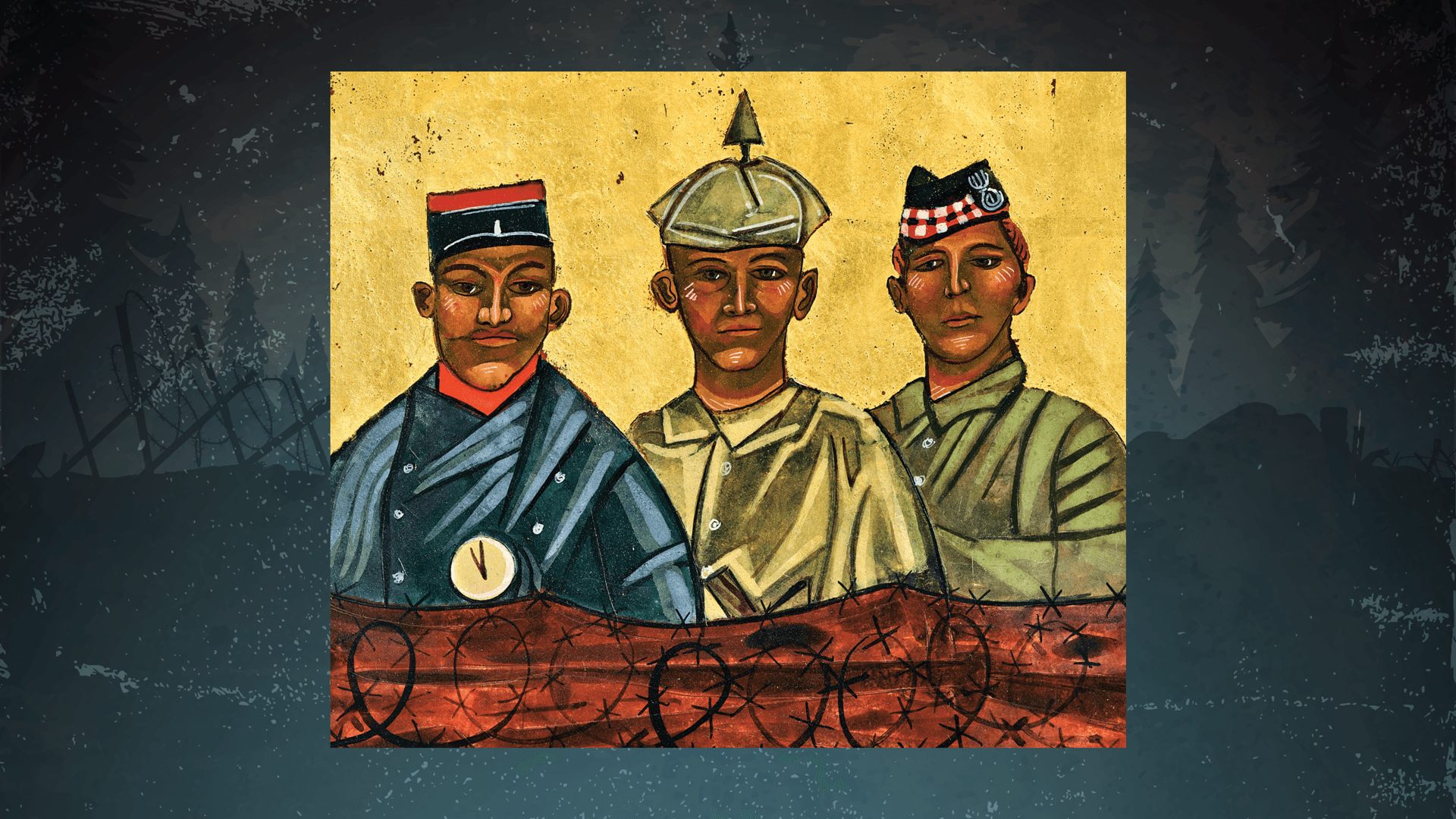
On a dark night in 1914, soldiers from three nations embroiled in World War I put aside their weapons to celebrate Christmas together in no man’s land.
BACKGROUND
In August 1914, at the beginning of World War I, the German military invaded Belgium and began pushing its way into France. Allied French and British troops halted the Germans along a 400-mile line stretching through France and Belgium—what became known as the Western Front. By December, the deplorable conditions of trench warfare and the proximity of the two sides set the stage for a series of spontaneous Christmas ceasefires. Inspired by the holiday, German and Franco-British forces put down their guns and fraternized in no man’s land.
In 2005, these truces were depicted in director Christian Carion’s war film Joyeux Noël (Merry Christmas). The movie served as the basis for the 2011 opera Silent Night by composer Kevin Puts and librettist Mark Campbell. Like the screenplay, Campbell’s text is trilingual, with Scottish, French, and German characters singing in their respective languages. A year after its Minnesota Opera premiere, Silent Night was awarded the Pulitzer Prize for Music. For its 2026 production, HGO performs Puts’s recently revised version of the score.
WHAT TO LISTEN FOR
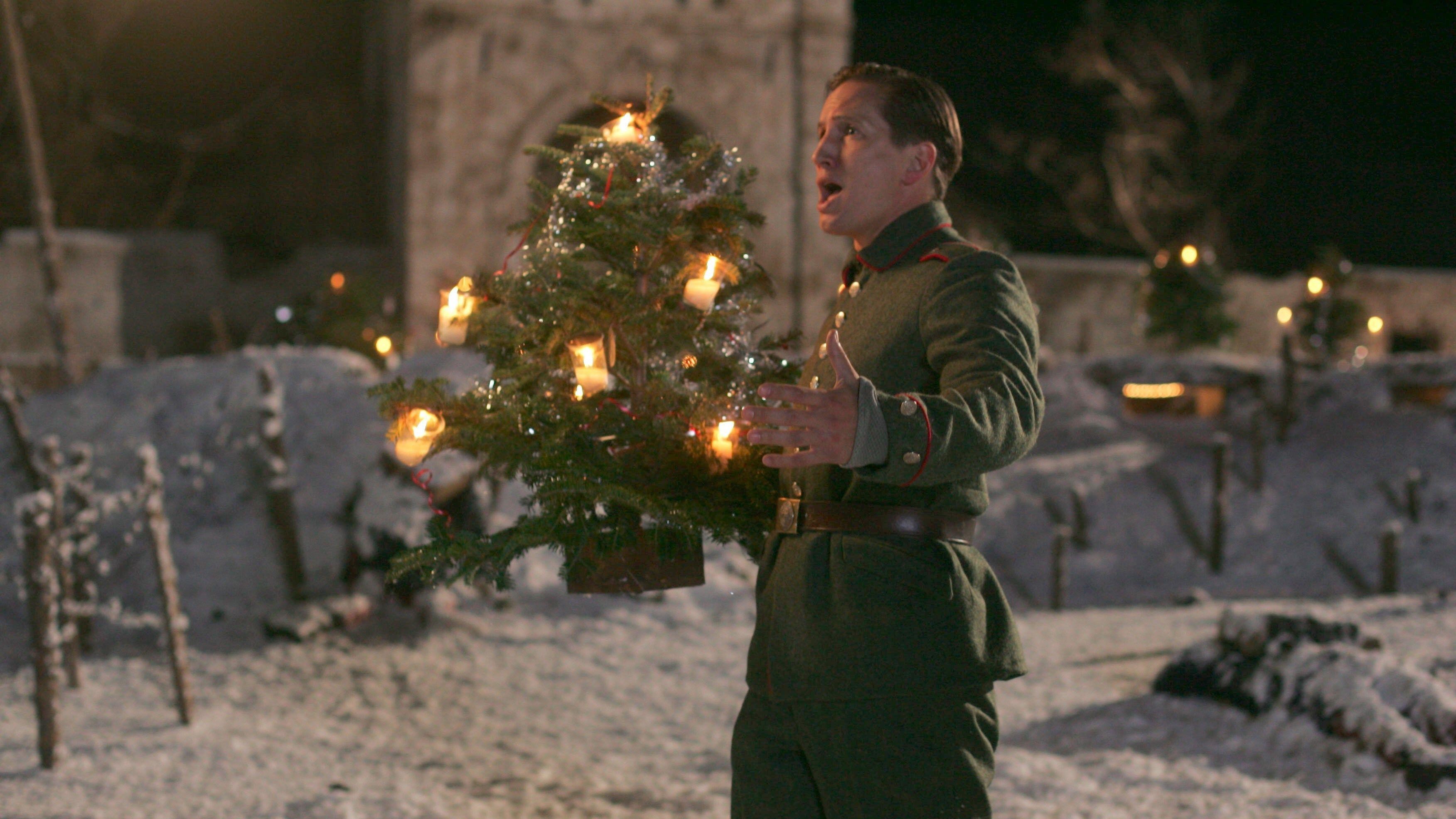
In the opening scene, fictional opera stars Nikolaus Sprink and Anna Sørensen sing a duet from what sounds like a forgotten Mozart opera. In reality, it’s a pastiche—that is, a clever imitation of a musical style. Puts’s score includes convincing pastiches of war anthems, folksongs, hymns, and German Lieder, some accompanied by harmonica or bagpipe. Listen for Sprink’s Latin carol “Dormi Jesu,” which serves as the catalyst for the truce in Act I.
These “forgeries” are strung together by Puts’s personal compositional language. Brooding string lines and tense harmonies convey the atmosphere of apprehension that pervades the trenches. Listen for the Act I battle music, in which the orchestra violently recreates the din of artillery.
Scattered among these bombastic moments are quieter passages of calm that reflect the opera’s central theme. For instance, the delicate strains of the harp are often associated with scenes of peace. Anna’s numbers, especially, stand as defiant expressions of pacifism. Listen for her a cappella “Dona nobis pacem” (Grant us peace) at the end of Father Palmer’s mass in Act I, as well as her virtuosic Act II aria “Irgendwo, irgendwann,” with its hopeful call to action.
Puts features the all-male chorus prominently in his score, typically dividing the voices into three groups that overlap and intertwine in complex counterpoint. Listen for the soldiers’ lullaby “Sleep” in Act I and their poignant Act II procession “Je vous promets,” during which the soldiers bury their dead.
FUN FACT
Silent Night isn’t the first musical work to depict the 1914 Christmas truces. The ceasefire was reenacted in the 1963 musical Oh, What a Lovely War!, which was adapted into a 1969 film by Richard Attenborough. The truce also inspired Paul McCartney’s 1983 song “Pipes of Peace,” Collin Raye’s 1996 “It Could Happen Again” (with spoken narration by Johnny Cash), and Garth Brooks’s 1997 “Belleau Wood.”
SYNOPSIS
Setting: Belgium, Western Front, Christmas 1914
ACT I
In Berlin, German tenor Nikolaus Sprink and his lover, Norwegian soprano Anna Sørensen, are performing together in an opera when a military official interrupts their duet. The Kaiser has declared war, and Sprink has been enlisted. In a Scottish village, Jonathan and his brother William rush off to enlist. And in France, Lt. Audebert’s pregnant wife Madeleine begs him not to leave her for combat.
Five months later, in December 1914, a bloody battle breaks out on the Western Front—the Germans against the Scottish and their French allies. During the skirmish, William is fatally shot. Despite the prayers of his parish priest, Father Palmer, Jonathan vows revenge on the enemies who killed his brother. In the French bunker, Lt. Audebert logs the names of the men he lost while he pictures his wife and their future child safe at home. Exhausted by the day’s fighting, troops from all three sides find some brief respite in sleep.
On the morning of Christmas Eve, a shipment of decorated trees arrives for the German platoon. Their lieutenant, Horstmayer, informs Sprink that Crown Prince Wilhelm has requested the tenor sing that night at a party, where he’ll be joined by Anna. In the French trenches, Lt. Audebert receives a haircut from his aide-de-camp, Ponchel, who remarks that his mother lives only an hour away. After Anna and Sprink perform at the Crown Prince’s soiree, Anna reveals she has arranged for the couple to spend the night together. When Sprink tells her he has an obligation to return to his comrades, she convinces him to take her with him.
Back at the front line, Sprink sings for the German troops. Suddenly, he climbs out of the bunker to perform a carol for the Scots on the other side, who answer back on bagpipe. Horstmayer, Audebert, and the Scottish lieutenant, Gordon, confer in no man’s land and agree to a ceasefire—just for that night. Troops from the three platoons fraternize, sharing chocolate and exchanging photos of wives and girlfriends. Father Palmer holds a Christmas Eve mass, during which Anna sings the “Dona nobis pacem”—“Grant us peace.”
INTERMISSION
ACT II
The next morning, the three lieutenants agree to extend the truce through Christmas Day so the platoons can bury their dead. Watching from the side, Anna imagines what it must be like for women who receive news that their loved ones have been killed. Meanwhile, word of the truce has reached the British, German, and French commanders, who find this disgraceful conduct treasonous. As Christmas comes to a close, Anna and Sprink—refusing to participate in the war any longer—surrender themselves over to the French as prisoners.
The troops write home about the extraordinary truce—all except Jonathan, who lies to his mother in a letter that William is still alive. The British Major arrives the day after Christmas to notify the Scots that they are being relocated. Just then, a soldier can be seen in no man’s land. The Major orders the men to fire, but only Jonathan obeys, shooting what appears to be a German. In reality, it is Ponchel, who borrowed a German uniform to sneak behind enemy lines and visit his mother. Before he dies, Ponchel shares some news he learned: Lt. Audebert’s son has been born.
Audebert is lectured by his father, the French General, who informs him that the platoon is being transferred to Verdun. Likewise, the Crown Prince tells the Germans that they are being deployed to the Eastern Front as punishment. While they wait to be shipped off by train, the German troops hum a ballad they learned from the Scots. Men from all three sides reflect on the miraculous Christmas they witnessed.