SEEING GEORGE AND LENNIE

The breadth and diversity of this story is captured in an extraordinary photographic record."
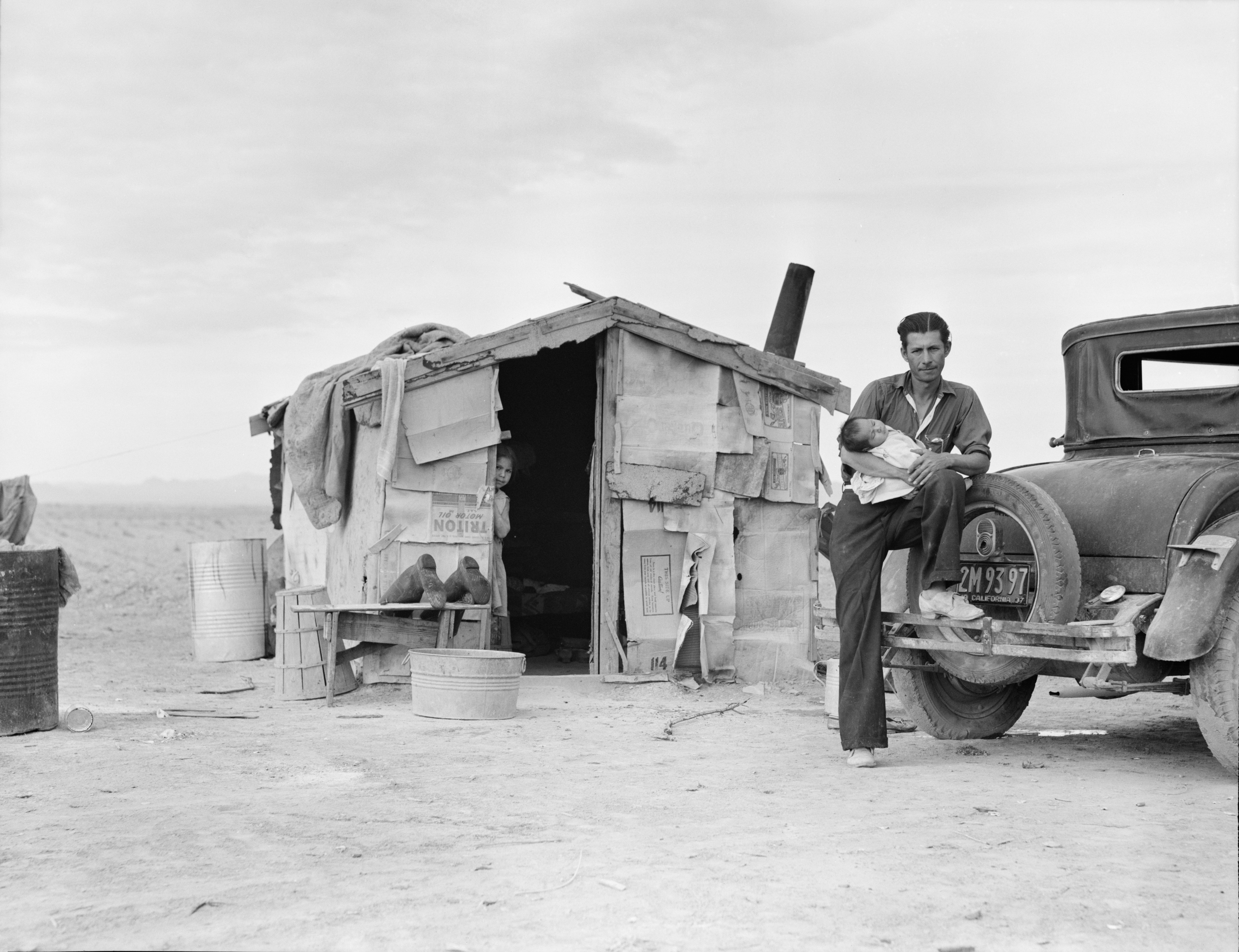
It’s a beautiful and challenging work, and I was thrilled to finally have the chance to create a new production of it. I knew that I wanted to make something that felt as authentic as the book, but that also pushed forward and told the story from a more universal perspective. For George and Lennie’s story is not unique—they are part of a long line of migrant and immigrant workers who make up California’s agricultural history, beginning with Chinese immigrants in the late 19th century and continuing with Japanese and Filipino workers, White tenant farmers escaping the Dust Bowl and the Great Depression, Black sharecroppers escaping Jim Crow laws as part of the Great Migration, and Mexican braceros who came to fill the labor shortages of World War II. Fortunately for us, the breadth and diversity of this story is captured in an extraordinary photographic record that spans generations. And so, to begin our work on this production, we started at the beginning of that history with the pioneering work of documentary photographer Dorothea Lange.
Lange is one of my favorite artists. She captured the upheaval of American agricultural life and humanized the Great Depression through her powerful, intimate, and stunning photographs. Working originally for the Farm Security Administration, she traveled through California, the Southwest, and the South, documenting the effects of the Depression, the Dust Bowl, and of the plight of migrant workers and later residents of internment camps while taking some of the most important photographs of the 20th century. She helped the viewer to really see her subjects, and I have found her images to be both inspiring and indispensable. For me, her photo of two migrant workers, or bindlestiffs, walking up the open road practically is George and Lennie—and so, imagine my delight when I encountered an homage to it made in 1961 by documentarian Ernest Lowe, who, it turns out, is one of Lange’s disciples.
Ernie Lowe was still a photography student when Lange came to guest-lecture in one of his classes. Unlike Lange, who moved from assignment to assignment, Lowe spent a great deal of time photographing in the same places—mostly notably Teviston, a rural farm community founded by former Black sharecroppers in the San Joaquin Valley of California. Lowe came to know the people there, and they let him into their houses and into their lives—and so we now have this extraordinary visual history. Inspired by the work of Lange, Lowe, Marion Pogrounded in the details of California agricultural life but with a timelessness and slightly contemporary edge that helps us bring the storytelling forward. The river gulley where George and Lennie hide, the Bunkhouse, and the Barn are brought to life in a stark, beautiful, and modern way. Panels that move up and down create not only a projection surface but a moveable horizon that evokes the California landscape. Luke traveled to Steinbeck country to film original content for the projections, which capture the cinematic breadth of the countryside. They also allow us to tell a more intimate, personal story—specifically to explore Lennie’s psychology and try to see the world through his eyes. Lennie’s perspective is rarely centered, and yet I think there is great beauty and import in trying to see the world as he does. He is, after all, the emotional heart of this extraordinary opera.
Kara Harmon’s costumes are equally grounded in authentic details. Months of painstaking research have yielded looks that echo the 1930s but are also an homage to the generations of farm workers who have followed, which are revealed in items like the types of hats they wear or the layering of their clothes—subtle but unmistakable clues to their backstories and regional origins. I grew up in California and know it is a great melting pot, nowhere so visibly as in its agricultural communities, and Kara’s clothes tell this story beautifully.
Of Mice and Men is a moving and intimate story of friendship and hope set against a cinematic backdrop—one in which the beauty of the farm and the dream that Lennie and George share are in sharp contrast to the challenges they face and the tragedy that unfolds. The title of the recent retrospective of Lange’s work at the National Gallery—Seeing People—is a perfect description for what Floyd’s opera does. For if photographers like Lange and Lowe asked us to truly see our fellow human beings—and if Steinbeck, as he said, gave voice to the “inarticulate and powerful yearning of all men”—then it was Carlisle Floyd who elevated that yearning into song.