Quick Start Guide: Messiah

THE WORK IN ONE SENTENCE
A savior is sent to redeem mankind through his death and resurrection, granting his followers eternal life.
BACKGROUND
George Frideric Handel was born in Germany, but like all great composers of the baroque, he honed his craft in Italy. In 1712, he moved to London and established himself as the leading creator of Italian opera. Handel also helped to cultivate the emerging genre of English-language oratorio. Originating in Italy alongside opera, oratorios are religious music dramas that are typically performed unstaged. Messiah represented a radical departure from the Old Testament narratives Handel had previously chosen for his oratorios. Charles Jennens’s libretto, assembled from biblical verses, tells no story. Rather, it offers an abstract meditation on Jesus’s role as the Christian messiah—the savior of humanity.
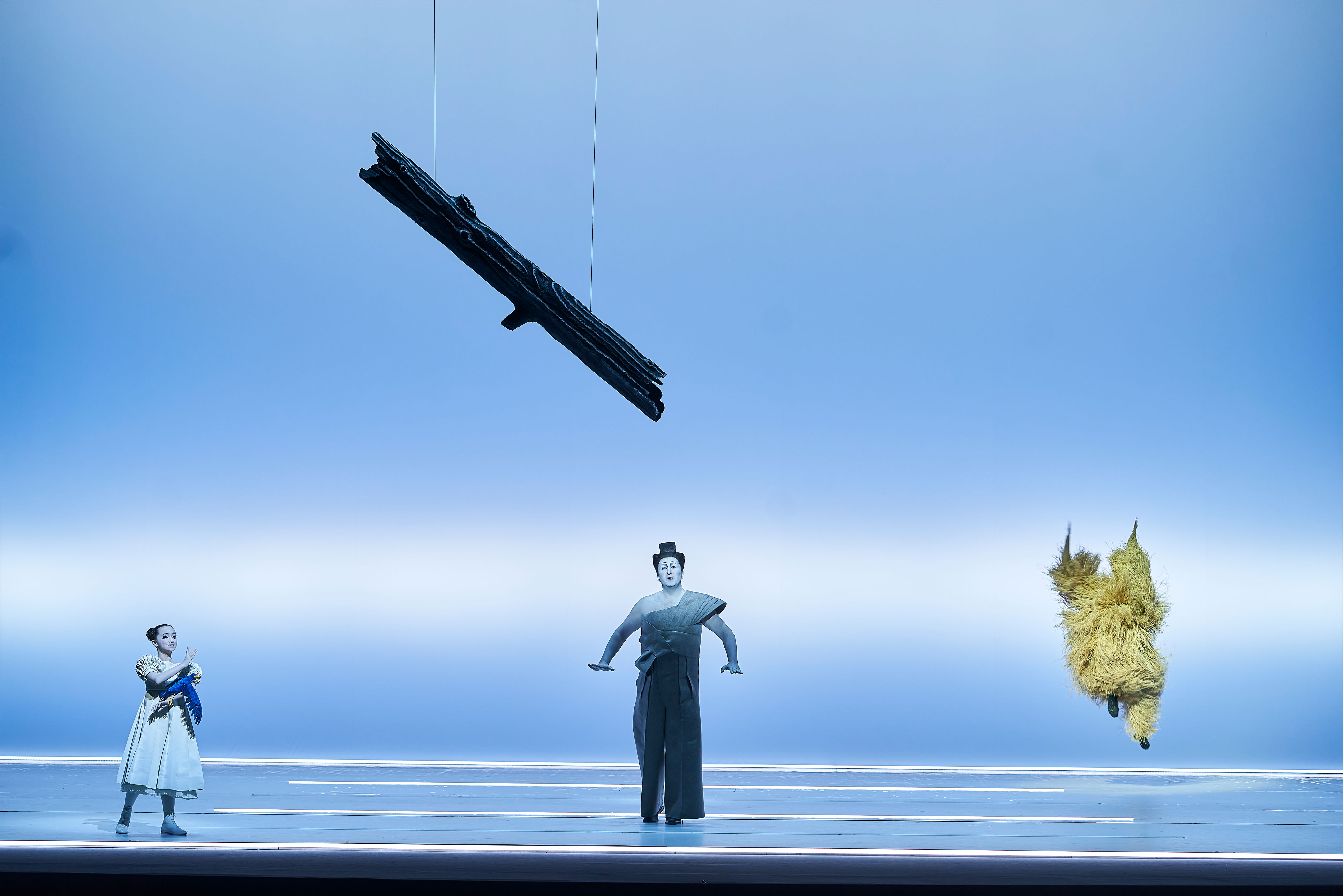
Following its 1742 Dublin premiere, Messiah became an instant classic. Choral societies were founded across Britain and Europe to perform the work, along with other Handel oratorios. In 1789, one such society in Vienna commissioned Mozart to arrange a German-language version of Messiah. Mozart “classicized” Handel’s baroque score by introducing new harmonies and reworking the orchestration with additional winds. For this production—a rare example of a fully staged Messiah—HGO utilizes Mozart’s arrangement, but restores the original English text.

WHAT TO LISTEN FOR
The orchestral introduction, labeled a “Sinfony” by Handel, is an example of a French overture. This baroque form consists of a slower section filled with dotted rhythms and a faster contrapuntal section. Part I opens with the tenor’s “Ev’ry valley,” which showcases the singer’s coloratura. These rapid runs and ornaments are a staple of Handel’s vocal writing for both the soloists and, unusually, the choral parts. The highlight of Part I is the portion recounting Jesus’s nativity, which is why Messiah is often associated with Christmas. Listen for the chorus “For unto us a child is born,” with its jubilant refrain of “Wonderful, Counsellor.” It’s followed by a rustic instrumental interlude, titled “Pifa” (Pipe), that represents the shepherds in the field.
Part II is darker in tone, as it deals with Christ’s passion. Listen for the alto’s mournful “He was despised,” which follows an ABA form known as a da capo aria. (The part is sung by a countertenor in HGO's production—that is, a man who sings in his falsetto range.) During the chorus “All we like sheep,” listen for the zig-zagging setting of “have gone astray” and the circling coloratura on “we have turned.” This illustrative technique, called “word painting,” is a favorite of Handel’s. Part II concludes with the triumphant “Hallelujah” Chorus, one of two finales in Messiah that feature the timpani prominently.
Part III, focusing on themes of resurrection and the afterlife, opens with the soprano’s expansive “I know that my redeemer lives.” In the bass’s “The trumpet shall sound,” don’t listen for the usual trumpet solo—Mozart replaced it with a horn in his arrangement. The tenor and alto share the only ensemble in Messiah, their lively “O death, where is thy sting.” Listen for the way they trade phrases back and forth, which is reminiscent of love duets from Handel’s Italian operas. The glorious “Amen” that closes Messiah is, like many of the other choral movements, organized as a fugue. Listen for the main fugal theme, introduced by the basses, which is then passed around to the other parts and developed into a contrapuntal swirl of swelling voices.
FUN FACT
It is customary to stand during the “Hallelujah” Chorus at the end of Part II. This tradition is said to originate from the first London performance of Messiah in 1743. It was reported that the audience—which included King George III—was so moved by the piece that they rose to their feet. However, there’s no evidence that George II attended, and the story is probably a myth.
SYNOPSIS
PART I
In a time of war and iniquity, a voice cries out in the wilderness: “Prepare ye the way of the Lord.” A prophecy is foretold of one whose coming will transform the world. When his glory is revealed, valleys shall be made high and mountains low; the heavens and earth will shake. This savior shall be born of a virgin mother, and he will purify mankind, bringing light into the darkness.
One night, shepherds in a field are visited by an angel who tells them to rejoice: the savior has finally been born. During his life, he shall preach peace and heal the sick. His followers will find comfort in him, like sheep led by their shepherd.
INTERMISSION
PART II
The savior has been sent to cleanse the world of sin, and yet he is rejected by mankind. The people turn away from righteousness like wandering sheep. They wound and abuse him, and none show pity. But it is through his suffering that humanity is delivered from their transgressions. The savior dies. However, his soul is not left to endure the pain of hell. He is resurrected and lifted on high, where he is proclaimed the King of Glory.
The savior’s followers venture out in the world to preach his gospel of peace. Yet the rulers of the earth rise up against them. The faithful are promised that they shall be liberated from the persecution of these kings. For the one true king—the savior—reigns in heaven for ever and ever.
PART III
Just as the savior rose from the dead, so too shall his followers be resurrected. At the final trumpet, they shall be transformed into immortal beings free of corruption. For death has been defeated through the savior’s victory—that is, his death and resurrection. Seated at the right hand of God, he comes to the aid of his people. For all eternity, he is praised as the Lamb of God, worthy of blessing, honor, glory, and power.