Prepare Ye!: A Messiah Primer

What’s a “messiah”?
“Messiah” is a Hebrew word meaning “anointed one.” In Judaism, the messiah is a leader descended from King David who is prophesied to one day unite the Jewish people and usher in an age of peace. While most practicing Jews are still awaiting the messiah, Christians consider Jesus to be the fulfillment of those prophecies. In fact, the title "Christ" comes from the Greek translation of "messiah." Handel’s oratorio Messiah examines Jesus’s role as the Christian messiah—the savior of all mankind from sin and death.
What’s an “oratorio”?
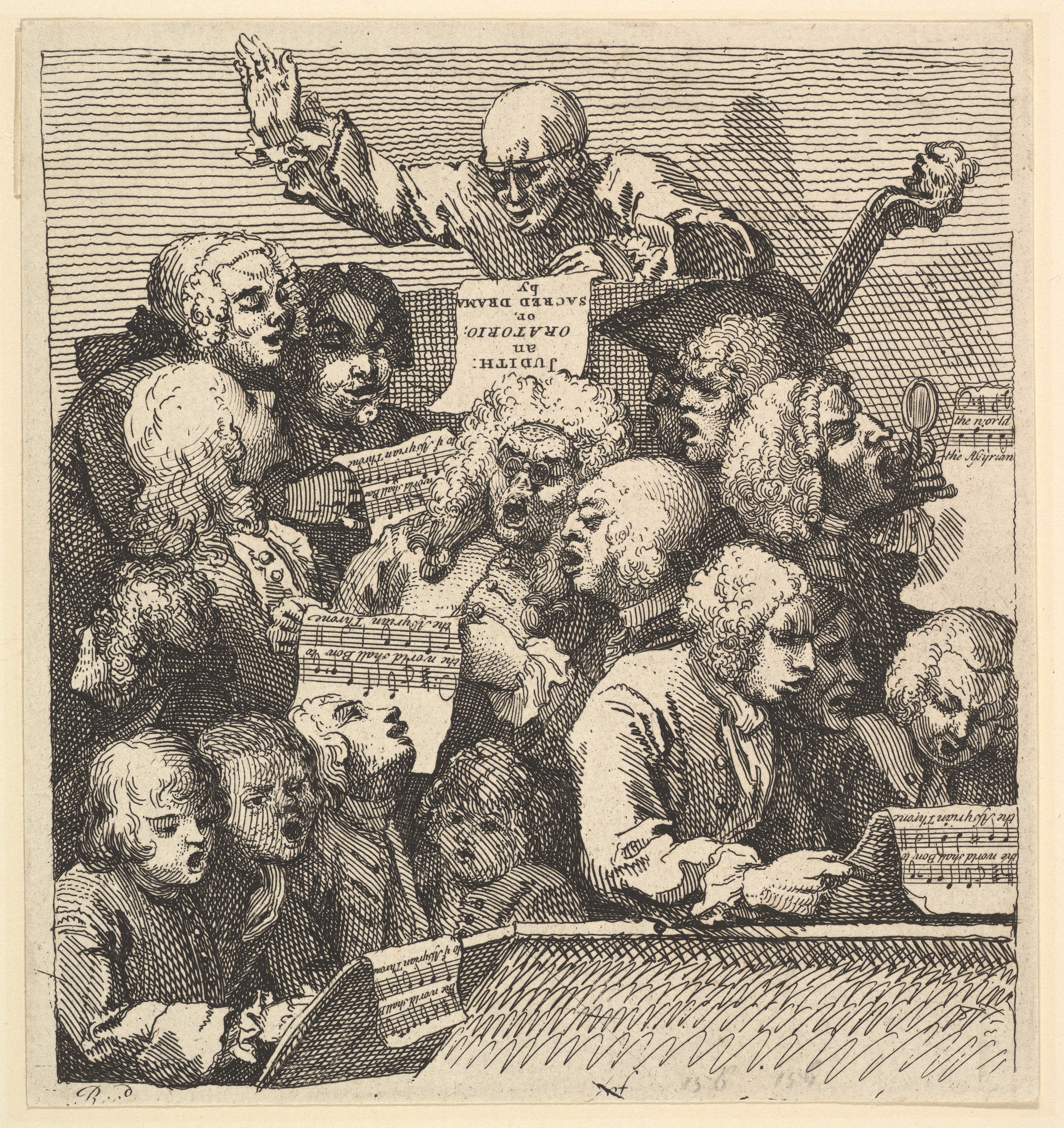
An oratorio is a form of religious music drama that emerged in 17th-century Italy alongside opera. Stories were typically taken from the Hebrew Old Testament, as well as the lives of Christ, Mary, or the saints. During the baroque era, the genre was musically indistinguishable from opera—singers, who portrayed biblical figures, would alternate between recitative dialogue and virtuosic arias. In some cases, oratorios were even mounted in fully realized productions with costumes and sets. But for the most part, these sacred works were left unstaged, presented in churches or concert halls.
What story does Messiah tell?
Messiah is an unusual example of an oratorio in that it doesn’t follow a dramatic narrative. The soloists don’t play specific characters, nor are there any scenes depicted in the manner of a nativity pageant or a passion play. Rather, the libretto by Charles Jennens is a compilation of biblical passages related to Christ’s birth (Part I), his death and resurrection (Part II), and his glory in world to come (Part III). The text is closer to a scripture reading than an operatic drama. And for this reason, Messiah would initially seem impossible to bring to life onstage. So, for most of its nearly 300-year performance history, Handel’s work has existed exclusively as a concert piece, with the four stationary principals lined up in front of the orchestra and choir.
If Messiah isn’t an opera, then why is Houston Grand Opera performing it?
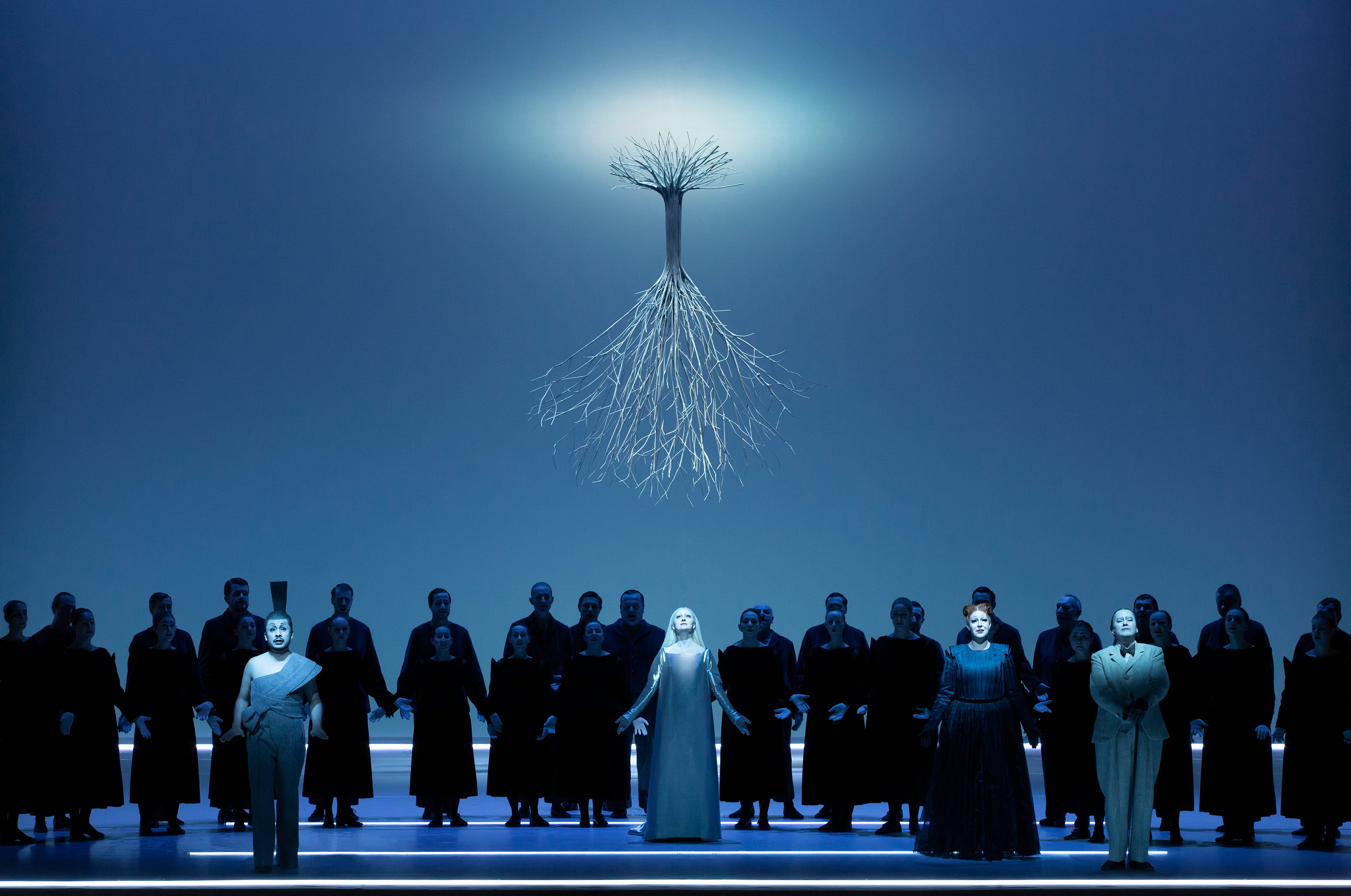
In the 21st century, directors began getting the wild idea to stage Handel’s Messiah as if it were an opera. This challenge has inspired a range of novel solutions, but none quite as visionary as that of late Texan director Robert Wilson. While Wilson has staged traditional operatic repertoire, including HGO’s 2022 Turandot, he’s best known for his experimental theater works. For instance, his groundbreaking opera Einstein on the Beach, a 1976 collaboration with composer Philip Glass, is a series of static tableaux devoid of any plot. Though far removed from the world of 18th-century oratorio, Wilson’s abstract approach to theater is ideally suited to Messiah—a piece on the same scale as opera, but which lacks any linear narrative.
What is the meaning of Robert Wilson’s production?
We’ll allow Wilson to answer that himself: “The reason I’m attracted particularly to this work (in some ways it reminds me of Einstein on the Beach) is, in its abstraction, we are liberated to think what we want to think. That’s not to say there’s not meaning. It’s full of meaning. But we are not given a specific meaning, so we’re free now to think whatever we want to think.
“It’s to inspire us spiritually, [but] it’s not a religious work. Religion has no place in the theater. Religion will divide men, politics will divide men. But theater and art have the possibility of bringing people together in a spiritual way. And this forum that we call theater serves, in that sense, a unique function in society: that we can come together, regardless of our differences, and for a few minutes share something together."
Handel wrote operas in Italian, so why is Messiah in English?
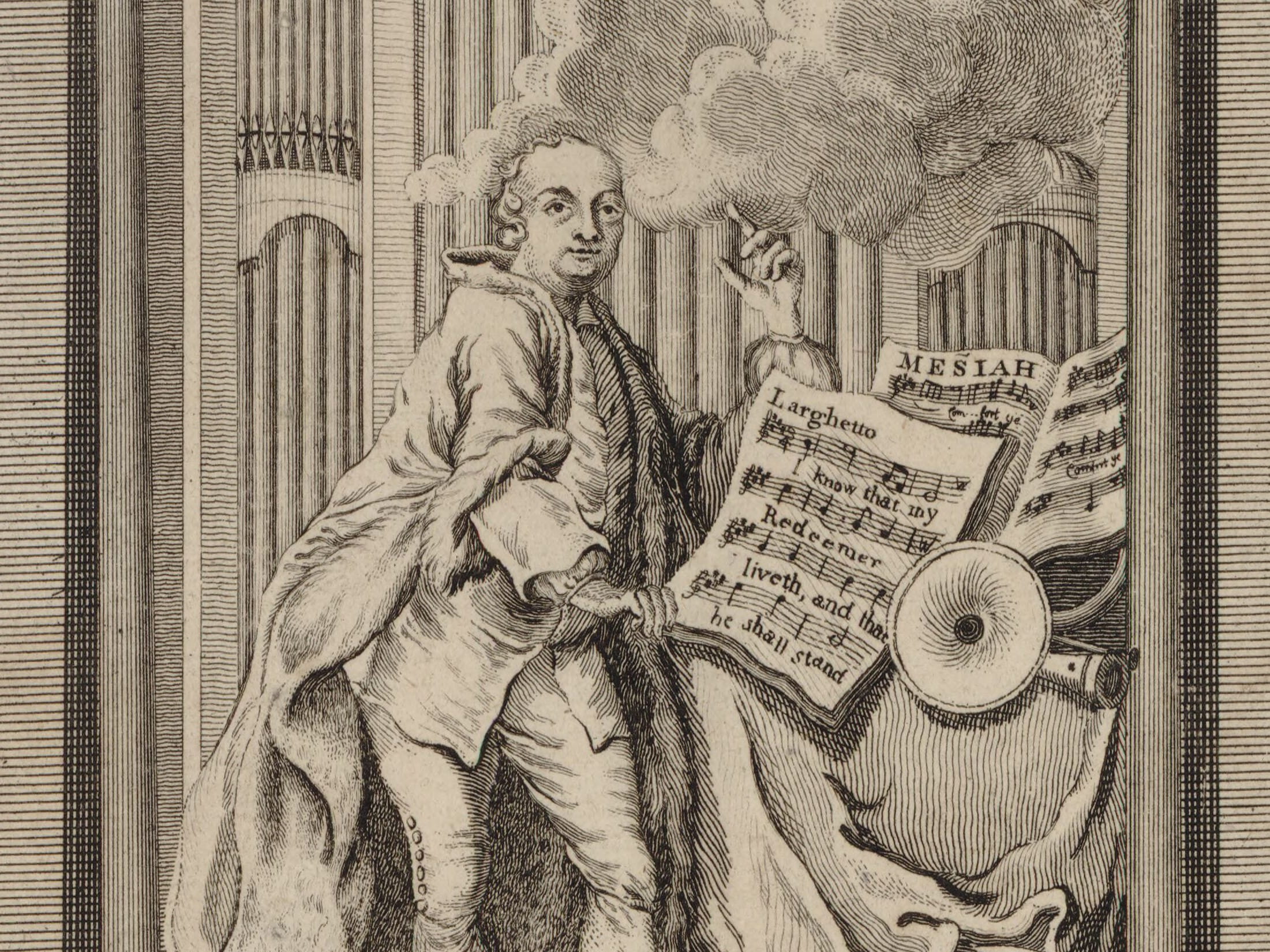
Born in Germany in 1685, George Friederic Handel honed his craft in Italy like all great European composers of the baroque. In 1712, he relocated to London, where he soon established himself as the leading creator of Italian opera—a popular entertainment among Brits at the time, despite the language barrier. Alongside his operatic composing, Handel was integral in developing a homegrown strain of oratorio in English.
One of his crucial innovations in the genre was to take advantage of England’s rich choral tradition by beefing up the role of the chorus. Messiah features the chorus in nearly two dozen numbers, including the iconic “Hallelujah.” Handel’s vocal writing places great demands on the choristers, who are expected to execute complex counterpoint and long passages of coloratura—a technique usually reserved for soloists.
How is the score of Messiah organized?
The orchestral introduction—labeled a “Sinfony” by Handel—is an example of a baroque French overture. An opening slow section proceeds in stately dotted rhythms, while the faster contrapuntal section takes the form of a fugue. The only other extended orchestral passage is the “Pifa” (Pipe) that announces the shepherds outside Bethlehem. With its droning bass and folklike melody, this number is inspired by the bagpipes played by Italian herdsmen.
The rest of the work alternates between vocal movements for the soloists and chorus. While there are exceptions, Handel mostly cycles through the same basic pattern. One of the four soloists sings a passage of recitative and an aria, and the chorus responds with their own number. A notable departure from the solo arias is the Part III duet “O death, where is thy sting,” which is the only ensemble in Messiah. The tenor and alto (the latter part taken by a countertenor in HGO's production) trade phrases back and forth in a manner resembling love duets from Handel’s Italian operas.
Why is Mozart co-credited in HGO’s production?
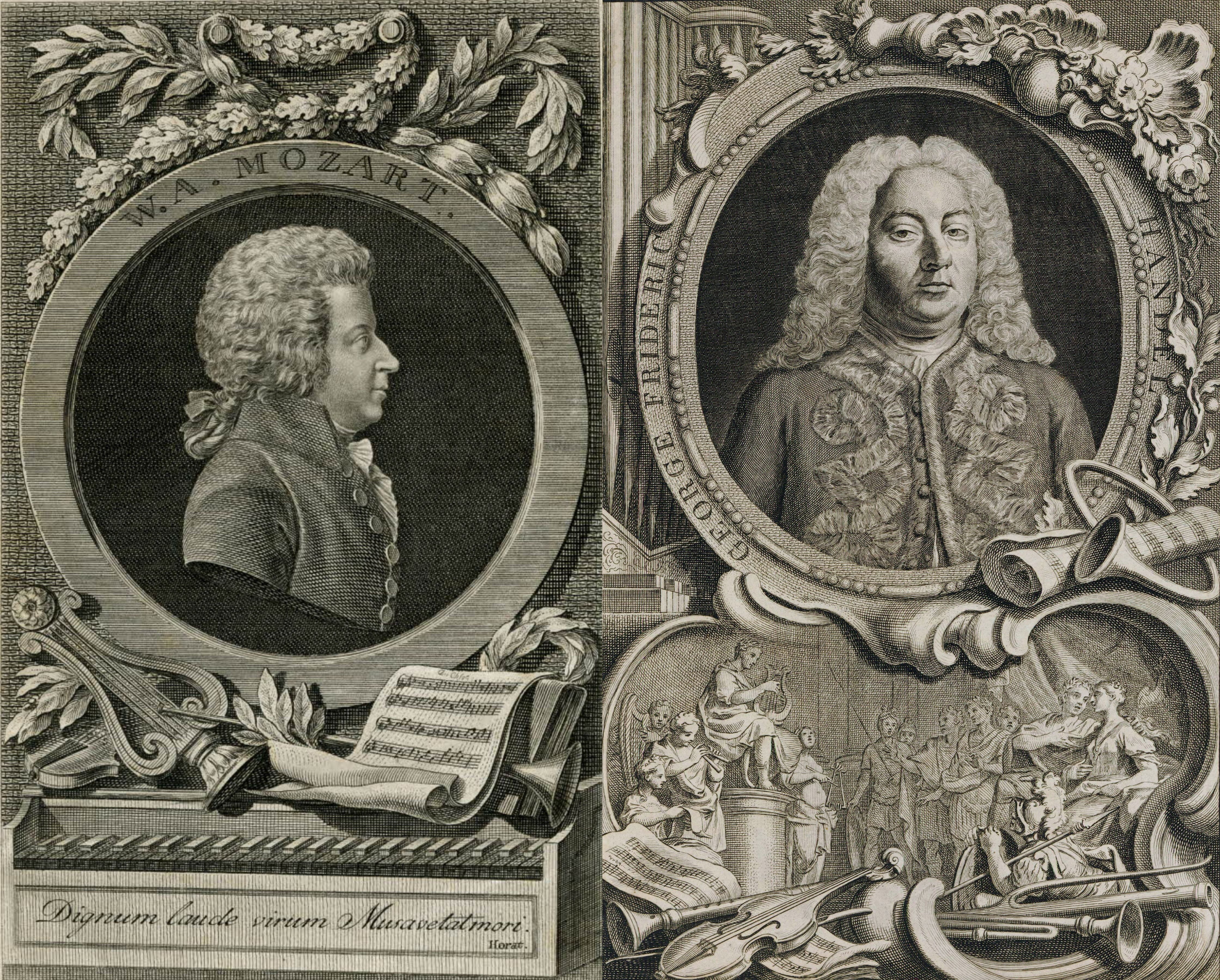
After its 1742 premiere as a charity concert in Dublin, Messiah became an instant classic. Over the next decades, special choral societies were established across the U.K. and Europe to mount performances of Messiah and other Handel oratorios. In the 1780s, one of these societies was set up in Vienna by the Dutch diplomat and music patron Gottfried van Swieten. He entrusted the musical direction to Mozart, who arranged a handful of Handel works for the society’s concerts—including a German-language Messiah in 1789. While HGO’s production utilizes the Mozart arrangement, the original English text has been restored.
Why did Mozart arrange Handel’s score?
Even in Handel’s day, it was common practice to adapt oratorios to changing circumstances. Whenever he revived Messiah, Handel rewrote or reassigned numbers to suit the strengths of his soloists. Similarly, Mozart’s arrangement was tailored to the classical orchestra of his time. The baroque ensemble Handel had written for 50 years earlier was dominated by strings and harpsichord. Additional instruments were used sparingly, often for novelty or effect.
But by the 1780s, orchestras had expanded to include what was called a Harmonie in German—that is, a wind section. In addition to the bassoon, oboe, and trumpet that appear in the original, Mozart added flutes, clarinets, horns, and trombones. He employs winds with far greater frequency than Handel, weaving in new wind countermelodies that elegantly complement the vocal lines.
What other changes did Mozart make to Messiah?
Mozart cut two numbers from the score and also reassigned solos to different voice types. Notably, the Part I aria “Rejoice greatly,” which Handel originally wrote for soprano, is taken by the tenor. While Mozart left the vocal lines mostly untouched, he did take some liberties with the harmonizations. Using the added winds, he altered or filled out harmonies to better suit classical tastes. In one case, Mozart completely recomposed one of Handel’s numbers. Van Swieten, who commissioned the arrangement, felt that the soprano's Part III aria “If god be for us” sounded “cold,” so he had Mozart re-set the text as a passage of recitative.
What happened to the trumpet in “The trumpet shall sound”?
Perhaps the most unusual change Mozart made was to eliminate the trumpet solo from the Part III bass aria “The trumpet shall sound.” One explanation offered is that the baroque trumpet used in Handel’s day, called a “clarino,” had fallen out of fashion by the 1780s, and there were no longer players who could execute the virtuosic lines he wrote for the instrument. There were, however, highly skilled horn players in the classical era. Mozart had even written a series of horn concertos in the years preceding his Messiah arrangement. And so the solo line—in a greatly shortened version—goes to a hornist instead.
basso continuo:
A musical part, typically assigned to a cello-and-harpsichord duo, that serves as the main harmonic support in a baroque or classical ensemble. The cellist plays the bassline while the keyboardist fills out the chord progressions.
recitative:
A speech-like style of singing, characterized by repeated notes and flexible rhythms. Recitative can be either “dry”—that is, backed only by the basso continuo players—or “accompanied”—backed by the full orchestra.
da capo aria:
A common aria form in baroque operas and oratorios. The singer introduces an opening A section, proceeds to a contrasting B section, and then repeats the A section, usually with improvised ornaments added. The alto's “He was despised” is an example from Messiah.
ritornello:
An orchestral passage that repeats between vocal sections of an aria.
coloratura:
Virtuosic vocal runs and ornaments executed at great speed.
word painting:
A technique—greatly favored by Handel—in which a composer illustrates the sung text through musical means. The chorus’s wandering coloratura lines in “All we like sheep have gone astray” are an example from Messiah.
counterpoint:
The combination of two or more different musical lines, either vocal or instrumental. Their contrasting melodies interact with one another, creating complex musical textures.
fugue:
A form of counterpoint in which a main theme, called a “subject,” is passed around and developed among the contrapuntal parts. Many of the choruses in Messiah feature fugal passages, notably the massive “Amen” that closes the work.