Power Play

Director Joan Font and associate director/choreographer Xevi Dorca have been making mischief at Houston Grand Opera for nearly 20 years. Font and Dorca—who both hail from the Catalonia region of Spain—are members of Comediants, a Barcelona street-theater collective co-founded by Font in 1972. The group’s eccentric performances incorporate circus, puppetry, clowning, and commedia dell’arte. Beginning in 2007 with Cinderella, Font and Dorca staged a trio of carnivalesque Rossini productions for HGO that drew heavily on their work with Comediants. The Barber of Seville followed in 2011 and The Italian Girl in Algiers in 2012.
Ahead of this spring’s Barber—HGO’s third revival of the staging—Font and Dorca walked us through their multilayered take on Rossini’s madcap opera buffa.
HGO audiences who saw your production of Rossini’s Cinderella last season will remember the adorable troupe of rats portrayed by silent actors. In this production of Barber, Dr. Bartolo’s servants seem to fill a similar role.
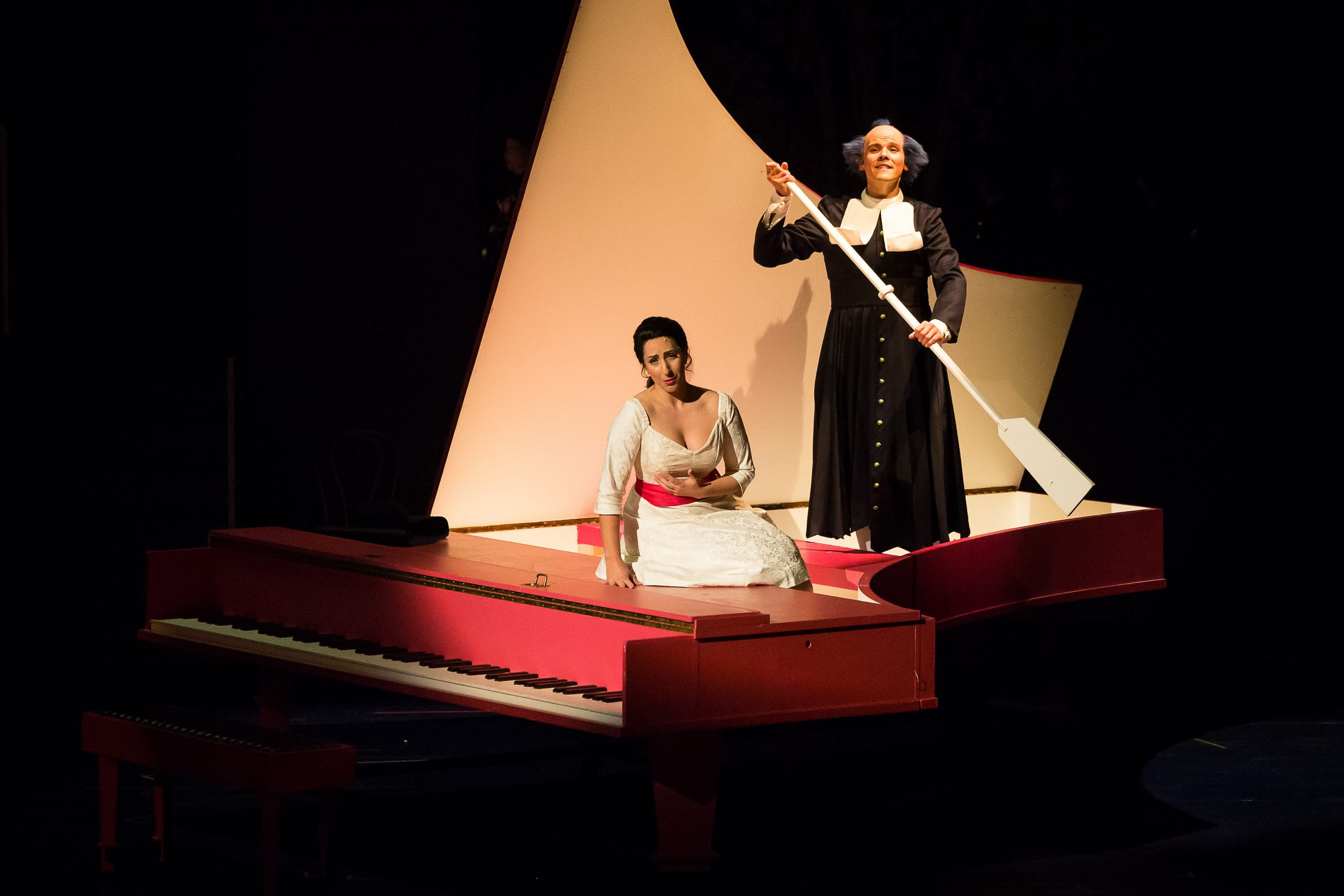
Xevi Dorca: We have different “levels” of onstage. The main story is the first level, with the characters that are singing. But then we have another level of silent characters, who are archetypes—for example, the Widow, the Drunkard, etc. They help to take care of the props and make the scenes more alive. During three arias—Figaro’s, Don Basilio’s, and Berta’s—the principals are standing and singing. And what they are explaining in their arias is represented by the servants in a commedia dell’arte way.
Joan Font: It’s theater within theater. The spectator sees one story, a second story, and a third story. They can choose between these stories, but there’s always this correlation of worlds. And there is always some place where you can have some entertainment. Not just with the characters, but also with the props—like the piano. This piano is everything: a desk, a barbershop, a public plaza, a bed, a wedding cake. So there is this unfolding of characters, of elements, of scenery, of spaces.
You mentioned commedia dell’arte, which is a form of Italian folk theater that influenced opera buffa farces like Barber. Could you explain what it is?
JF: Commedia dell’arte is a type of theater that emerged during the Renaissance in opposition to classical theater, which was based on Greek mythology—the gods and these grand heroes. Commedia dell’arte, by contrast, confronts reality, everyday life. There are these fantastic characters: drunks, maids, usurers, musicians, and actors. It is, above all, an ironic—even cynical—view of the world around us. It uses comedy, but deep down, it’s a mirror that reflects the audience. What commedia dell’arte does is enter the street so that the public can identify with the characters.
With all the commedia-inspired action onstage, movement is essential to your production. The characters often move in perfect sync with the music, like cartoons. Xevi, could you discuss your role as choreographer?
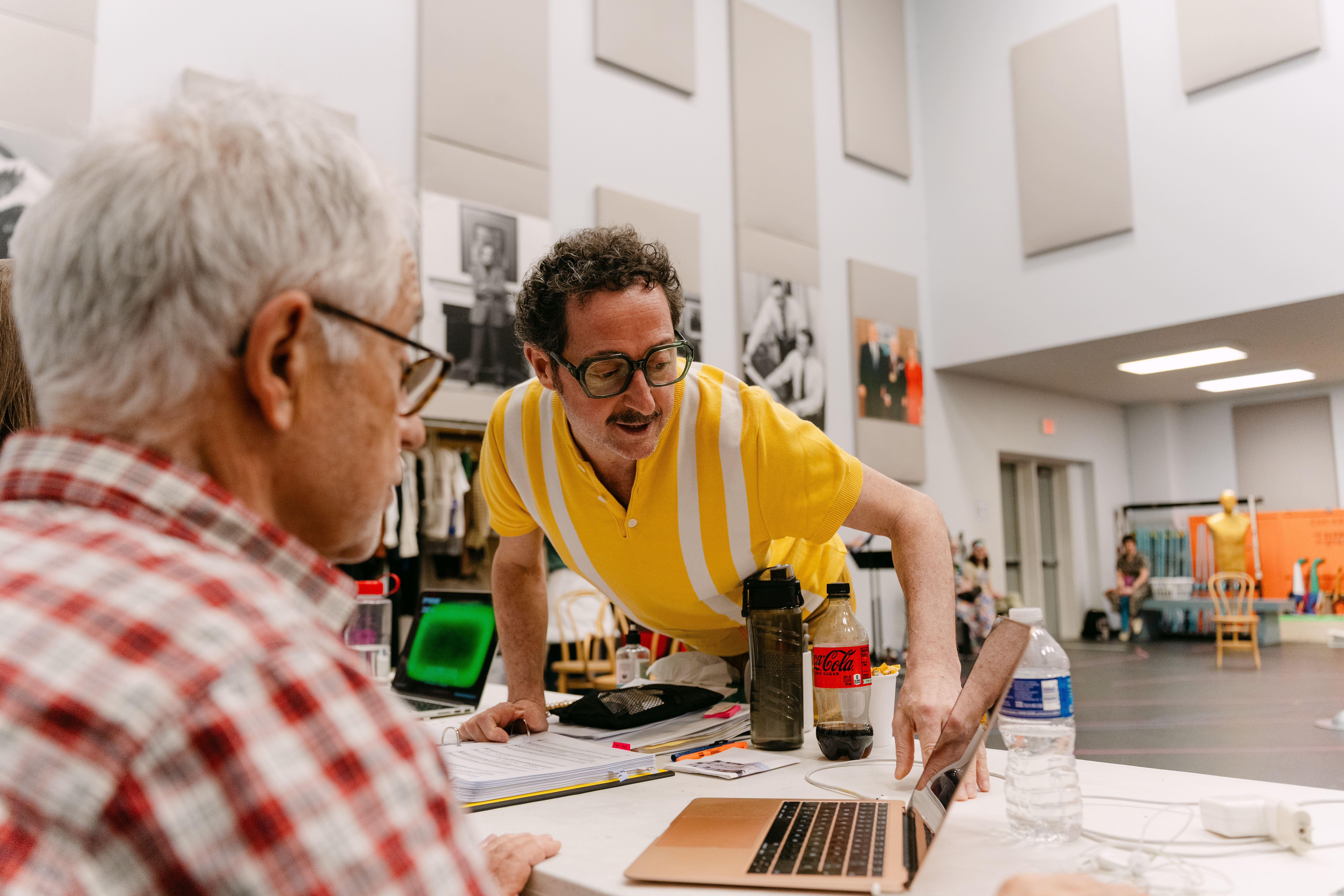
XD: It’s very curious that I received a nomination for outstanding choreography at the Dora Mavor Moore Awards in Toronto for this production, where we don’t have dancers. But the jury saw that someone was organizing the music through the movement. Joan tells me what is important in a scene—what we have to show—then from this I create the movements. When I have to move the principals or the chorus or the supers, the music tells me how this has to go. I don’t think too much—I just go into the rehearsal room, and through the music, we create the scenes. Rossini is very easy to follow, because the accents are very clear and he finishes his “sentences” very clearly.
Could you explain your concept for this production? What are the themes you hope to tease out?
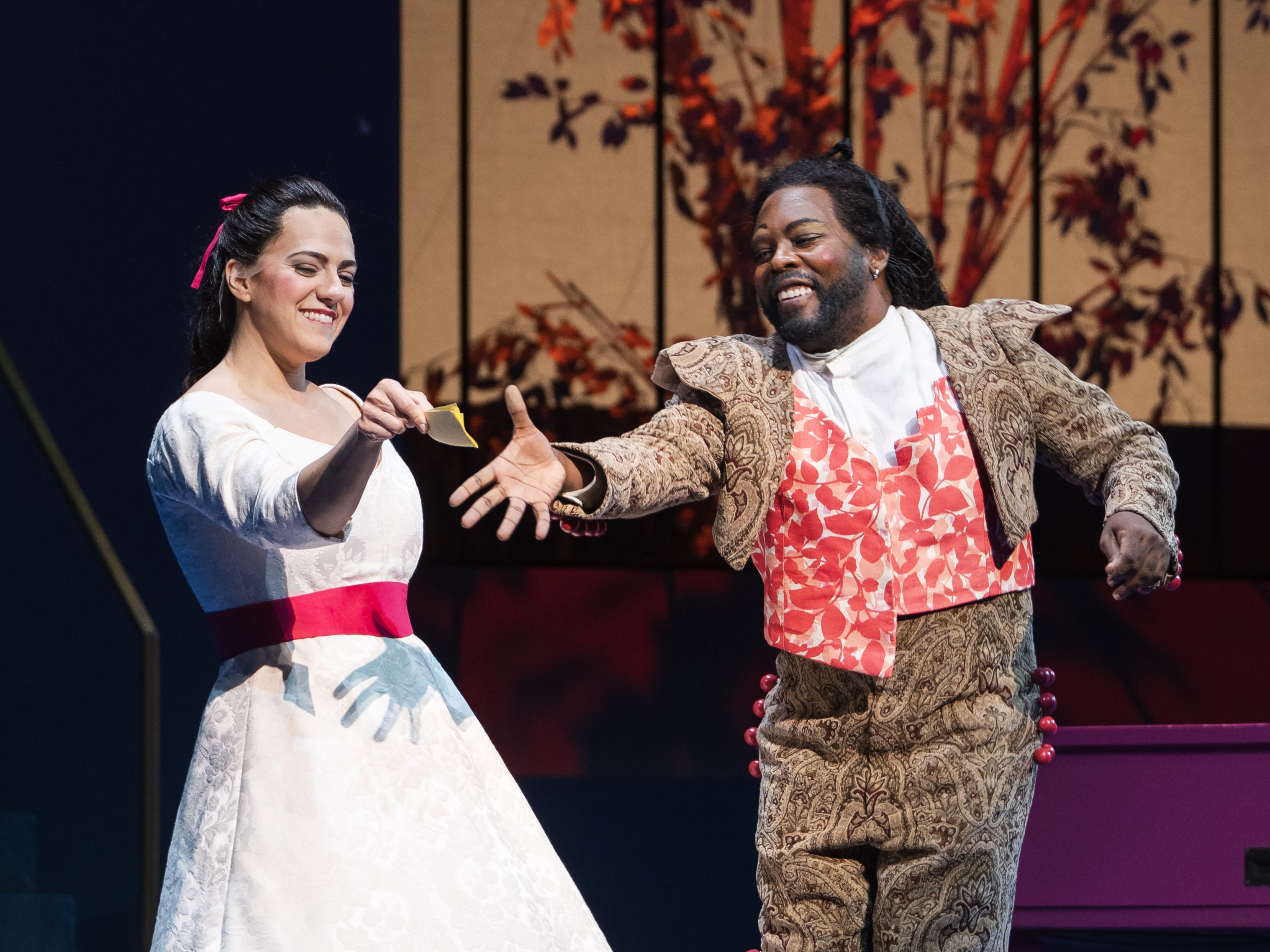
JF: One of the most important is the power of the key. Having the key gives you the power to lock a door so someone can’t leave. And there’s another super-important element, which is letters. These messages go back and forth, and you don’t know if they’ll finally reach the person they’re meant for, or if they’ll get lost along the way. Like the keys, it’s an element of great humor—it’s very funny to follow a letter’s journey. Another theme is money: “El poderoso caballero es Don Dinero.”
XD: We have a saying in Spain—an easy way of translating it is, “A powerful man is the one that has a lot of money.” Money is power. Almaviva uses money to solve all the problems. At the beginning, he pays Figaro. Also, he pays Basilio, who changes his mind because Almaviva gives him an expensive ring.
“Power” seems to be the key word here—the characters are constantly trying to exert power, whether with money or keys. Especially Bartolo, who keeps Rosina locked away.
JF: The heroine is a woman in a man’s world. It’s Don Bartolo who owns the mansion. There are no women in the chorus. But in this opera, the one who wins—the one who explains her world—is Rosina.
XD: Rossini was very modern. He was defending women in all this. In Barber, Cinderella, and The Italian Girl, the rest of the main characters are men, but the heroines of those operas are always women. Rossini gives power to those women.
JF: Rossini’s themes are timeless and universal. I could stage a new production of Barber dressed in today’s clothes, or even in the future—in the year 2035. And it would work, because it’s a universal theme. These are themes that touch everyone: old age, youth, love, disorientation, loss of identity, letters, keys. These have always existed. For a child, an adult, an old person—it’s universal.