PORGY AND BESS RETURNS TO HGO
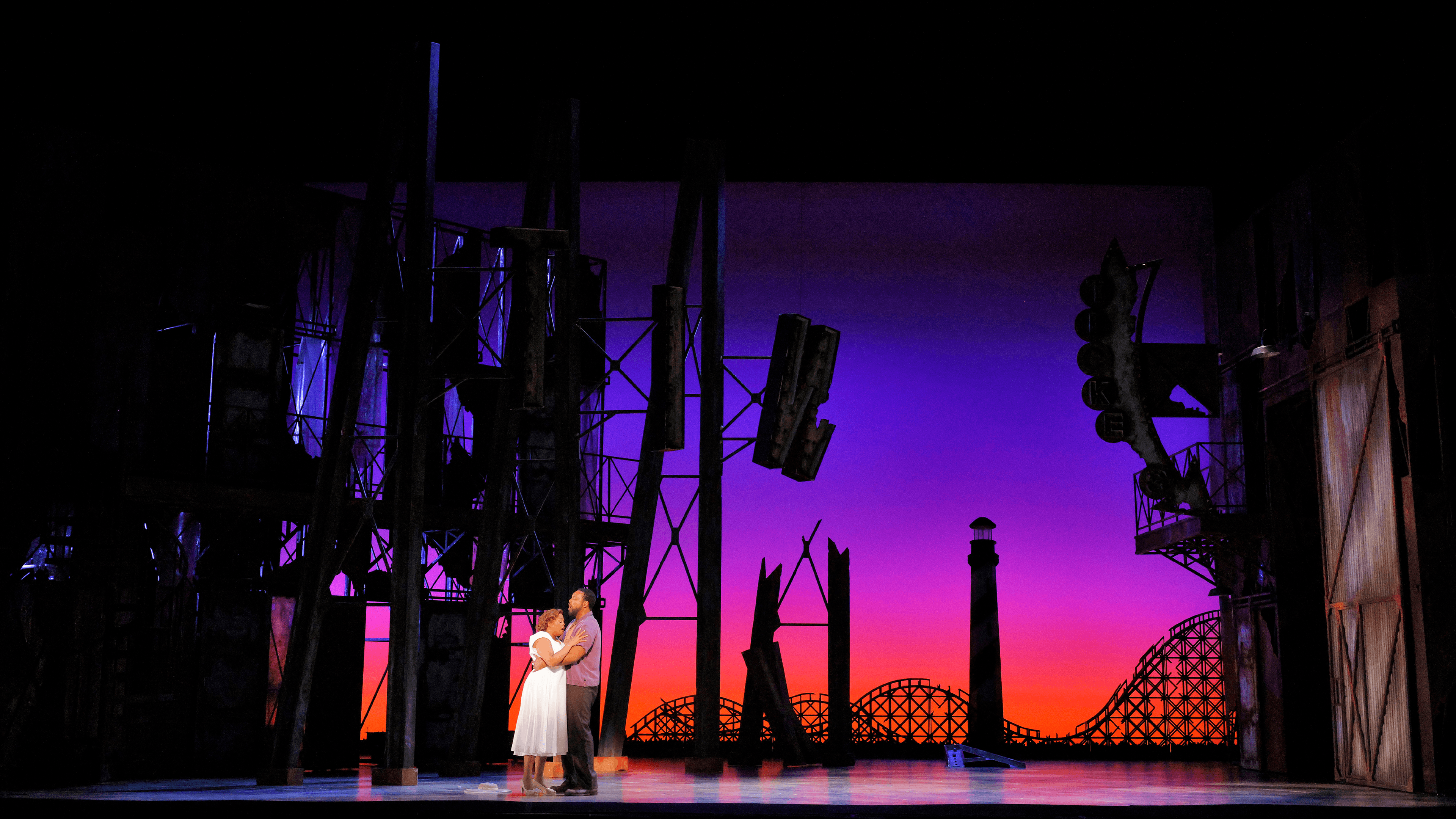
I have directed Porgy and Bess many times, and each time I step back into the world of Catfish Row, it feels incredibly rich and satisfying. The unforgettable music, powerful characters, and the hard-hitting story speak directly to the heart. To me it is, without a doubt, the greatest American opera ever written. The story, the lyrics, and music are all extraordinary achievements in their own right, fusing all the operatic elements we love into a powerful work of timeless music and storytelling.
Astonishingly, the premiere Porgy and Bess was not a commercial success. The opera, which ran for almost four hours, had the misfortune of opening in 1935, in the midst of the Great Depression, which didn’t help ticket sales. Composers like Puccini, Rossini, Verdi, and others had been able to salvage works after unsuccessful premieres, but Gershwin never had the chance to revisit Porgy and Bess; he died of a brain tumor two years after it finally reached the stage. In subsequent years, many other artists and producers turned their attention to Gershwin’s masterpiece, often with drastic cuts and rearrangements. We have Houston Grand Opera to thank for the restoration of the complete original score in 1976; that production won both a Tony Award and a Grammy Award and paved the way for the work’s return to the opera house.
I first directed Porgy 20 years ago. During the two decades that followed, we have navigated life-changing events in the world outside the theater. As I traveled with the production, the fears and hopes of the Catfish Row community often seemed to mirror the emotions we were experiencing in real life in our rapidly changing societal landscape.
I remember being in rehearsal in Washington, D.C. at the time of Hurricane Katrina, which gave new weight to the pivotal scene in which Jake and Clara are killed in a storm. In the production’s second outing, at Lyric Opera of Chicago, Barack Obama was elected president the night of our dress rehearsal, a real-life amplification of the hope that suffuses the opera’s final moments. The entire cast went together to Grant Park to celebrate as Obama accepted the nomination. Each time the production traveled—to Atlanta, Los Angeles, Cooperstown, and San Francisco—we found something in the lives of these characters that resonated with current events. And now I am thrilled and deeply honored to bring the work to HGO audiences after such a long absence.
When Gershwin was preparing to write Porgy and Bess, he set forth an audacious vision: “The production will be a serious attempt to put into operatic form a purely American theme. If I am successful, it will resemble a combination of the drama and romance of Carmen and the beauty of a Meistersinger, if you can imagine that.”
Like Carmen, Porgy tells the story of ordinary people, not the kings, queens, and cardinals that figure so prominently in so much of operatic literature. Gershwin’s sweeping score reminds us of the inherent majesty and magnitude of the human spirit, regardless of outer circumstances. As with any family, Heyward and Gershwin’s characters have a unique ability to influence one another—sometimes to hurt, sometimes to heal. Their complex interactions invite multiple interpretations, which also feels very true to the human experience. Some see Porgy’s leaving Catfish Row as a sad event; but for me, the ending feels hopeful. The community has supported Porgy, helping him face an uncertain future with optimism.
Is Porgy’s optimistic decision to strike out and leave Catfish Row foolish, or is it an indication of courage and strength? Each of us may have a different answer, but by reflecting on the question, we learn something about ourselves. As for myself, I will continue striving to hold on to the belief in a brighter future to come.