Matters of the Heart

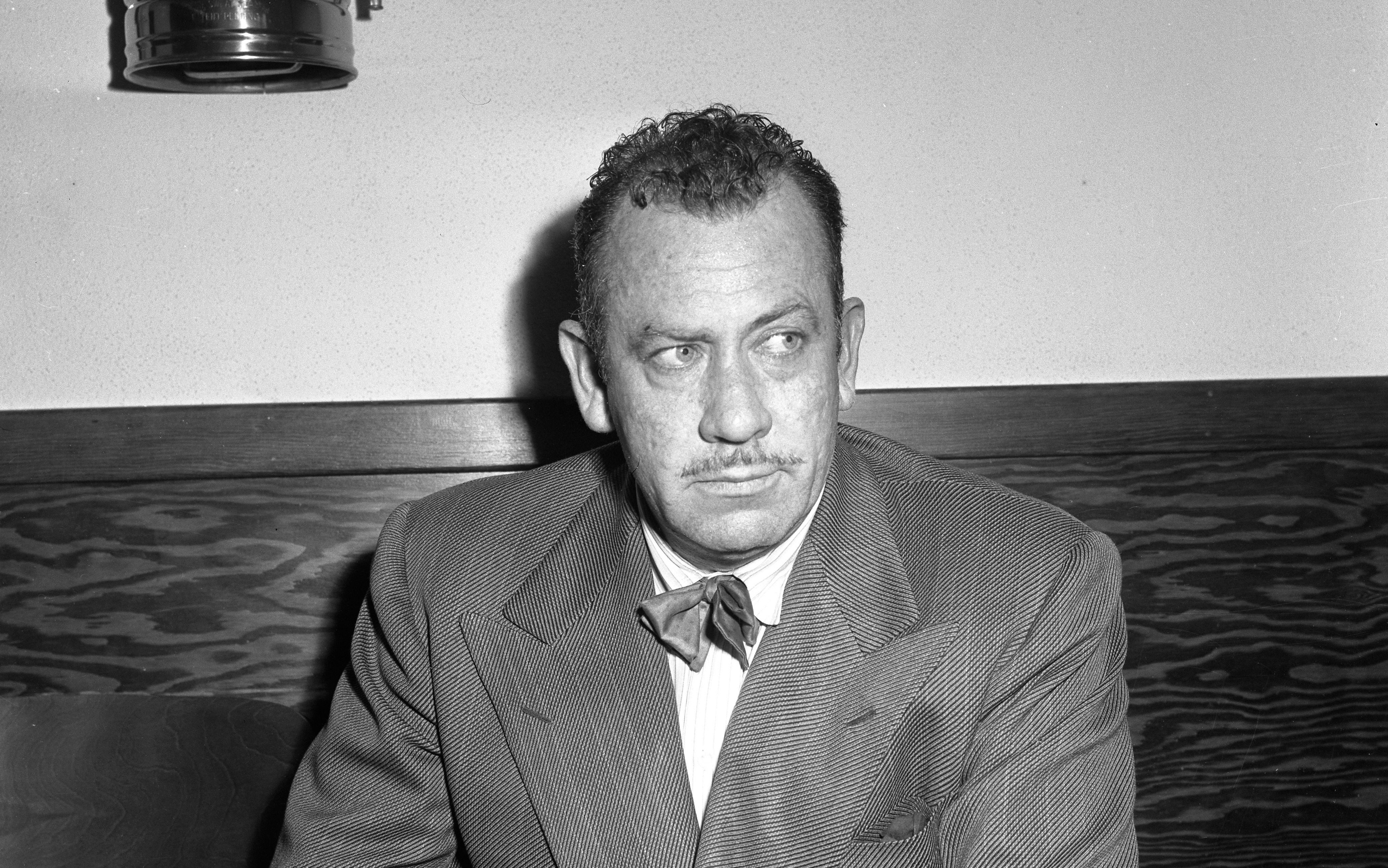
Published in the depths of the Great Depression, John Steinbeck’s Of Mice and Men (1937) is a novel that both embodies and transcends its historical moment. This story of two itinerant agricultural laborers, George Milton and his mentally disabled friend Lennie Small, is one that Steinbeck knew well. He took frequent breaks while studying at Stanford University in the early 1920s to gain experience working in agricultural industries around his hometown of Salinas, California.
That experience filtered into Steinbeck’s humanitarian concern with the plight of the working poor. Labor conditions in California’s agricultural sector were already deteriorating in the early years of the 20th century with the emergence of a massive itinerant labor force that spread from the Midwestern Corn Belt to Western states to harvest seasonal crops. Unionization efforts by the Industrial Workers of the World (or “Wobblies”) could not prevent the dire conditions that Steinbeck depicts in Of Mice and Men—irregular work, low wages, constant movement, and individual powerlessness, all of which worsened during the Great Depression.
These concerns would come to a head in Steinbeck’s most famous Depression-era novel, The Grapes of Wrath (1939), which builds on themes in Of Mice and Men with its representation of the impoverished conditions facing Oklahoman farmers and their families forced to migrate west during the Dust Bowl. The when and the where of Of Mice and Men, however, are far less distinct—simply a ranch somewhere near the Salinas River sometime in the early decades of the 20th century. Contemporary reviews of the novel likewise pointed to its general and universal themes. For Eleanor Roosevelt, writing in her daily syndicated newspaper column, the novel was thus a “picture of the tragedy of loneliness.”
Such basic themes gave Steinbeck’s novel a broad appeal, a portability beyond its historical moment that saw it selected for the Book of the Month Club, immediately adapted (by Steinbeck himself) into a three-act Broadway play, and, two years later, turned into a Hollywood film. Today the novel continues to be widely taught in American high schools. For several years in the early 21st century, the State of Texas even turned to the novel to derive its so-called “Lennie Standard,” which determined whether individuals with mental disabilities should be exempt from the death penalty.
Part of the appeal of Of Mice and Men, then, was its ease of adaptation, and its usefulness toward different ends. It is little wonder that Steinbeck’s novel caught the attention of Carlisle Floyd, whose libretto and musical score display an uncanny ability to intuit so much about Steinbeck’s complex intentions in his deceptively simple book. Floyd’s stated desire to emphasize the childishness of Steinbeck’s characters, particularly Lennie, resonated with one of Steinbeck’s more subtle experiments in Of Mice and Men—to write it as a book for children, an experiment in representing the purity and simplicity of a child’s world.
Steinbeck similarly theorized his novel as an experiment in “is-thinking” or “non-teleological thinking,” whereby events are presented as they are, without taking sides or suggesting causes (Steinbeck’s original title for the novel was “Something That Happened”). This may be another source of the novel’s enduring popularity, the curious way its dramatic events do not quite add up to some greater meaning, leaving the story open to multiple interpretations.
Floyd's opera resonates with something elemental in the novel: the emotional conditions of human existence."
However you read the novel, Floyd’s opera resonates with something elemental in it: the emotional conditions of human existence. The composer thought that he detected in Steinbeck’s novel certain “act-endings and scenes that built to curtains.” In this way, he had in fact again intuited one of Steinbeck’s greatest experiments in Of Mice and Men. He intended it not as a novel at all but as “a play in the form of the novel”—a formal innovation that grew from the author’s belief that certain themes are best understood by groups of people in almost physical contact with one another. Steinbeck’s conception of Of Mice and Men as a play-in-novel form creates an uncanny effect on us as readers, whereby we encounter not a represented social world but instructions toward a future stage production; not dialogue between characters but lines for actors; not fictionalized places but set descriptions; not objects but would-be props.
When we combine all of the waiting in the story—all of the repetition and rehearsal of empty linguistic formulas centered on Lennie and George’s dream of living off “the fatta the lan”—with the novel’s themes of poverty, loss, failure, and exile, we seem to verge on an existentialist literary world, an empty environment of human loneliness. We approach even a theater of the absurd not unlike Samuel Beckett’s 1953 play, Waiting for Godot, which likewise features two tramp-like characters in a codependent and repetitive relationship, staged in a barren landscape.
Like the Broadway play, the opera realizes the novel’s formal desires to be performed on the stage. When we add to this the other experiment that Floyd recognized in Steinbeck’s story—its “childish” representation of a purer world of intense colors, sounds, and feelings—then we understand the nature of Floyd’s interpretation of Steinbeck. The opera emphasizes the childishness of the characters—Curley’s Wife, for example, carries a doll in the original libretto. Floyd further compresses Steinbeck’s already minimalist story into one that explores intensely basic, even childlike emotional states, brought to life by the pure sound and the heightened visuality that Steinbeck associated with the humble world of children.
Floyd’s opera brings to light (and sound) the novel’s existentialist theme of human loneliness and its understanding of the self as a fragile construct governed by negative emotions. Lennie’s disability lies at the extreme end of a spectrum of maladies of the self, or what the opera calls the “heart.” When Lennie and George sing of their dream together early in the opera, Lennie knows the words “by heart,” not just in the sense of memorization, but in the deeper way that all the characters in the opera are essentially singing from their hearts, from their core emotional selves.
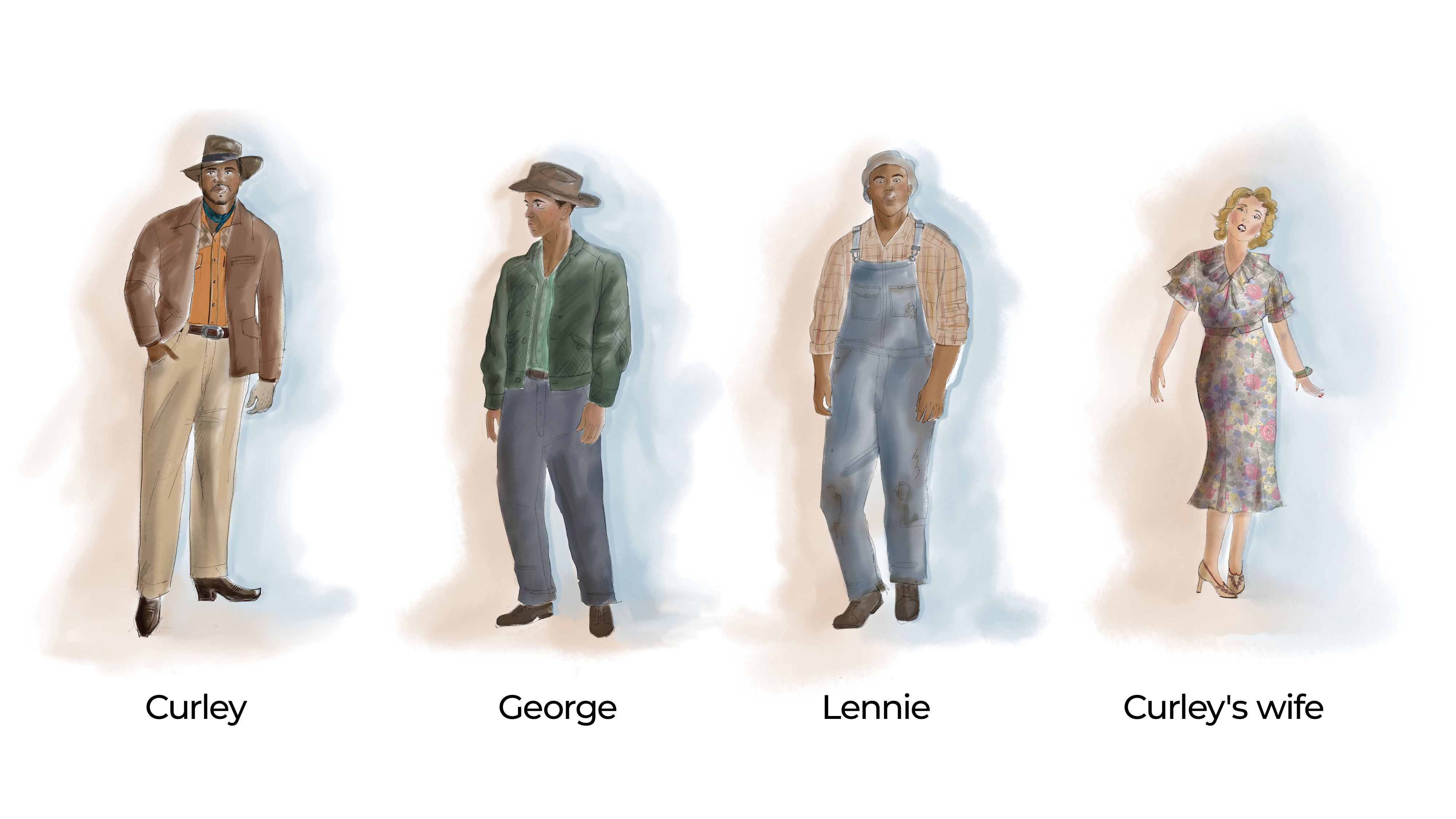
The dynamic between Curley and Curley’s Wife is a particularly fraught emotional tangle at the center of the opera, not least because her power increases. For example, she physically blocks Lennie from leaving the bunkhouse to force his fight with Curley, and in other ways she physically disrupts the activities of the men. Curley lives under a cloud of shame, the most destructive of emotions; his virility is openly questioned, his inability to control the desires of his wife constantly displayed. Curley’s Wife is a bitter, threatening presence, but then also a figure of loneliness, someone who wants to be cared for, to have attention paid to her, to be loved and adored. Her habit of stroking her own hair—something she can’t control—is a sign both of her vanity and her anxiety. All the major characters seem to be internally divided in similar ways. Lennie likewise cannot control his actions, split as he is between tenderness and violence.