Leading baritone Will Liverman on his many roles—including Figaro.

GRAMMY Award-winning baritone. Composer. Entrepreneur. Recording artist. Producer. When I reach Will Liverman over Zoom ahead of his long-awaited HGO debut as Figaro in The Barber of Seville, I cannot help but marvel at his versatility as an artist. In a way, I tell him, he’s like a modern impresario.
“It’s funny that you bring that up,” he says. “I would say that’s probably the biggest similarity that I have with Figaro, is being a hustler.” We both laugh. In the best possible sense of the word, I tell him.
“I guess I’ve always had that mindset,” he replies. “I feel motivated and energized by doing a lot of different things. That’s just my brain space. And so, yeah, Figaro is that guy: matchmaking, scheming, always.”
Famous for his Figaro, Will always loves stepping back into the role. “He’s super resourceful, super charming, full of energy, witty. He helps Count Almaviva get with Rosina and outwits Don Bartolo in the process!”
But what Will might love most about Figaro is that he’s ultimately out to help his community. And that aspect of the beloved barber’s character inspired a life-changing epiphany in the baritone one day in 2018, when he was in Kentucky to perform the same role. He’d stopped to get his hair cut when, contemplating the Black barbershop as a community hub, he was seized by the idea to create an updated version of Rossini’s masterpiece.
Five years later, The Factotum, Will’s genre-spanning new opera, co-written with DJ King Rico, made its sold-out world premiere at the Lyric Opera of Chicago. Loosely inspired by Rossini’s 200-year-old classic, named for the aria “Largo al factotum,” and set in a Black barbershop on Chicago’s South Side, it was praised by Opera News as “mic-drop fabulous good.”
That was just one of a slew of Will’s successes over the past five years, both on the stage and in the recording studio. It was in 2021 that he appeared at the Metropolitan Opera as Charles Blow in Terence Blanchard’s Fire Shut Up in My Bones, in what the New York Times called a “breakout performance.” The role won him a GRAMMY Award for Best Opera Recording and shot him to a new level of fame.
“This visibility was something I never saw coming in my career,” he says candidly. “Not to slight myself, but I didn’t see that shift or think that after a two-year shutdown, I would be opening the season for the Met and see my face all over a bus. You know, it was weird.”
Still, with a voice as gorgeously rich as Will’s, it should not have been a surprise. And from that breakout moment until now, he has continued to grace the world’s great stages while using his platform to champion what he calls his “passion projects”: a suite of albums that have garnered him four GRAMMY nominations in addition to his win, and counting.
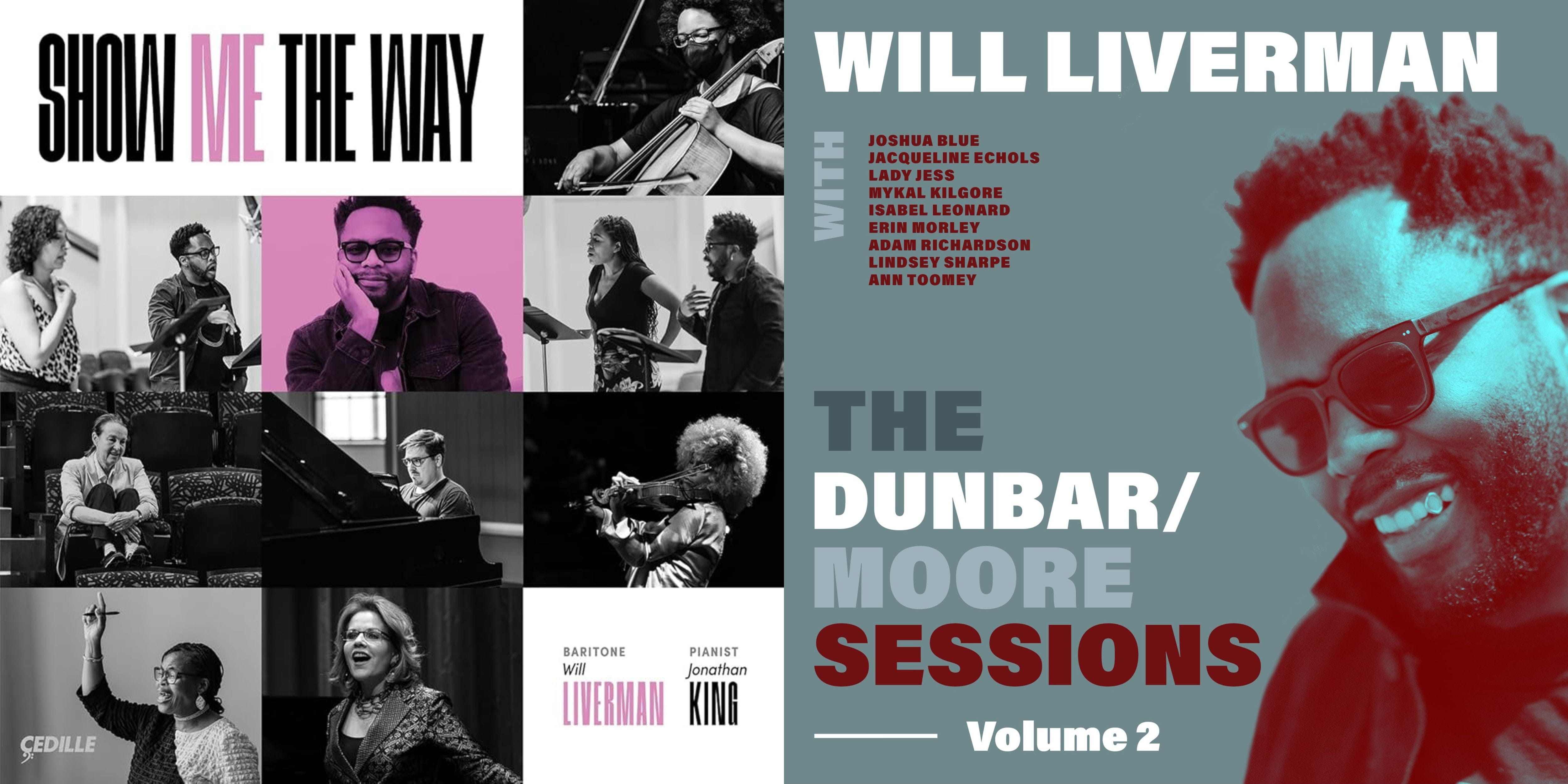
Will’s newest album of art songs, the 2026 GRAMMY-nominated The Dunbar/Moore Sessions, Volume II—featuring his own compositions set to poems by the writer/activists Paul Laurence Dunbar and Alice Dunbar-Moore—was released in collaboration with a who’s who of the opera world, including many names Houston audiences will recognize: Lauren Snouffer, Isabel Leonard, Joshua Blue, and more. He also recently collaborated with a host of stars including Renée Fleming on a 2025 GRAMMY-nominated album celebrating women in classical music, Show Me the Way.
That ability to bring people together, to make things happen—these are hallmarks of Will’s character and career. But of course, the same traits also remind me of someone else. Inevitably, our conversation returns to the iconic Figaro, Rossini’s classic opera, and Will’s abiding love for both.
“Figaro’s got one of the most famous arias out there,” he enthuses, “one that bridges the gap to the mainstream. When I first heard Barber of Seville, I thought they ripped that music from Bugs Bunny. But it was the other way around. There’s something just timeless about the music, the comedy, how they work together—it’s incredible.” He shakes his head in awe.
“It was written 200-plus years ago. For it to still resonate with people when they watch it, especially when the comedy really lands, and folks, like, fall on the floor laughing—that’s what I love. That, and the good singing, which is exciting to hear: the patter, the Rossini crescendo. All of those bubbly, energetic things that make it really fresh and exciting.”
Add in Will Liverman as your Figaro, and what’s more exciting than that?