How to build an orchestra in 5 steps

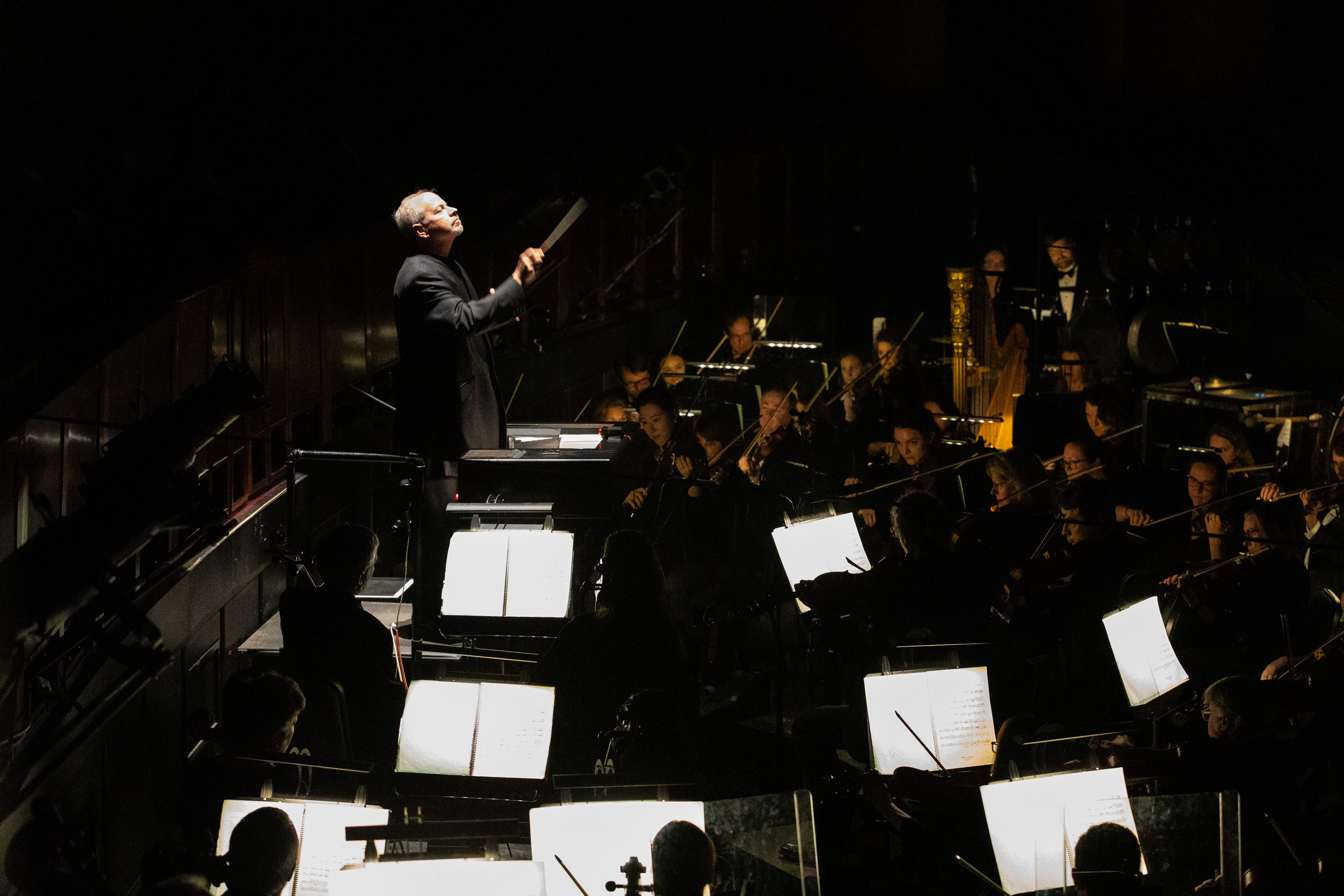
When Maestro Patrick Summers took over the Houston Grand Opera Orchestra in 1998, the ensemble was in its infancy. The majority of mainstage operas were performed with the Houston Symphony, with the HGO Orchestra filling in the remainder of the schedule. After the Symphony decided to focus away from opera, Maestro Summers was tasked with developing the HGO Orchestra into an ensemble capable of everything from new works to Wagner's Ring cycle. As he looks ahead to his next era at HGO at the end of the 2025-26 season, when he becomes the company’s Music Director Emeritus, we asked Maestro Summers to break down how he spent 25-plus years elevating the HGO Orchestra to, as soprano Renée Fleming puts it, a level of “undeniable prestige.”
“I had a set of specific goals each season, which were sometimes very simple: getting the response time to the baton to be as exact as possible, getting a gradation of dynamics that were consistent and clean, thinking about intonation in a certain way. Slow, methodical work over several years.”
“You have to establish the differences between an opera orchestra and a symphonic orchestra, the main one being that you are very attuned and aligned with the singers. You try to both emulate and support them. All great music-making aspires to vocalism. I think the breakthrough moment was Renée Fleming’s first Traviata in 2003. I remember the orchestra responding to her in a way that they had never responded to a singer before.”
“Mozart builds an orchestra better than any other repertoire. The 2023 Figaro was simply a totally different ensemble from when we did Figaro together for the first time in 2005. They’d done a lot of Mozart in that time.”
“When I began in 1998, I said, ‘I don’t want the company to program any Wagner or Strauss for 10 years. I think we need 10 years of orchestra building.’ And that’s a hard ask for an opera company. It was exactly 10 years after that, in 2009, that we did Lohengrin—the first Wagner for the HGO Orchestra. By then, we had done such a range of styles that it was the right amount of challenge. But I would say the culminating moment of my tenure, in terms of the orchestra, was Siegfried in 2016. That is the moment when I felt we were really at our greatest.”
“When you look at a fortissimo in The Elixir of Love, it’s not the same as a fortissimo in Salome. The farther you go back into history, the more interpretive choices a conductor has to make. Getting the orchestra to think about and assume a style has been the thing I’m most proud of. Because my aim for a performance is for an audience to say, ‘Wow, this opera,’ not, ‘Wow, this performance.’ We want the audience’s focus to be on the work itself, not its execution. And so the style has to be effortless.”