HGO Spotlight On: Graphic Designer Rita Jia

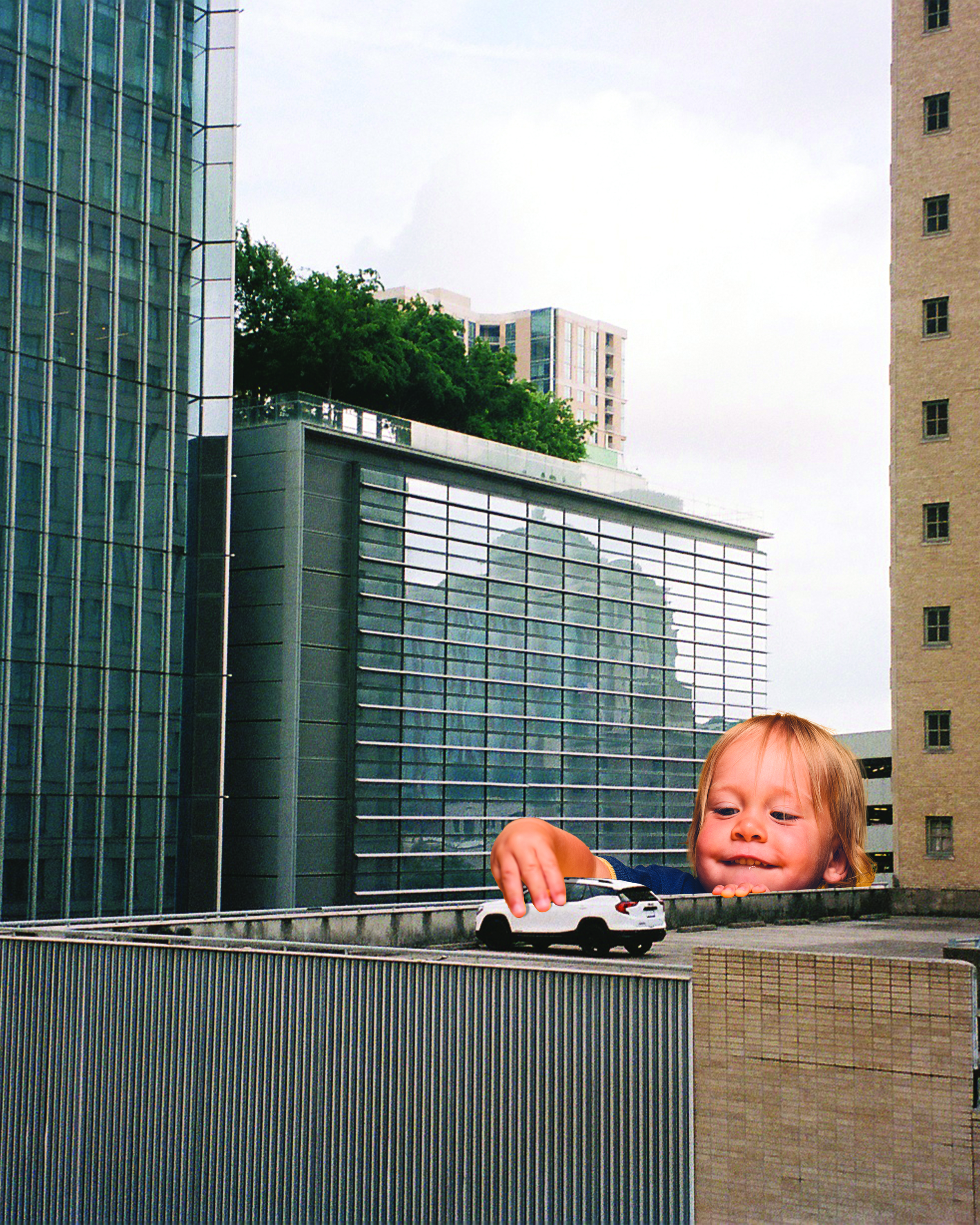
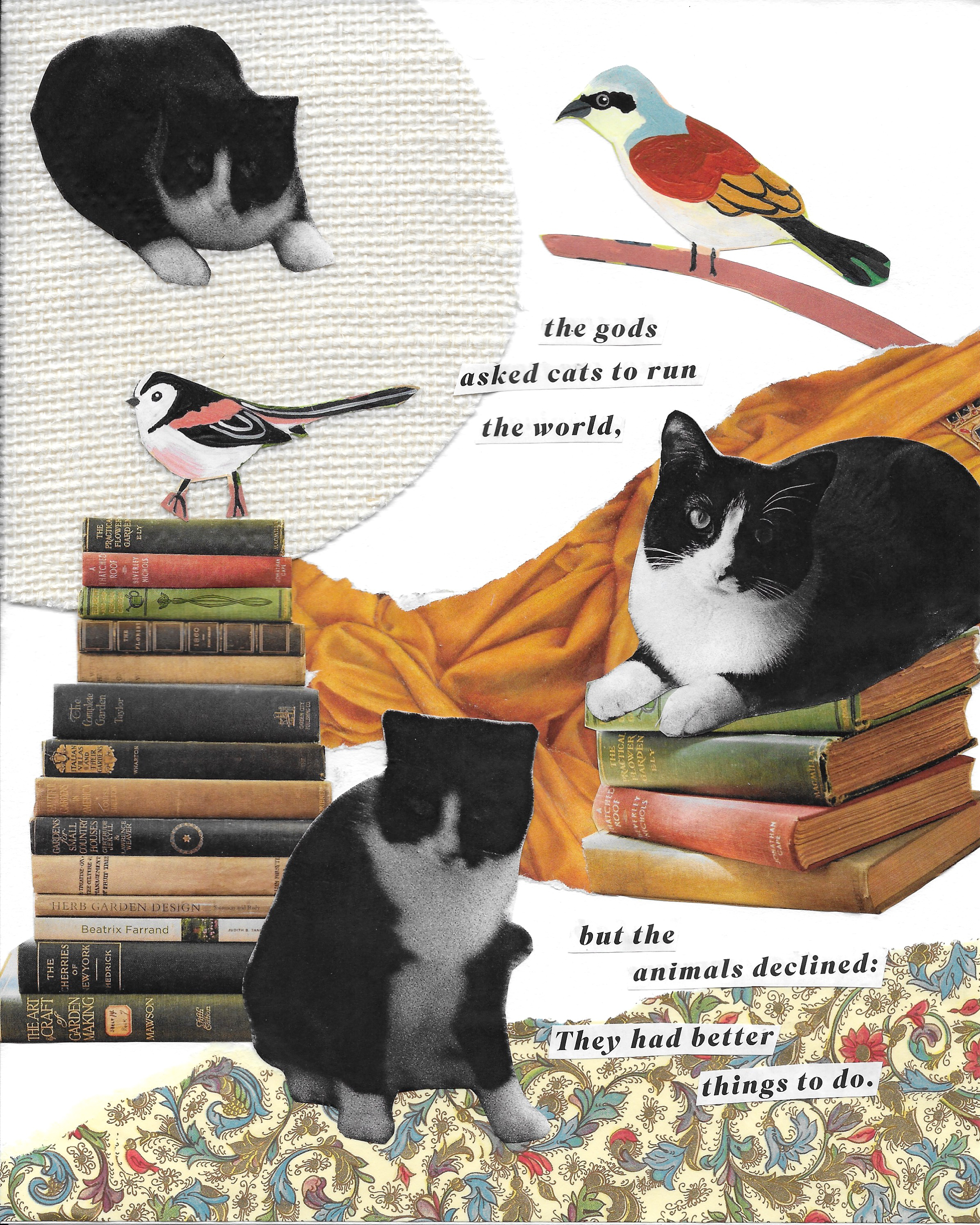
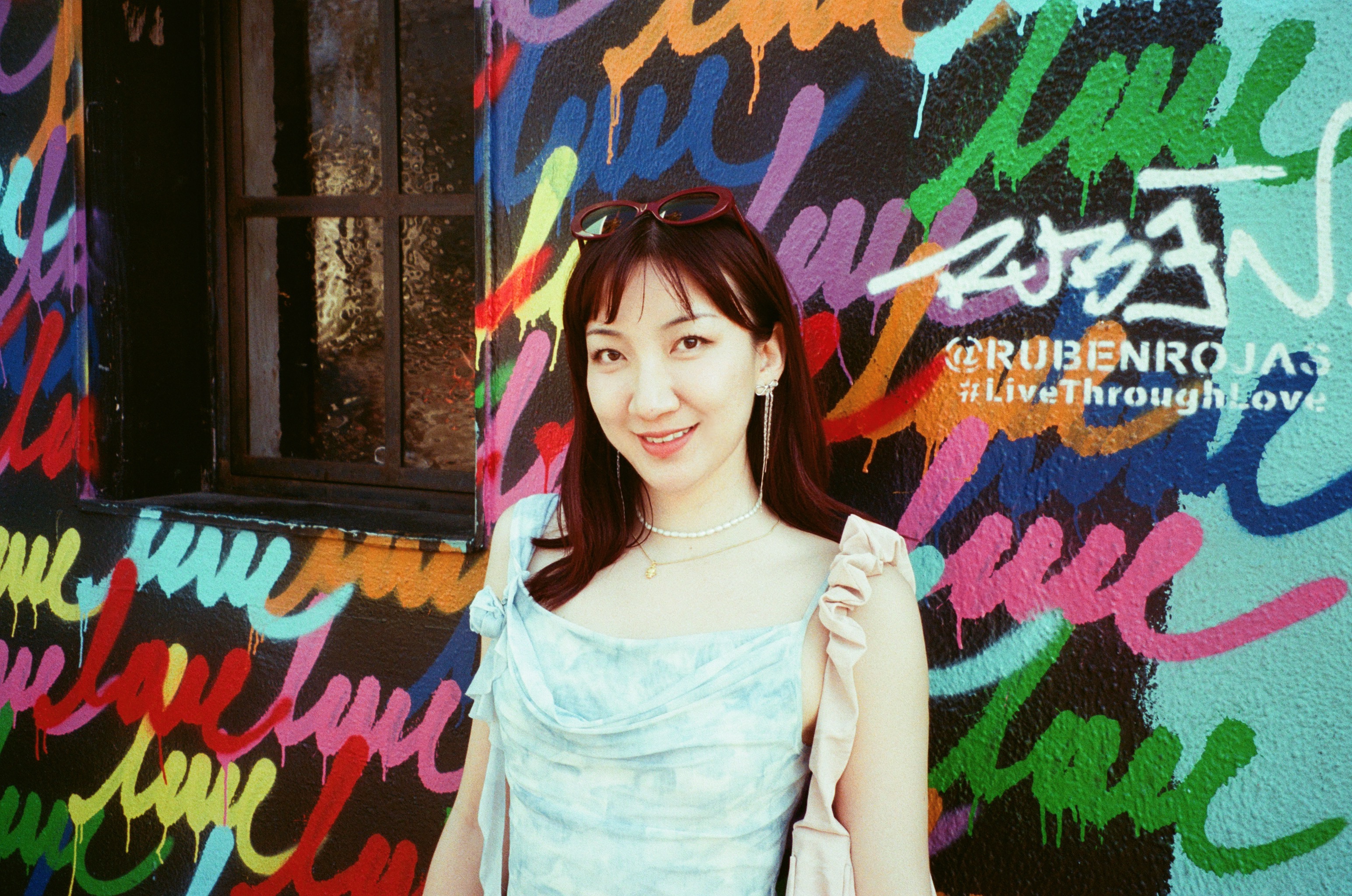
A series of collages hang on the office wall of Houston Grand Opera Graphic Designer Rita Jia. She assembled them from magazine cutouts and photos she took herself. In one, a boy the size of a Houston parking garage plays with a full-sized car, as if it were a toy. Another depicts Jia’s tuxedo cat Luna sitting on a stack of books, surrounded by the phrase, “The gods asked cats to run the world, but the animals declined: They had better things to do.”
 |
 |
Rita’s life is something of a collage—a juxtaposition of two very different cultures. Originally from Inner Mongolia, China, Jia became interested in art at a young age and went on to earn her bachelor’s in graphic design from Tianjin University of Commerce. On a trip to California with her dad during college, she fell in love with American culture and became determined to study in the U.S. In 2018, she moved over 7,000 miles to Georgia, obtaining her master’s in graphic design at the Savannah College of Art and Design (SCAD).
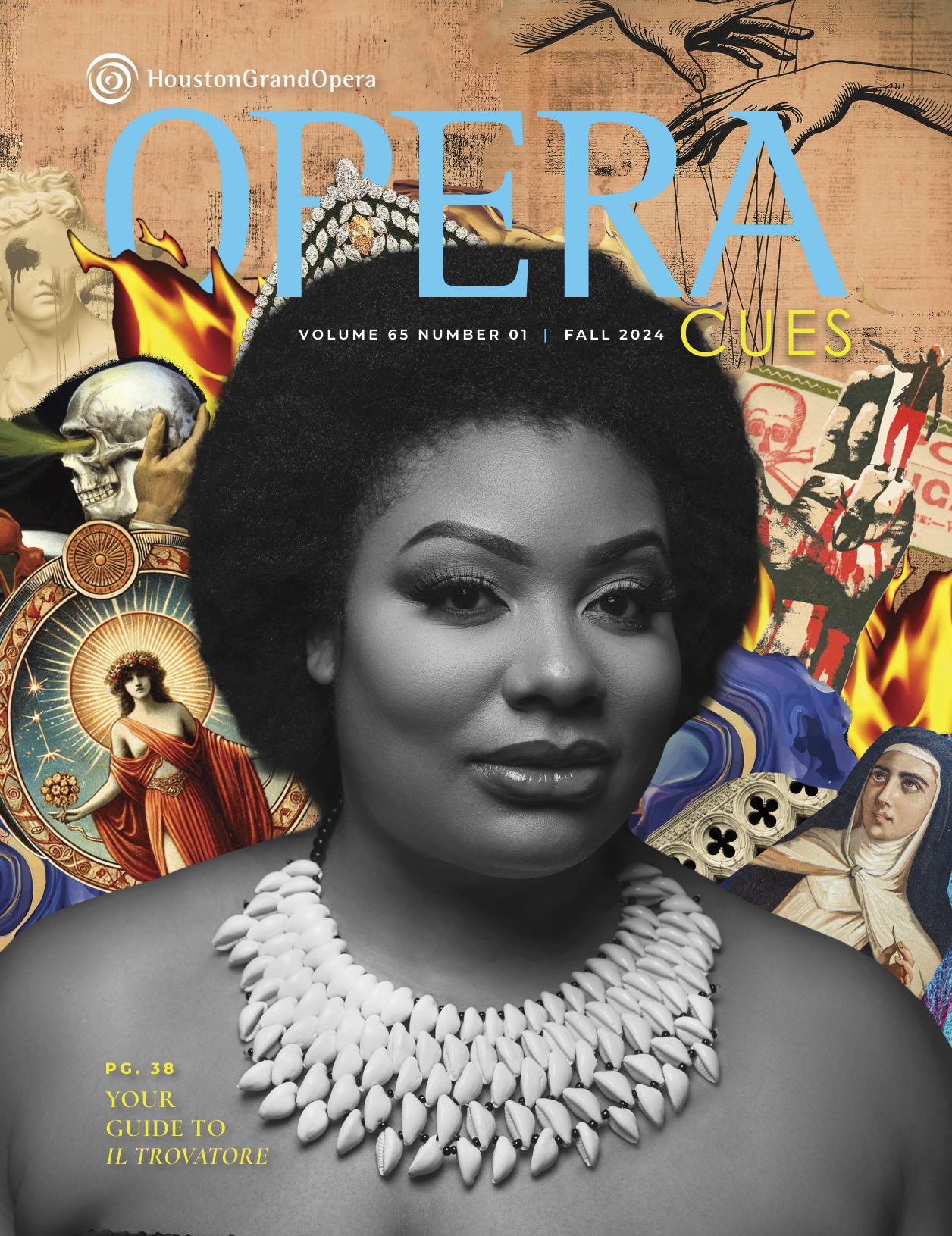
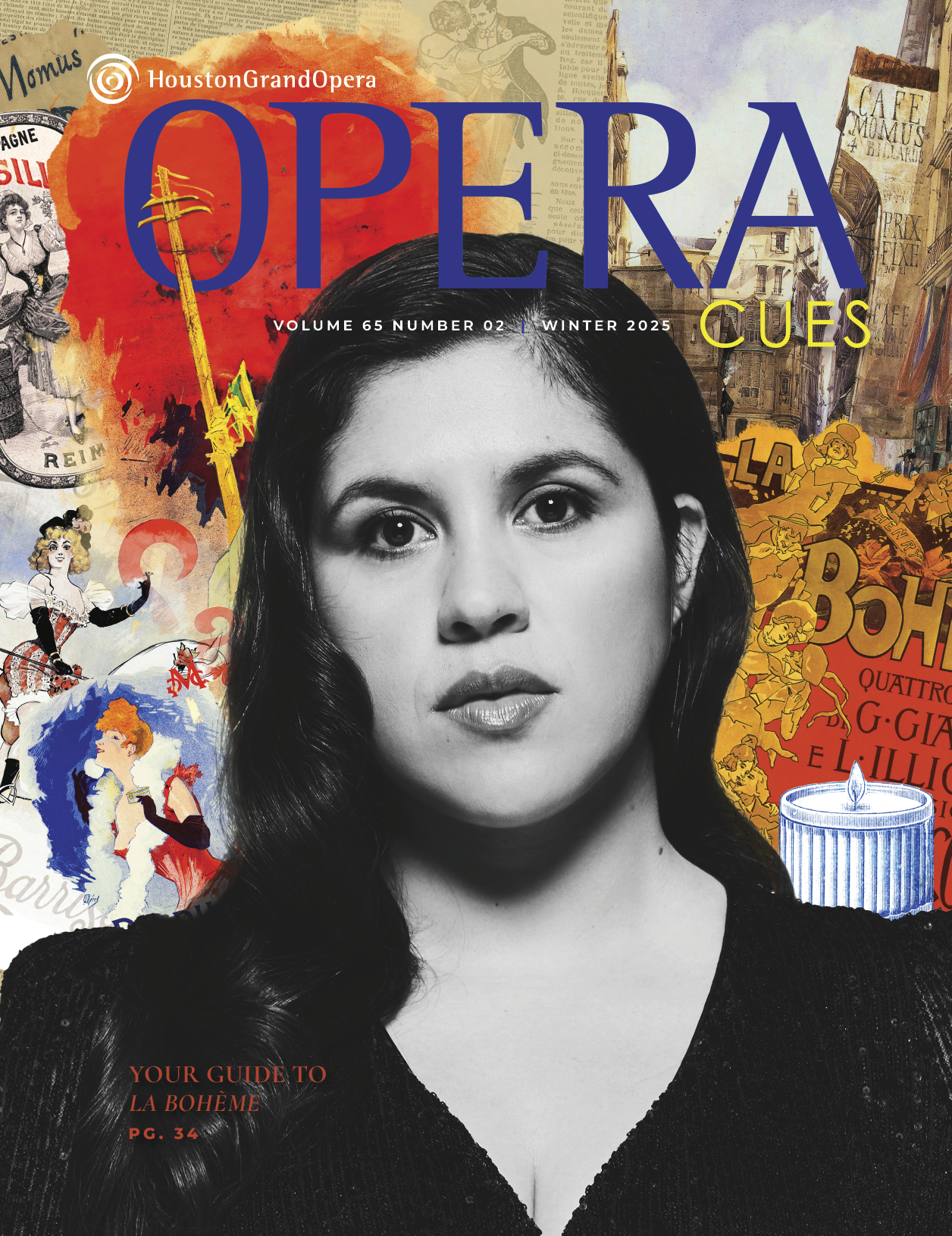
Drawing on her personal style—including her experiments in collage, which last season informed a series of covers for HGO’s house magazine, Opera Cues—Jia creates an engaging brand story through her design. Her work has been featured across various media, from ads and billboards to Instagram posts and holiday cards. If you see HGO’s logo on something, it’s very likely Jia designed it.
Tell us about yourself.
I’m originally from Hohhot, Inner Mongolia. It’s the northernmost province of China, but it’s next to the country Mongolia—that confuses people a lot. My dad was a musician. He played the erhu, which is a traditional two-stringed Chinese instrument. He loved music and he wanted me to be a pianist. I wasn’t very talented, and I played for several years. I was just not good. Growing up, I always liked drawing. I remember when I was 3 or 4, while other kids were outside playing, I preferred being alone and just drawing at home.
How did you get into graphic design?
I realized I liked it even more than drawing and painting, because there are so many possibilities with graphic design. You can use so many tools. It’s also great when you need to translate your vision into something useful.
My parents were supportive, especially my dad, who passed away. He really wanted me to do what I liked. He wanted me to develop my art skills because he thought that art and music can really shape a person to be intelligent and creative. My mom—she’s more cautious about future careers in fine art, so that’s why I switched from fine art to graphic design.
After I graduated from college in China, I still wanted to get more knowledge and develop my skills. I had heard SCAD is one of the best art schools in the U.S., so that’s how I applied and went there.
Why did you choose to work at HGO?
I wanted to work somewhere that combined high-level creativity and meaningful storytelling, and HGO was exactly that. The opera in China—it’s very different. I always found them so loud—hurt my ears. [laughs] Western opera is a bigger production, with storytelling, orchestra, and chorus. I didn't know much about opera before I started working here, but I'm gradually falling in love.
Is your personal style ever reflected in your professional work?
Usually, when I design at work, I don’t have a preferred style. It depends on what kind of work I do, what the message is, and what concept we have for a project. I’m always open to new styles, ideas, and trying new techniques. But I do like collage, and I sometimes use some of my collage skills in artwork here. When I designed the Opera Cues covers for the 2024-25 season, I started collecting all the images for the storytelling to make the composition look good. The black and white artist photos were the key objects, in the end I crafted all the pieces together into a cohesive final artwork. It was not a linear process, but it was so worth it.
 |
 |
What are necessary qualities to be successful in your role?
First is to have the vision, and the second is design execution. Vision means understanding how to elevate the brand, push boundaries, and create a stronger connection with the audience. Design execution is a necessary ability to make the vision come true—to send a certain message, but also to make the design look good.
What do you think makes for a good design?
A design that is able to grab people’s eyes, so that when they see it, they want to look at it more. That’s the next step—the “more.” The “more” part is the hierarchy of your message. You need to put the most important information at the beginning—the biggest font or the most interesting design. And then they see the secondary information: where you can buy tickets, the time, and this and that.
What do you do in your free time?
I do a lot of collage and mixed media art. It’s just a way of expressing myself. I will just sit down and find magazines to cut out things and start putting my thoughts into the work. It becomes a self-care routine. I also enjoy doing hot yoga and crochet. Whenever it’s wintertime, I feel like I need to crochet more scarves. You can never have enough scarves!
I really treasure the friends I made here in Houston—especially at HGO. I found my second home in Houston, and HGO is like my family now. Friends are very important to me, since I’ve been away from home since I was in high school. I’ve learned friends are one of the most valuable things in my life.
What has been the most rewarding experience working at HGO?
During the final dress rehearsal of Cinderella in 2024, when the conductor Lorenzo Passerini went onstage for his bow, he was wearing the HGO T-shirt I designed. Or when I see the audience looking at my Opera Cues covers during a performance—that’s the most fulfilling moment ever. Sometimes I can’t believe, like, I did this? That’s a long way to come here. I enjoy seeing my work getting printed, getting into people’s hands.
For more of the HGO Spotlight Series check out: HGO Spotlight on: Director of Strategic Initiatives Monica Thakkar