Bombs and Bagpipes

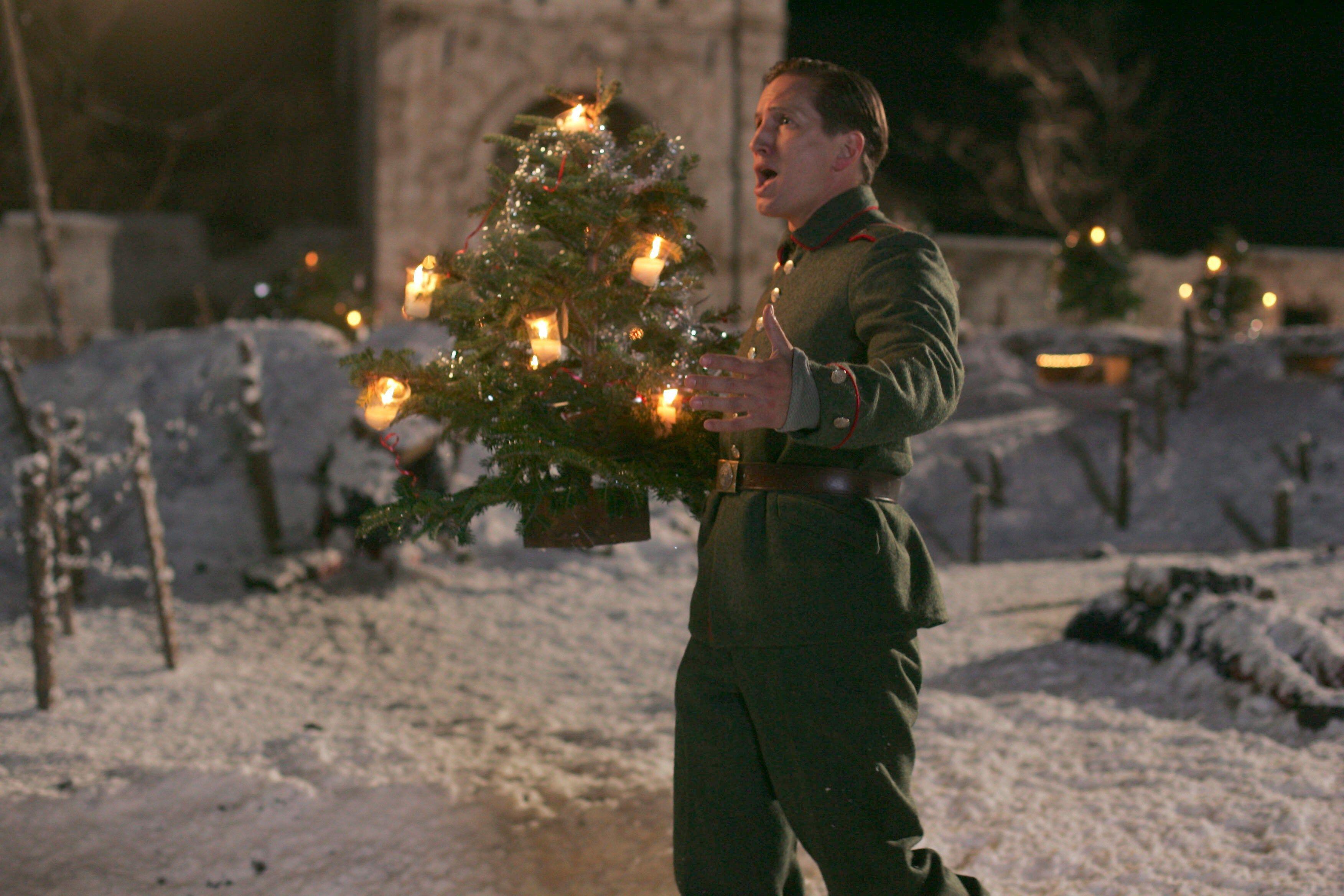
Kevin Puts has never written a film score. And yet his music is consistently labeled “cinematic.” It’s not that his style sounds like an imitation of John Williams or Hans Zimmer. Rather, there’s something about his compositional language that recalls the musical storytelling of a film soundtrack. It’s especially evident in his first opera, Silent Night, which itself is based on director Christian Carion’s 2005 movie Joyeux Noël, a dramatization of the 1914 Christmas truces.
“I love film, and I’ve always wanted to write film music,” says Puts ahead of Houston Grand Opera’s 2026 production of Silent Night. “When I started composing Silent Night, I was like, ‘This feels like I’m writing a film score but with singing.’ And also, the nature of Mark Campell’s libretto, which moves quickly from scene to scene—it felt like film to me. I was imagining the whole thing in a very cinematic way.”
But there’s something deeper about the opera’s score that makes it “cinematic,” beyond its resemblance to soundtracks. Puts often emulates techniques from film editing, musically recreating post-production effects like montages, dissolves, and overlaps.
In the opera’s prologue, he introduces five soldiers from the three nations engaged in combat: Scotland, France, and Germany. In between a series of vignettes, choruses representing these three sides perform war songs. At the climax, Puts superimposes these five soloists and three choruses in a complex “multiple exposure.”
“So first you get this five-voice counterpoint. And then the war songs come up underneath the soloists, like you’re turning up a fader. One after another, the five guys fade out, and then you’ve got the three songs kind of faded up. I wanted them all to be in disparate keys so that they would clash in a really gnarly and cataclysmic way. Then that crashes into the battle scene.”
Puts’s terrifying battle sequence—a barrage of exploding bombs and the ratatat of machine guns—is a masterpiece of organized sonic chaos. And, unsurprisingly, it was inspired by a cinematic source, though one that depicts World War II rather than the earlier Great War of Silent Night.
“I rewatched the beginning of Saving Private Ryan to get in the mode of absolute horror,” explains Puts. “There’s this moment in the movie when they come off the boats and onto the beach in Normandy. They’re underwater, and they can still hear the gunfire. There are bullets whizzing through the water and piercing their skin, and you can hear the thuds of battle. That’s what I was going for.”
Orchestral writing came naturally to Puts at the time he composed Silent Night in 2011. By then, he already had four symphonies under his belt. But the voice was relatively new territory for him. Moreover, because the soldiers sing in their respective languages in Campbell’s libretto, Puts faced the added challenge of setting text in English, French, and German.
“I’d written almost no vocal music at all,” admits Puts, “and I had not written anything in German or French before. The French was okay—I studied French in high school and felt comfortable with it. But the German just really freaked me out. I was so worried about where the stresses fell. It was a real kind of ‘paint-by-the-numbers’ process, where I could take a line and then figure out the rhythm and the shape of the line.”
"When I started composing Silent Night... I was imagining the whole thing in a very cinematic way."
“I rewatched the beginning of Saving Private Ryan to get in the mode of absolute horror,” explains Puts. “There’s this moment in the movie when they come off the boats and onto the beach in Normandy. They’re underwater, and they can still hear the gunfire. There are bullets whizzing through the water and piercing their skin, and you can hear the thuds of battle. That’s what I was going for.”
Orchestral writing came naturally to Puts at the time he composed Silent Night in 2011. By then, he already had four symphonies under his belt. But the voice was relatively new territory for him. Moreover, because the soldiers sing in their respective languages in Campbell’s libretto, Puts faced the added challenge of setting text in English, French, and German.
“I’d written almost no vocal music at all,” admits Puts, “and I had not written anything in German or French before. The French was okay—I studied French in high school and felt comfortable with it. But the German just really freaked me out. I was so worried about where the stresses fell. It was a real kind of ‘paint-by-the-numbers’ process, where I could take a line and then figure out the rhythm and the shape of the line.”
A major attraction of the libretto for Puts was the many passages of diegetic music—that is, songs that the characters in the opera perceive as music. None of these are quotations of pre-existing sources. Rather, Campbell and Puts invented their own pastiches—imitations of musical styles. The folksongs, hymns, and carols that appear throughout the score are all clever “forgeries.”
“The first prompt in the libretto is that Anna and Sprink are singing an opera in the style of Mozart or Gluck,” says Puts. “And I was like, ‘Okay, great. I get to pretend.’ And then there were other songs, like there’s a duet later in the show which is kind of Schubertian. For me, it was so appealing to write those songs on my own. It became really polystylistic. I’m always referred to as a ‘polystylistic’ composer, maybe because of this opera. It just naturally sprang from all these diegetic moments.”
Such instances of music-making within the world of the opera are essential to the story’s pacifist themes. After all, it’s the universal language of music that serves as the catalyst for the ceasefire. In one of the most magical scenes of Silent Night, Sprink climbs out of the German trenches and sings a Latin carol for the Scottish troops on the other side, one of whom answers back on a bagpipe. This instrument—almost entirely absent from the operatic repertoire—presented some obstacles for Puts.
“The bagpipe can only play in one key. So everything in those scenes is built around what the bagpipe can play. But the thing that we didn’t anticipate was that the bagpipe was so loud that we basically couldn’t hear the orchestra. So we figured out that the player had to be backstage. They built a box for the bagpiper to play inside of. But I had written something in the score like, ‘The bagpipes fade out.’ Well, how do you do that? So we had the bagpiper just walk out of the hall into the parking lot!”
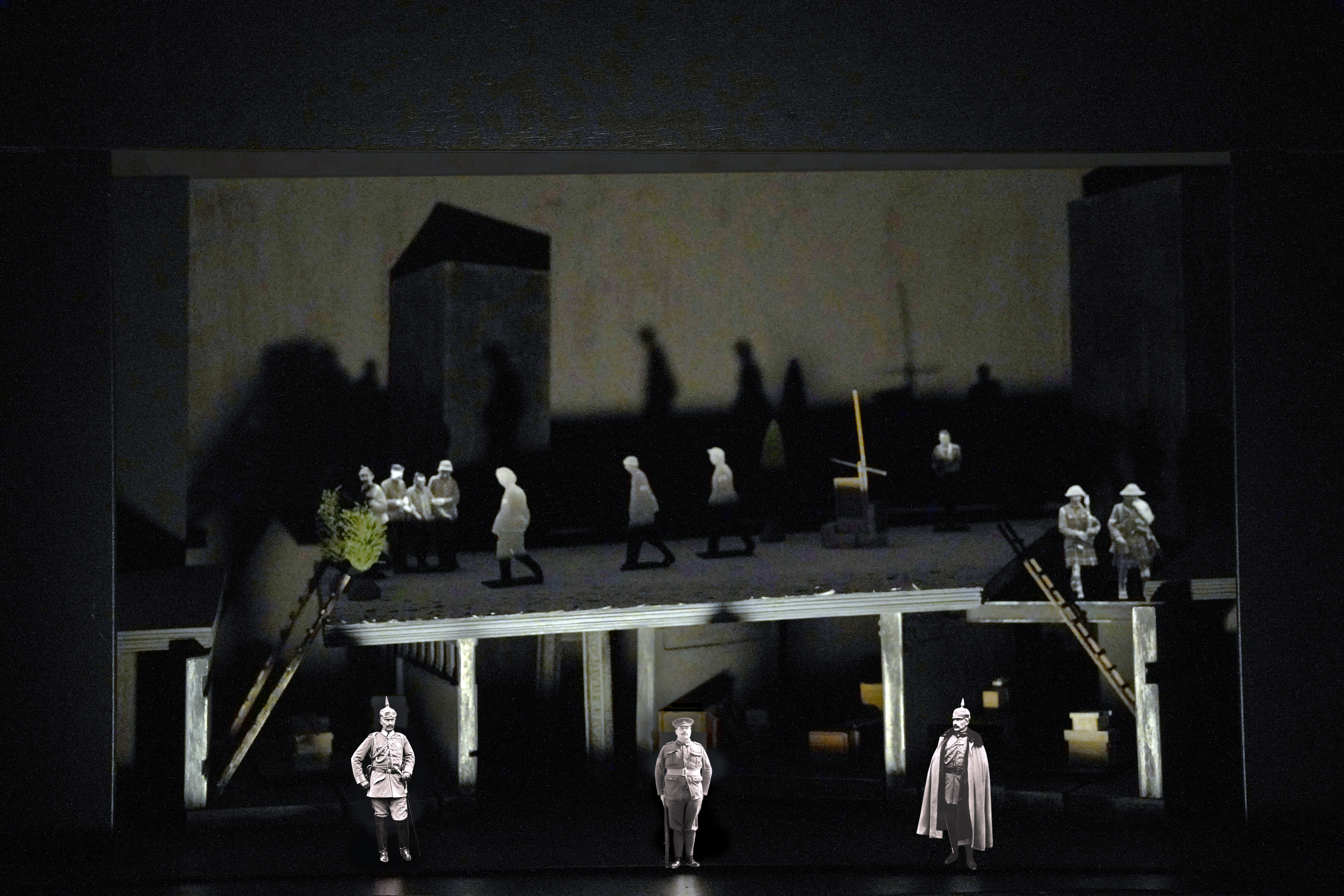
In the years after the triumphant 2011 premiere of Silent Night—which earned its creators a Pulitzer Prize—Puts composed three additional operas, including his recent The Hours. Given this added experience, the composer felt impelled to revisit his first operatic effort. His revised version of the score will be performed at HGO and later at the Metropolitan Opera, where James Robinson’s new staging will be mounted next season.
"I really embrace language now. I really love the words themselves, and I feel like there's so much music in the words."
“It was just a matter of thinking, ‘Well, I wrote this a long time ago, and I write a lot better for the voice now. If HGO and the Met are going to do this, then I want to feel really good about it.’ I made little tweaks to the vocal parts—there’s a little something changed in every single line in the opera. Sometimes a bar would be added where I thought it needed more time to be more lyrical. A lot of the baritone parts were too low in the original. I would sing lines and think, ‘Well, that’s awkward. Why did I do it that way?’
“I think what it is, is that I really embrace language now. I really love the words themselves, and I feel like there’s so much music in the words—not just in the vowels, but in the consonants as well. I’ve been working with wonderful singers recently, like Joyce DiDonato, and a great singer can make music out of every single part of the word.”
The most drastic change was the addition of a new chorus, sung by the three platoons while they bury their dead in no man’s land. Miraculously, Puts found a way to weave this poignant number into the existing music without lengthening the score in any way.
“Mark Campbell gave me some very simple text, and I found that I could overlay it quite well on the orchestral interlude that was already there. And we tried that out at Wolf Trap Opera two summers ago, and I was really happy with the result. The climax when the bagpipe comes in is even more emphatic, obviously, with an entire chorus singing. It just feels more like opera.”
In spite of these revisions, Puts emphasizes that, at its core, Silent Night essentially remains the same opera. “Nothing’s really changed. It’s almost like when they clean old paintings—suddenly it’s brighter.”