Ahead of HGO’s production of Silent Night, a Panel Discussion at Alliance Française de Houston Underscores the Importance of Cultural Understanding in Promoting Peace

On January 9, Houston Grand Opera co-presented a public workshop at the Alliance Française de Houston ahead of HGO’s production of Kevin Puts and Mark Campbell’s Silent Night. Titled Peace in the Trenches: The Story Behind Silent Night, the event explored the World War I Christmas truces that inspired the opera, as well as the continued need for cultural understanding in the pursuit of peace.
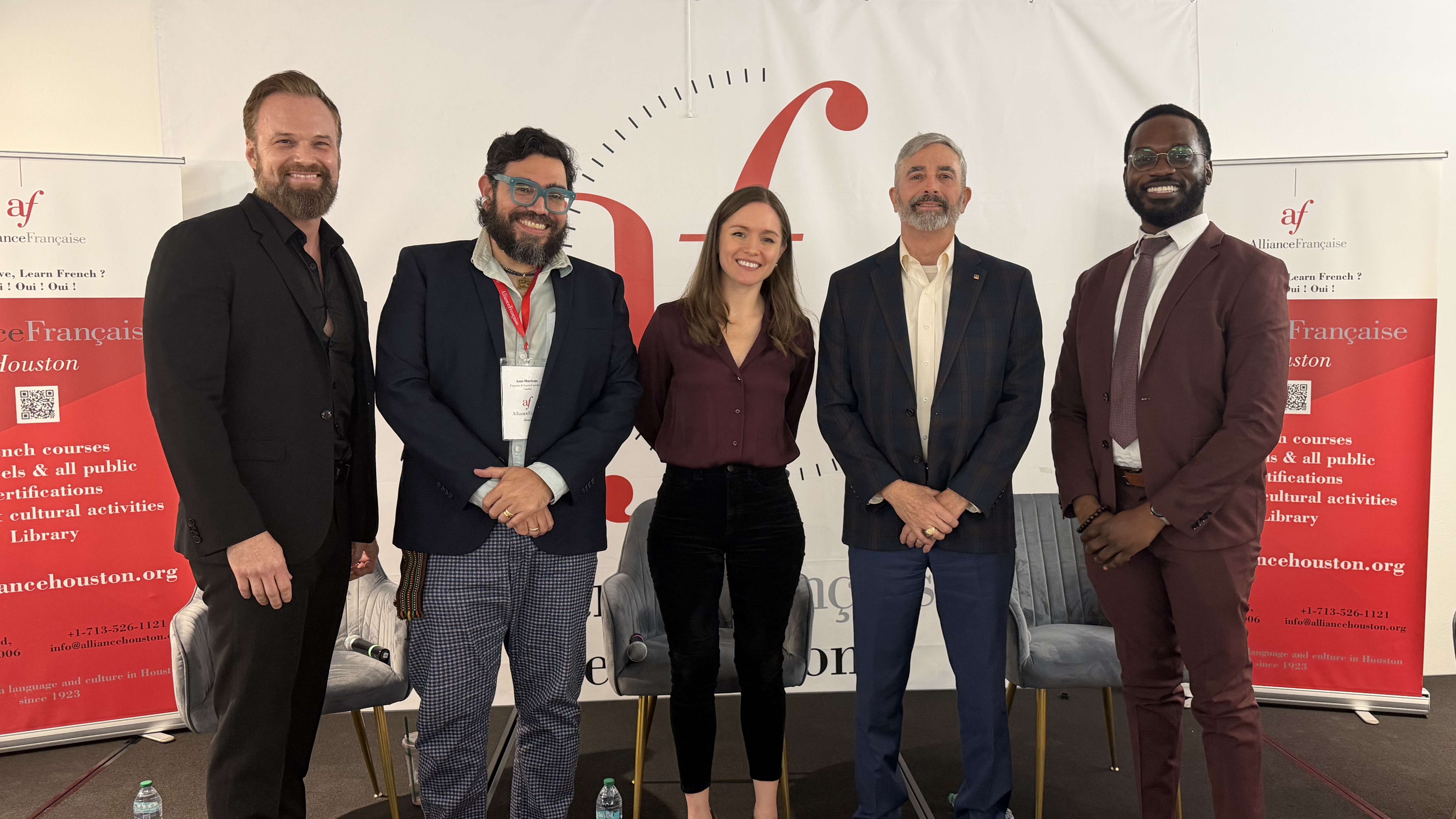
The Alliance Française de Houston (AFH)—part of a worldwide network of 800 institutes that promote French language and culture—hosted the proceedings at their Montrose center. Moderated by HGO Composer-in-Residence Joel Thompson, the evening’s panel discussion featured Texas A&M historian Roger Reese, University of Houston musicologist Kathryn Caton, AFH Adult Programs and TCF Exams Coordinator Juan Martinez, and bass-baritone Ryan McKinny, who stars in HGO’s production of Silent Night.
“Silent Night tells a story that is both historical and deeply human about war and fear,” said Thompson, “but also about empathy, compassion, and the unifying power of music.” Based on the 2005 film Joyeux Noël, the Pulitzer-winning 2011 opera takes place on the Western Front in 1914. On Christmas Eve, three fictional platoons from France, Germany, and Scotland call a truce, putting aside their nations’ conflict to join in soccer and song.
Reese, whose research focuses on Russian military history, explained how the conditions of trench warfare in WWI made such truces possible. “These guys were in the trenches, sometimes only 50 feet apart,” he said. “They could see each other, they could hear each other, and they knew that the other guys were experiencing the war and life the same as they were. They were living in filth with rats and lice and mud in their food and missing their families.”
“It was the shared cultural traditions that made this work,” Reese continued. “So many of the Christmas traditions that Britain had at the time came from Germany. When the British troops heard the German singing, they didn’t really need to know the words because they understood the tunes—they sang many of the same.”
This communal music-making, which helped enemies transcend their differences, reveals the power of the arts as a catalyst for peace. Martinez emphasized that cultural institutions like AFH and HGO continue to perform this same function today. “We need to think about institutions as places where we come to look for narratives—the narratives that make up a culture, the narratives that make up an identity. It’s also about understanding the historical narratives, the visual narratives, the art, the traditions.”
Laying out a timeline of operatic depictions of war, Caton helped to place Silent Night within the larger historical context of the genre. “We start seeing that, at the turn of the 20th century, some operas started to deal with the psychological effect of war. But it’s not really until after World War II that we start to get a lot more operas that deal with war itself and violence in general as the dramatic arc—works that really center the horror of the wars on individuals and on collective psyches.”
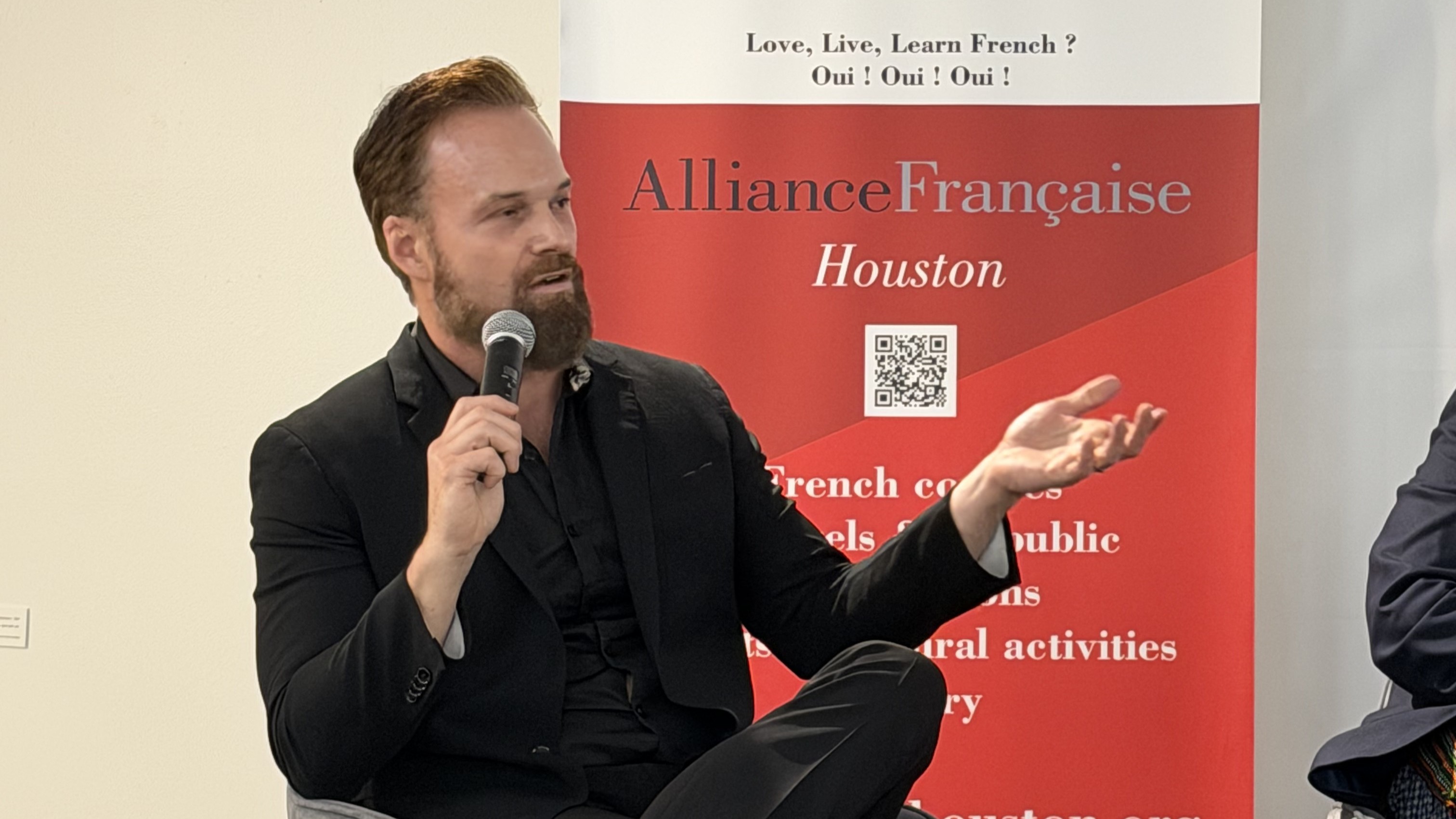
However, McKinny, who plays the role of the German Lieutenant Audebert, stressed that Puts and Campbell’s opera is less about war itself than it is “an opera about several different people experiencing this war and their individual stories.” Although he appears onstage in HGO’s Silent Night, McKinny also co-directed a Wolf Trap production of the opera with his wife, Tonya, in 2024.
McKinny explained that, whether he’s directing or singing, it is his responsibility as an artist “to fight for truth on the stage. And by truth, I don’t necessarily mean facts. I mean emotional truth—seeing people as human beings.” For McKinny, the young men who participated in the 1914 truces exemplified this impulse toward empathy and mutual understanding.
“Like these people who stopped their war for one night, when you can see the person over there as a whole human being who you might sing a song with, you might play soccer with, a whole universe of possibilities opens up. We think it’s ‘us and them’ forever. But then stuff like this happens. And it happens throughout the history of humanity. It’s not as simple as, ‘They’re bad and I’m good.’ And it can’t be.”
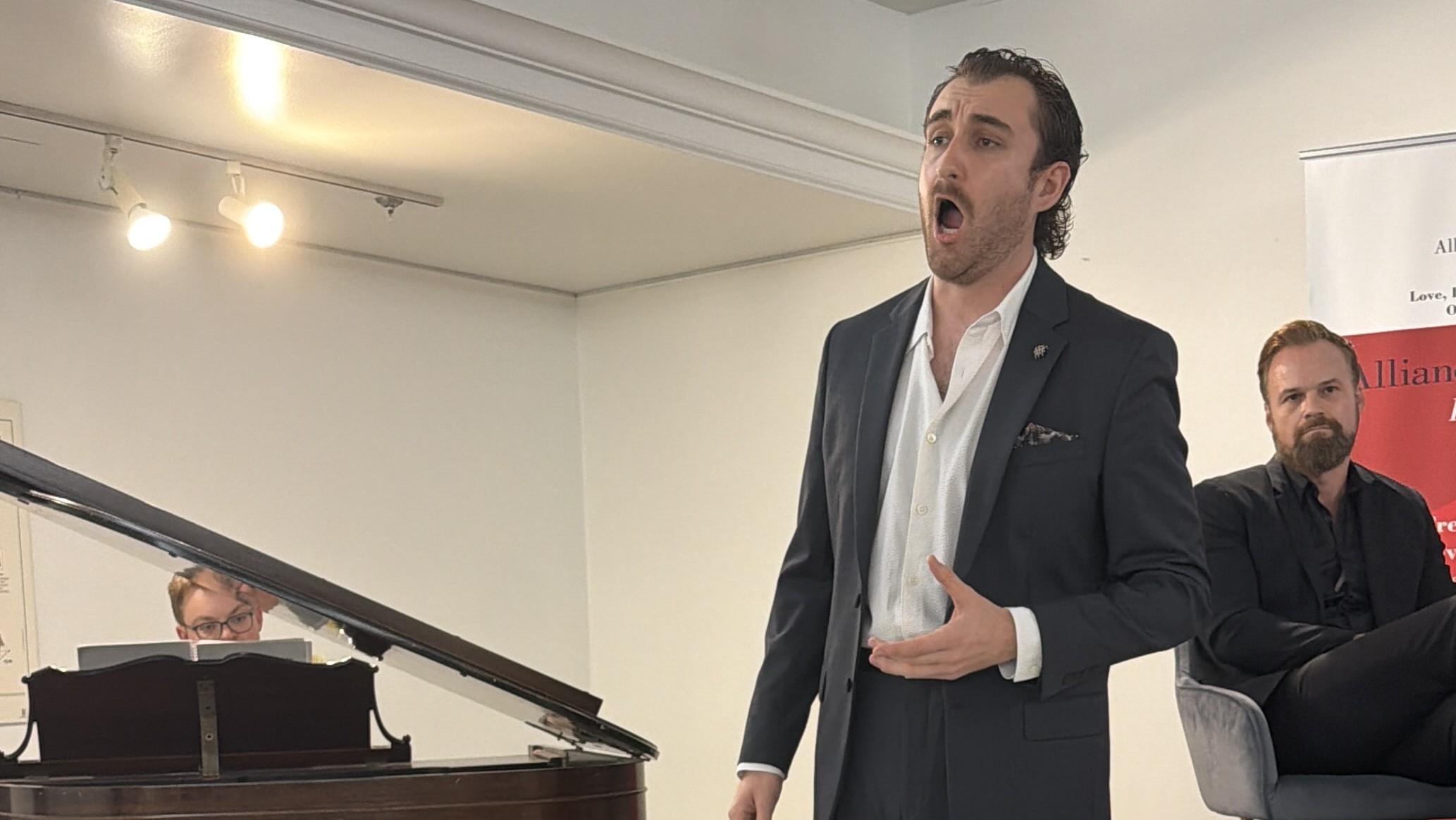
The evening concluded with a performance of an excerpt from Silent Night, sung by tenor Michael McDermott and accompanied by pianist William Woodard. A member of the Sarah and Ernest Butler Houston Grand Opera Studio, McDermott will portray the role of Nikolaus Sprink for the February 4 performance of the opera. HGO’s production, a new staging by director James Robinson, runs from January 23 to February 8. Tickets, starting at $25, can be purchased here.